
This review reports that exosome-based therapies, coupled with nanotechnology and AI, show promise in aesthetic medicine, notably in skin rejuvenation and hair restoration, but large-scale trials and clearer regulatory frameworks are needed for effective clinical adoption.
This study explored Black Sea shark liver oil-based emulgels, finding that the addition of borage oil (Gel 2) enhanced the anti-inflammatory and wound healing properties compared to shark liver oil alone (Gel 1) and a reference diclofenac gel, suggesting promising eco-friendly applications in dermatocosmetics.
 December 2024 in “Qlantic Journal of Social Sciences and Humanities”
 This study found that among adult balding men in Rawalpindi and Islamabad, those seeking hair transplants exhibited higher levels of perfectionism and body dysmorphic disorder symptoms compared to those not seeking treatment.
 January 2024 in “Skin appendage disorders”
 This article reviews existing research on the treatment of alopecia areata using growth factors and microneedling, reporting that these methods show promise in promoting hair growth without major adverse effects, but emphasizes the need for additional large-scale studies to confirm their efficacy and safety.
 January 2024 in “Wiadomości Lekarskie”
 This study surveyed university students in ten Eastern European and Central Asian countries to assess their attitudes toward individuals using wheelchairs, finding generally neutral or negative attitudes, though Ukrainian students affected by conflict displayed more positive views.
 December 2022 in “IntechOpen eBooks”
 This paper discusses forensic DNA phenotyping, emphasizing its ability to infer visible traits from biological samples without reference samples, but notes ethical and legal concerns related to its use.
 November 2019 in “Harper's Textbook of Pediatric Dermatology”
 This index of Harper's Textbook of Pediatric Dermatology, Fourth Edition, provides no clinical results or new findings.
 March 2018 in “International journal of basic and clinical pharmacology”
 This study found that while the carboplatin-paclitaxel regimen for advanced lung cancer is more affordable than newer treatments and maintains a good performance status, it significantly increases risks of alopecia and peripheral neuropathy.
 September 2016 in “Springer eBooks”
 This review discusses the application of mesenchymal stem cells and their secretory factors for skin and hair regeneration and reports no clinical results; the authors highlight the progress and call for practical applications.
 January 2015 in “Springer eBooks”
 This chapter reviews the potential of adipose-derived stem cells for skin aging and hair loss treatments but reports no new experimental results; the authors highlight these stem cells as a promising regenerative resource.
 August 2014 in “Springer eBooks”
 This article proposes that the combined genetic factor of filaggrin deficiency and environmental factor of staphylococcal biofilms contribute to the development of eczema and ichthyosis vulgaris, but reports no new clinical findings.
 April 2005 in “AORN Journal”
 The book is a detailed guide on dermatologic surgery techniques, recommended for both new and experienced doctors.
 253 citations
,
March 2006 in “The Journal of Clinical Endocrinology and Metabolism”
253 citations
,
March 2006 in “The Journal of Clinical Endocrinology and Metabolism” This review discusses the hypothesis that polycystic ovary syndrome may originate in fetal life due to prenatal androgen exposure, but reports no new clinical results.
 219 citations
,
September 2009 in “European journal of epidemiology”
219 citations
,
September 2009 in “European journal of epidemiology” This article discusses the rationale, design, major findings, and updated objectives and methods of the ongoing Rotterdam Study on various diseases, without reporting new research results.
130 citations
,
February 2019 in “JEADV. Journal of the European Academy of Dermatology and Venereology/Journal of the European Academy of Dermatology and Venereology” This study found that JAK inhibitors for alopecia areata showed promising response rates, with 72.4% of 289 cases responding, and oral administration achieving better outcomes than topical treatment, but recurrence occurred when treatment stopped. Further large-scale studies are needed to confirm these findings.
 22 citations
,
May 1999 in “International Journal of Dermatology”
22 citations
,
May 1999 in “International Journal of Dermatology” This article discusses androgenetic alopecia and reports no new clinical results.
 15 citations
,
September 2014 in “Journal of The American Academy of Dermatology”
15 citations
,
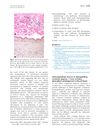
September 2014 in “Journal of The American Academy of Dermatology” This study found that seven cases of cicatricial alopecia initially diagnosed as discoid lupus erythematosus were more consistent with lichen planopilaris based on histopathology.
 12 citations
,
October 2012 in “Dermatologic Clinics”
12 citations
,
October 2012 in “Dermatologic Clinics” This review discusses the use of electromagnetic radiation, including low-level laser therapy, for hair loss management, but it reports no new clinical results and suggests further research.
 11 citations
,
September 2011 in “British Journal of Dermatology”
11 citations
,
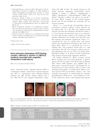
September 2011 in “British Journal of Dermatology” New ABCA12 gene mutations were linked to a skin condition with scaling and hair loss, and a treatment helped with hair loss in a related case.
9 citations
,
February 2023 in “Medicine” This review discusses the potential of traditional Chinese medicine to relieve clinical symptoms in cases of CCS and emphasizes the need for further large-scale, long-term studies to verify these effects.
 9 citations
,
January 2017 in “Organic Process Research & Development”
9 citations
,
January 2017 in “Organic Process Research & Development” This article describes the efficient synthesis of (S)-N-(2-bromo-6-methoxypyridin-4-yl)-2-hydroxy-2,4-dimethylpentanamide, a novel topical antiandrogen, with high purity and enantiomeric excess but reports no pharmacological results.
 9 citations
,
August 2014 in “Journal of The American Academy of Dermatology”
9 citations
,
August 2014 in “Journal of The American Academy of Dermatology” This article discusses the authors' concerns over the misinterpretation of studies linking smoking and frontal fibrosing alopecia, clarifying that neither study suggests smoking is protective against the condition.
 7 citations
,
May 2012 in “British Journal of Dermatology”
7 citations
,
May 2012 in “British Journal of Dermatology” This commentary explores whether chemical exposure may contribute to the rising prevalence of atopic diseases but reports no new findings.
 5 citations
,
July 2020 in “Journal of Cosmetic Dermatology”
5 citations
,
July 2020 in “Journal of Cosmetic Dermatology” This study found that using a vibration anesthetic device during scalp mesotherapy significantly reduced pain in patients with androgenetic alopecia and alopecia areata compared to the non-vibration side.
 4 citations
,
March 2015 in “Skin Research and Technology”
4 citations
,
March 2015 in “Skin Research and Technology” This study suggests that using trichotillometry to establish the normal range of shear strain for different hair types could inform diagnostic and treatment decisions for various hair conditions.
 3 citations
,
January 2005 in “Media Asia”
3 citations
,
January 2005 in “Media Asia” This study reports that since the early 1990s, China's advertising and consumer culture have rapidly transformed, with Chinese brands now leading the market alongside significant cultural shifts toward consumerism and materialism.
 3 citations
,
October 2007 in “Expert Review of Dermatology”
3 citations
,
October 2007 in “Expert Review of Dermatology” This review discusses the biological and cosmetic aspects of hair aging and reports no new clinical results; it highlights current treatments and future research directions to address both aging factors.
 2 citations
,
January 2023 in “International journal of biological sciences”
2 citations
,
January 2023 in “International journal of biological sciences” This review discusses the mechanisms of hair repigmentation and reports no clinical results; the authors suggest further research into topical treatments for reversing gray hair.
1 citations
,
October 2025 in “Beni-Suef University Journal of Basic and Applied Sciences” This study reviews lipid-based nanocosmeceuticals and reports that they enhance therapeutic effectiveness in dermatological applications by improving skin hydration, reducing wrinkles, and effectively managing conditions like psoriasis and eczema, though further large-scale trials and regulatory alignment are needed for clinical use.
 1 citations
,
September 2025 in “Clinical Cosmetic and Investigational Dermatology”
1 citations
,
September 2025 in “Clinical Cosmetic and Investigational Dermatology” This narrative review highlights the potential of autologous adipose mesenchymal stem cell-derived exosomes (AMSCs-Exos) in anti-skin aging, noting their superior biocompatibility and manufacturing advantages while stressing the need for standardized production protocols to overcome existing application challenges.