 8 citations
,
August 2015 in “Journal of dermatological science”
8 citations
,
August 2015 in “Journal of dermatological science” This study observed that the topical skin-whitening agent rhododendrol induced skin depigmentation in approximately 16,000 consumers, linked to melanocyte cytotoxicity and immune reactions.
 10 citations
,
September 2019 in “Experimental Eye Research”
10 citations
,
September 2019 in “Experimental Eye Research” This review discusses the role of RDH12 in vision, its structural and functional aspects, and related disease mechanisms, but reports no new clinical results; it aims to support therapy development for inherited retinal dystrophies.
 June 2020 in “The journal of investigative dermatology/Journal of investigative dermatology”
 This study found that low-level pulsed wave red light stimulated collagen and ATP production in human fibroblasts with significantly shorter treatment time than continuous wave light, suggesting enhanced consumer compliance for skin treatments.
5 citations
,
May 2001 in “Proceedings of SPIE, the International Society for Optical Engineering/Proceedings of SPIE” This study developed a double-wavelength laser scanning microphotometer to measure hair shaft and follicle absorbance, improving spatial resolution and reducing light scattering effects in vitro.
 March 2019 in “Journal der Deutschen Dermatologischen Gesellschaft”
 This clinical letter identifies Rothmund-Thomson syndrome type 2 as a rare cause of chronic wounds, but provides no new experimental findings.

This study reported that dandelion herb-derived carbon dots significantly enhanced wound healing in mice with Staphylococcus aureus infections, outperforming a commercial wound healing spray through their antibacterial and dual ROS-modulating capabilities.
June 2026 in “ACS Applied Materials & Interfaces” In this study, carbon dots derived from dandelion herb demonstrated significant antibacterial and biofilm-disrupting capabilities, promoting wound healing in a mouse model infected with S. aureus, while also showing excellent biocompatibility and the ability to modulate reactive oxygen species.
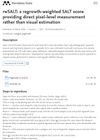 March 2026 in “Mendeley Data”
 In this study, researchers developed an open-source browser-based tool to enhance the reproducibility and accuracy of SALT score calculations from scalp photos, aimed particularly at assessing partial regrowth in alopecia areata patients on JAK inhibitor therapy.
 April 2018 in “The journal of investigative dermatology/Journal of investigative dermatology”
 This study identified a novel mechanism by which dsRNA-induced TLR3 activation and retinoic acid pathways contribute to new hair follicle formation after deep wounds in mice and suggested a similar potential in humans.

A 72-year-old man was diagnosed with a rare skin form of Rosai-Dorfman disease after years of misdiagnosis.
 April 2024 in “Communications biology”
 The researchers reported that disrupting ATRA signaling by deleting RDHE genes in the hair follicle led to altered hair follicle cycles, composition, and gene expression, indicating RDHEs' role in hair follicle signaling coordination.
 April 2019 in “Journal of Investigative Dermatology”
 This study identifies a mechanism where dsRNA activates TLR3 to induce RA production, promoting hair follicle regeneration in mice and suggesting a potential role in human tissue regeneration.
 1 citations
,
May 2019 in “Journal of The European Academy of Dermatology and Venereology”
1 citations
,
May 2019 in “Journal of The European Academy of Dermatology and Venereology” New method, hair distribution width (HDW), improves accuracy in diagnosing androgenetic alopecia (AGA).
In this study, homeopathic Radium bromatum showed potential anti-cancer effects against human lung and liver cancer cells in vitro while exhibiting low cytotoxicity towards non-cancerous kidney cells.
3 citations
,
June 2025 in “Gyemyeong uidae haksulji” This review suggests that PDRN shows promise as a safe and versatile regenerative agent for wound healing and other dermatological applications, based on its dual mechanisms and clinical evidence of efficacy.
 2 citations
,
April 2018 in “Journal of Investigative Dermatology”
2 citations
,
April 2018 in “Journal of Investigative Dermatology” This study defines two types of RDEB wounds, chronic open and recurrent, and finds that patient self-reports on wound size correlate well with investigator measurements when complemented by serial photography.
 1 citations
,
February 2018 in “British Journal of Dermatology”
1 citations
,
February 2018 in “British Journal of Dermatology” The CWARTS tool is a promising method for assessing warts and could improve treatment and research.
 February 2026 in “Nano Research”
 In this study, researchers developed a near-infrared-responsive nanoplatform that synergistically enhances chronic wound healing by accelerating mitochondrial restoration and immune modulation, leading to enhanced wound repair and high-quality healing in diabetic rat models.
 6 citations
,
October 2020 in “Endocrine journal”
6 citations
,
October 2020 in “Endocrine journal” This case report identifies two specific mutations in the WRN gene in a 40-year-old female with Werner syndrome, highlighting the need for awareness of its early manifestations and treatment options.
January 2015 in “UNIFESP Institutional Repository (Universidade Federal de São Paulo)” This study found that a 30 Gy radiation dose was most effective in an experimental rabbit model of radiodermatitis, causing significant tissue changes and prolonged effects compared to lower doses and a control group.
4 citations
,
April 2022 in “Evidence-based Complementary and Alternative Medicine” This study found that dracorhodin perchlorate improved wound healing in diabetic rats by regulating the TLR4 pathway and related inflammatory factors.
1 citations
,
April 2010 in “Cancer Research” In preclinical studies, a B-Raf inhibitor called WYE-130600 caused dose-related skin effects in dogs and rats, suggesting potential similar responses might occur in humans.
April 2021 in “Institutional Repositories DataBase (IRDB)” This study reported that high-intensity red LED irradiation increased osteogenic differentiation and mineralization of human bone marrow mesenchymal stem cells, potentially through Wnt/β-catenin pathway activation.
 April 2018 in “Journal of Investigative Dermatology”
 This study found that dermal white adipose tissue surrounding human hair follicles enhances proliferation, pigmentation, and hair shaft elongation in an ex vivo setting.
 61 citations
,
April 2014 in “Radiation Research”
61 citations
,
April 2014 in “Radiation Research” This study observed that topically applied RTA 408 reduced the severity of radiation-induced dermatitis in mice, with the highest dose significantly reducing and alleviating skin damage and associated inflammation.
August 2026 in “The Journal of Dermatology” In this review, the authors summarize recent findings on dermal white adipose tissue (dWAT), highlighting its crucial role in the hair follicle microenvironment by regulating inflammation and immune responses, thus influencing hair regeneration.
 October 2024 in “International Journal For Multidisciplinary Research”
 This review highlights that Wedelolactone, a compound in Eclipta prostrata, appears to be a potent antioxidant and selective modulator of proteins linked to chronic diseases, suggesting further research into its pharmacological effects is warranted according to the examined data.
22 citations
,
October 2018 in “Molecular Medicine Reports” In this study, classic PDRN (50-1,500 kDa) was observed to improve wound healing quality in a mouse model by enhancing collagen composition and cell migration.
3 citations
,
September 2023 in “Journal of Photochemistry and Photobiology A Chemistry” 53 citations
,
November 2014 in “International Journal of Oncology” This study found that wedelolactone, a natural compound from plants, inhibited breast cancer-mediated osteoclast differentiation and activity in vitro, suggesting its potential as a therapy for bone destruction in breast cancer bone metastasis.