 42 citations
,
December 2016 in “Cell Death & Differentiation”
42 citations
,
December 2016 in “Cell Death & Differentiation” This study found that transient mtDNA double strand breaks in mice accelerated aging in certain tissues through increased reactive oxygen species, independent of p21/p53 pathway mediation.
 30 citations
,
April 2010 in “Cell Cycle”
30 citations
,
April 2010 in “Cell Cycle” This review discusses how the p53 tumor suppressor gene helps maintain adult tissue homeostasis by promoting the removal of DNA-damaged cells, with implications for treating age-related diseases and p53-deficient cancers; it reports no new results.
 28 citations
,
March 2017 in “Endocrinology”
28 citations
,
March 2017 in “Endocrinology” In this study, the researchers found that vitamin D and calcium signaling in keratinocytes are essential for normal skin regeneration after wounding, with deficiencies significantly delaying wound closure and re-epithelialization in mice.
 27 citations
,
March 2024 in “Frontiers in Pharmacology”
27 citations
,
March 2024 in “Frontiers in Pharmacology” This review highlights the potential of natural product-derived compounds, such as flavonoids and alkaloids, to reverse multidrug resistance in tumors, emphasizing their role in regulating signaling pathways, proteins, and genes related to MDR, and aims to guide future research efforts in this area.
 26 citations
,
April 2019 in “Genes”
26 citations
,
April 2019 in “Genes” In this study, researchers identified novel long non-coding RNAs related to cashmere fineness in goats, highlighting a potential regulatory network involving lncRNA XLOC_008679 and its target gene KRT35.
 20 citations
,
January 2013 in “Cell & Bioscience”
20 citations
,
January 2013 in “Cell & Bioscience” This review discusses recent findings on the epigenetic regulation of adult stem cells and cancer stem cells, highlighting shared and distinct features, and reports no new clinical results.
 18 citations
,
May 2020 in “Biomolecules”
18 citations
,
May 2020 in “Biomolecules” This review discusses spironolactone's new roles in tumor immunosurveillance, DNA repair inhibition, and viral infection suppression, highlighting its potential to extend uses beyond traditional applications, but reports no clinical results.
 18 citations
,
April 2014 in “Stem cells”
18 citations
,
April 2014 in “Stem cells” The researchers reported that minor salivary gland stem cells exhibit stem cell characteristics and respond to tobacco-derived carcinogens, implicating the transforming growth factor beta pathway in their maintenance.
 12 citations
,
September 2024 in “Frontiers in Immunology”
12 citations
,
September 2024 in “Frontiers in Immunology” This study found that metabolism-related genes significantly impact the prognosis and metastasis in breast cancer, and the development of prediction models may guide personalized therapeutic strategies.
 12 citations
,
August 2022 in “Stem cell reviews and reports”
12 citations
,
August 2022 in “Stem cell reviews and reports” This study found that PBX1 overexpression reduces hair follicle-derived mesenchymal stem cell senescence and apoptosis by interacting with SIRT1 and PARP1, highlighting a potential mechanism for addressing aging-related diseases.
 9 citations
,
August 2024 in “Tissue Engineering and Regenerative Medicine”
9 citations
,
August 2024 in “Tissue Engineering and Regenerative Medicine” In this study, researchers suggest that strategic early intervention during fetal wound healing could lead to significantly improved long-term skin regeneration outcomes.
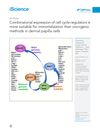 5 citations
,
January 2021 in “iScience”
5 citations
,
January 2021 in “iScience” Using a combination of specific cell cycle regulators is better for safely keeping hair root cells alive indefinitely compared to cancer-related methods.
 5 citations
,
May 2023 in “European Journal of Human Genetics”
5 citations
,
May 2023 in “European Journal of Human Genetics” This study found that mutations in the TULP3 gene are associated with progressive degeneration of the liver, kidney, and heart in adults, highlighting the importance of early detection and management.
3 citations
,
April 2022 in “Research Square (Research Square)” In this study, the researchers identified a PBX1-SIRT1-PARP1 axis that plays a crucial role in reducing senescence and apoptosis in hair follicle-derived mesenchymal stem cells.
 1 citations
,
November 2025 in “Cell Death and Disease”
1 citations
,
November 2025 in “Cell Death and Disease” This review discusses the role of various genetic regulators in maintaining human mesenchymal stem cell stemness and highlights strategies for ex-vivo expansion, but reports no new clinical findings.

Custom skincare can be made based on genes, fewer cats in Lublin have FeLV/FIV than national average, and studies also looked at small water bodies, river pollution, guppy growth, toxins in biochars, palm oil issues, and pumpkin seed oil for hair strength.

This article reviews various topics including medically important plants in dermatology, supporting medicinal herbs for primary dysmenorrhea, and several drug delivery systems, without providing new clinical findings.
 September 2022 in “Research Square (Research Square)”
 This study found that overexpressing Rps14 in supporting cells promoted hair cell regeneration in the organ of Corti by facilitating cell proliferation and differentiation.
 January 2018 in “Stem cell biology and regenerative medicine”
 This review discusses how the nuclear lamina integrates biochemical and mechanical signals to influence gene expression and skin homeostasis, but reports no new clinical results.
 August 2007 in “Journal of Investigative Dermatology”
 This review covers presentations from the 68th Annual Meeting of the Society of Investigative Dermatology and highlights research advances in dermatology, but reports no new clinical results.
 November 2022 in “CARDIOMETRY”
 This article discusses the potential benefits of GcMAF and oral MAF, developed by "Saisei Mirai", for cancer and other conditions, but reports no new clinical results.
 883 citations
,
August 2016 in “Nature Reviews Disease Primers”
883 citations
,
August 2016 in “Nature Reviews Disease Primers” This review discusses the current understanding of polycystic ovary syndrome, focusing on its epidemiology, pathophysiology, diagnosis, management, and future research directions, but reports no new clinical results.
 359 citations
,
September 2017 in “European Journal of Epidemiology”
359 citations
,
September 2017 in “European Journal of Epidemiology” This article discusses the rationale, design, and significant findings of the long-running Rotterdam Study but reports no new clinical results.
 308 citations
,
December 2018 in “PLOS Genetics”
308 citations
,
December 2018 in “PLOS Genetics” This study identified three novel genetic loci associated with PCOS and found similar genetic architecture across different diagnostic criteria, with evidence suggesting genetic links between PCOS and various metabolic and psychological traits.
 218 citations
,
January 2013 in “The Lancet Oncology”
218 citations
,
January 2013 in “The Lancet Oncology” This review discusses the pathobiology of chemotherapy-induced alopecia and highlights challenges in managing it, reporting no new clinical results and emphasizing the need for well-designed preclinical models to develop effective treatments.
 161 citations
,
August 2013 in “Journal of experimental botany”
161 citations
,
August 2013 in “Journal of experimental botany” This study found that specific ATP-competitive TOR inhibitors (asTORis) decrease root growth in Arabidopsis thaliana in a dose-dependent manner, similar to their effects on mammalian cells.
 116 citations
,
September 2020 in “Nature Communications”
116 citations
,
September 2020 in “Nature Communications” This study reports previously unrecognized cellular complexity in growing mouse incisors, suggesting species-specific differences in cell dynamics between mouse and human teeth related to growth and differentiation.
 68 citations
,
September 2018 in “International Journal of Molecular Sciences”
68 citations
,
September 2018 in “International Journal of Molecular Sciences” In this study, researchers found that exposure to PM10 significantly increased inflammation and impaired collagen synthesis in human dermal fibroblasts, suggesting PM10 contributes to skin aging through these mechanisms.
 60 citations
,
August 2008 in “Human molecular genetics online/Human molecular genetics”
60 citations
,
August 2008 in “Human molecular genetics online/Human molecular genetics” This study suggests that a position effect disrupting TRPS1 expression may be linked to hypertrichosis in both Ambras syndrome in humans and a similar phenotype in Koa mice.
 50 citations
,
April 2014 in “Nature Communications”
50 citations
,
April 2014 in “Nature Communications” This study analyzed skin from 538 knockout mouse mutants and identified 50 with epidermal phenotypes, providing valuable insights into genetic conditions and systemic effects related to skin abnormalities.