March 2021 in “Research Square (Research Square)” This study analyzed the structure and dynamics of ketoconazole, revealing how its molecular characteristics, such as spin-lattice relaxation time and chemical shift anisotropy, are influenced by π-π stacking interactions and different carbon site environments.
3 citations
,
September 2025 in “ChemMedChem” This review highlights the inadequacy of the "specificity paradigm" in drug design for complex diseases like Alzheimer's and cancer, suggesting a shift toward developing multitarget drugs to improve treatment efficacy by interacting with multiple targets through various mechanisms.
December 2022 in “International Journal of Molecular Sciences” This study used machine learning to identify FDA-approved drugs afatinib, neratinib, and zanubrutinib as potential KRASG12C inhibitors for resistant non-small-cell lung cancer, highlighting the potential of AI in drug repurposing.
5 citations
,
January 2018 in “Interdisciplinary sciences: computational life sciences” Accurate protein modeling can help develop new treatments for prostate cancer and other diseases.
18 citations
,
February 2021 in “Archives of Dermatological Research” This study found that Physcion from Polygonum multiflorum may be an effective natural 5α-reductase inhibitor for treating androgenic alopecia by enhancing hair growth and improving follicle morphology in laboratory settings.
37 citations
,
December 2020 in “Molecules” This study reported that a newly formulated Curcumin-loaded proniosome, named F5, exhibited enhanced antiviral efficacy, stability, and safety when compared to Curcumin alone, and improved the therapeutic performance of Acyclovir by reducing its effective dose against Herpes simplex virus.
3 citations
,
March 2022 in “Research journal of pharmacy and technology” This study found that the compound (+)–Marmesin from Petroselinum crispum showed potential as an anti-alopecia agent by demonstrating better binding to androgen receptors than minoxidil, though not surpassing native ligands.
1 citations
,
December 2025 in “International Journal of Molecular Sciences” This review reports that chitosan-based systems with metal nanoparticles and polyphenols may enhance wound healing by improving the bioavailability and stability of these compounds, suggesting a potential new approach for chronic and diabetic wounds.
1 citations
,
January 2025 in “IntechOpen eBooks” This source outlines the development of a comprehensive system for evaluating the safety and efficacy of cosmetics in China compared to established practices in Europe and the U.S., highlighting factors like AI technologies and specific product categories such as anti-aging and sun protection.
170 citations
,
September 2020 in “Viruses” This review highlights that drug repositioning offers a cost-effective alternative to traditional drug discovery, especially for treating orphan and resistant diseases like COVID-19, by repurposing existing drugs such as Hydroxychloroquine and Remdesivir.
54 citations
,
March 2024 in “Journal of Medicinal Chemistry” This article summarizes the properties, synthesis, and biomedical applications of molecules with N-oxide functionalities, emphasizing their growing role in healthcare due to their unique properties, such as water solubility and redox reactivity, crucial for drug targeting and cytotoxicity.
31 citations
,
March 2016 in “Journal of Investigative Dermatology” AKR1B10 enzyme may cause keloid scars and could be a treatment target.
18 citations
,
November 2012 in “Current opinion in urology” This review discusses hormonal control and treatment options for benign prostatic hyperplasia, highlighting similar efficacy and safety between finasteride and dutasteride, and reports no clinical results; further studies are suggested for new therapeutic agents.
15 citations
,
November 2024 in “Pharmaceutics” This review discusses how recent advancements in computational and lab-based methods have enhanced peptide drug discovery, noting the efficiency and cost benefits over traditional approaches and the potential for targeting difficult protein interactions, including protein degradation using proteolysis-targeting chimeras.
12 citations
,
April 2023 in “Frontiers in Materials” This review discusses the biofunctionalization of hydrogel scaffolds for vascular tissue regeneration and reports promising results from in vivo studies, such as improved angiogenesis and healing in pressure ulcers when using specific peptides.
 10 citations
,
July 2022 in “Journal of Medicinal Chemistry”
10 citations
,
July 2022 in “Journal of Medicinal Chemistry” This article discusses the potential for combining PROTACs with other therapeutic modalities in drug discovery and reports no clinical results.
6 citations
,
October 2023 in “Pharmaceuticals” This study found that the extract of Eclipta prostrata L. demonstrated high antioxidant and anti-acetylcholinesterase activities, moderate inhibition of enzymes linked to diabetes, and favorable ADMET properties, suggesting potential cognitive and diabetes management benefits.
1 citations
,
June 2022 in “Pharmaceutics” This study found that paracellular transport significantly contributes to the intestinal permeability of minoxidil, suggesting its limited suitability as a Biopharmaceutics Classification System reference drug due to potential variability.
 January 2024 in “Biotechnology advances”
 This review highlights the importance of selecting high-quality bioassays in discovering bioactive compounds from marine sources, emphasizing their role in evaluating safety and efficacy during pharmaceutical, food supplement, and cosmetic development.
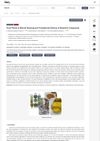
This review highlights the potential of plant-derived natural compounds as biocompatible and biodegradable materials in dermal and transdermal delivery systems, emphasizing their unexplored benefits and detailing recent advances in isolation techniques and drug delivery technologies.
18 citations
,
December 2005 in “Journal of Medicinal Chemistry” In this study, novel substituted benzoyl benzoic acids and phenylacetic acids were potent and selective inhibitors of human steroid 5alpha-reductase type 2, with one compound showing promising bioavailability in rats for potential clinical evaluation.
9 citations
,
August 2023 in “Molecules” This study found that the peptides RMYYY and VMYMI displayed stronger binding energy and more frequent interactions with HPGDS compared to the native inhibitor, suggesting potential as future therapeutic drugs.
 September 2023 in “Pharmaceuticals”
 This study found that nanoparticles containing minoxidil and betamethasone improved drug delivery to hair follicles, with lipidic nanoparticles significantly enhancing minoxidil and betamethasone penetration compared to control, making them a promising option for alopecia areata treatment with reduced side effects.
 March 2025 in “International Journal For Multidisciplinary Research”
 This article reviews innovative methodologies in drug discovery using computational QSAR studies and layered double hydroxides for alpha-reductase inhibitors, but reports no new experimental results.
3 citations
,
August 2010 in “Letters in Drug Design & Discovery”  June 2026 in “Mendeley Data”
 This source presents the Drug Database for Hair Loss Disorders, offering comprehensive details about pharmacological agents for treating hair loss conditions, including information on chemical properties, efficacy, and safety, aimed at supporting research and drug development.
 June 2026 in “Mendeley Data”
 This study introduced the Drug Database for Hair Loss Disorders, which provides comprehensive details on pharmacological agents used to treat hair loss conditions, aiding research and development efforts in drug companies through accessible chemical properties, mechanisms, and efficacy data.
![Benzo[c]quinolizin-3-ones Theoretical Investigation: SAR Analysis and Application to Untested Compounds](/images/assets/6712367a-949f-47c7-a756-2bfe6316fc69/small/15331.jpg) 6 citations
,
August 2004 in “Journal of Chemical Information and Computer Sciences”
6 citations
,
August 2004 in “Journal of Chemical Information and Computer Sciences” This study found that certain molecular quantum descriptors can be directly correlated with the biological activity of benzo[c]quinolizin-3-ones, potentially aiding in the identification and design of active compounds.
January 2009 in “The Chinese Journal of Modern Applied Pharmacy” This study concluded that QSPR models effectively predict drug skin penetration, with the Potts-Guy model showing the highest predictive accuracy for the drugs tested.
 December 2022 in “Research Square (Research Square)”
 In this study, the researchers developed a quantum algorithm, QuantAnts machines, which identified complexes of CD9, CD34, and CD74 as potential targets for certain cancers involving the RAS pathway.