 1 citations
,
October 2013 in “Expert Review of Dermatology”
1 citations
,
October 2013 in “Expert Review of Dermatology” This paper reviews the differential diagnoses and diagnostic tests to distinguish alopecia areata from other types of hair loss, without providing new clinical findings.
August 2022 in “Journal of Pakistan Association of Dermatologists” This case report describes a 7-year-old female from the Middle East with monilethrix, highlighting the disease's rarity in this population, characterized by brittle, sparse hair and keratosis pilaris.
30 citations
,
December 1996 in “Journal of Investigative Dermatology”  May 2025 in “Pediatric Dermatology”
 This systematic review identified topical and oral minoxidil as the most effective treatments for monilethrix, but noted the varying efficacy of oral retinoids and other treatments.
2 citations
,
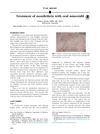
May 1979 in “PubMed” This report describes four cases of monilethrix in children and concludes that periodic inhibition of keratin synthesis, not a metabolic defect, may explain the hair abnormality.
 37 citations
,
May 2016 in “JAAD case reports”
37 citations
,
May 2016 in “JAAD case reports” This abstract describes monilethrix, an autosomal dominant genodermatosis with symptoms like hair fragility and keratosis pilaris, and does not report new experimental results.
6 citations
,
March 2017 in “Journal of the European Academy of Dermatology and Venereology” This article reviews genetic mutations linked to monilethrix, a hereditary hair disorder, and reports no new clinical findings on the condition's variability in symptoms and severity.
4 citations
,
May 2020 in “The journal of pediatrics/The Journal of pediatrics” This case report details the diagnosis of monilethrix in a 4-year-old boy, characterized by brittle hair and specific dermoscopic findings, and highlights the condition's hereditary nature and management through avoiding mechanical hair damage.
34 citations
,
December 1984 in “Journal of Cutaneous Pathology” This study observed that the thinning and structural abnormalities in monilethrix-affected hair occur at the internodes due to possible periodic dysfunction of the hair matrix, particularly in the cortex.
1 citations
,
January 2017 in “International Journal of Trichology” This case report describes a 6-year-old girl diagnosed with monilethrix, experiencing hair fragility and loss after a fever, and showing improvement in hair density following treatment, despite persistent symptoms.
4 citations
,
January 2013 in “International Journal of Trichology” Monilethrix has no effective treatment, but avoiding hair trauma helps manage it.
1 citations
,
January 2018 in “Jornal Brasileiro de Patologia e Medicina Laboratorial” This case report describes a 10-year-old girl with monilethrix, detailing hereditary autosomal dominant traits and distinctive nodular hair shaft abnormalities observed in her family through clinical examination and microscopic analysis.
26 citations
,
May 1991 in “Clinical and experimental dermatology” In this study, oral etretinate resulted in increased hair length and loss of beading in a childhood monilethrix case, while the scalp's keratosis pilaris persisted.
13 citations
,
July 2004 in “Pediatric dermatology” This case study describes a 9-year-old boy with monilethrix and associated abnormalities, suggesting a new, severe autosomal recessive variant termed "monilethrix syndrome.
6 citations
,
January 2011 in “European Journal of Dermatology” This article discusses monilethrix, a rare human hair dysplasia caused by mutations in hair keratins, but reports no new clinical findings.
September 2017 in “PubMed” In this case report, a Danish family with monilethrix showed varying symptoms, diagnosed via dermatoscopy, microscopy, and gene sequencing. The study highlights that while no cure exists, oral minoxidil shows promise in a single case, and reducing hair trauma remains key for management.
9 citations
,
February 2024 in “mBio” This study found that biliverdin beta and delta, metabolites of heme, play a critical role in Pseudomonas aeruginosa iron acquisition and cooperative behaviors, which are crucial for the bacterium's long-term infection in cystic fibrosis patients, suggesting potential targets for new therapies.
4 citations
,
November 1999 in “PubMed” This article presents five family cases of monilethrix and reports that neither vitamins nor desquamative ointments are effective treatments, although symptoms may spontaneously regress over time.
 1 citations
,
July 2018 in “CMAJ. Canadian Medical Association journal”
1 citations
,
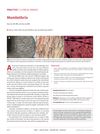
July 2018 in “CMAJ. Canadian Medical Association journal” This case report describes a three-year-old girl with a two-year history of hair loss who was previously treated with selenium sulfide shampoo, with no family history of alopecia.
21 citations
,
January 2010 in “International journal of trichology” This report on two Indian male siblings with monilethrix highlights trichoscopy's role in diagnosing this condition, which can be complicated by early-onset androgenetic alopecia.
June 2021 in “International Journal of Biosciences (IJB)” This study reports that both aqueous and methanolic extracts of Tridax procumbens flowers demonstrated antibacterial activity against selected bacteria, indicating potential as antibacterial agents.
6 citations
,
January 2008 in “Indian Journal of Dermatology” This case report describes a rare autosomal dominant hair shaft disorder, monilethrix, observed in three consecutive generations of a family, with gradual improvement noted with age.
April 2024 in “Anais Brasileiros de Dermatologia” January 2015 in “Nasza Dermatologia Online” This case report describes an eight-year-old Kashmiri boy diagnosed with monilethrix, a rare genetic hair disorder, characterized by a beaded appearance and fragility of the hair shaft.
11 citations
,
December 2015 in “Indian journal of dermatology, venereology, and leprology” Dermoscopy quickly and accurately diagnosed a rare hair disorder in a 12-year-old girl.
18 citations
,
January 2015 in “Experimental Dermatology” This study reports new monilethrix cases in Venezuela, the Netherlands, Belgium, and France, expanding the known mutational spectrum of the disorder with novel mutations in KRT81, KRT83, and KRT86 genes.
35 citations
,
May 2006 in “Journal of Investigative Dermatology” Monilethrix involves multiple genes affecting hair structure, including DSG4 mutations.
This report describes a 7-year-old girl with monilethrix who showed significant improvement while on acitretin treatment, but symptoms returned after stopping the medication.
43 citations
,
April 1996 in “Journal of Investigative Dermatology” 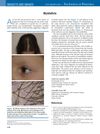 6 citations
,
August 2012 in “The Journal of Pediatrics”
6 citations
,
August 2012 in “The Journal of Pediatrics” This case report describes a 12-year-old girl diagnosed with monilethrix, characterized by fragile, beaded hair shafts, with no effective treatment currently available.