Discreet Monilethrix: De Novo Mutation in Polish Families
January 2017
in “
International Journal of Trichology
”
Studysummary This case report describes a 6-year-old girl diagnosed with monilethrix, experiencing hair fragility and loss after a fever, and showing improvement in hair density following treatment, despite persistent symptoms.
Our plain-language summary. Not medical advice or a treatment recommendation. Consult a qualified healthcare professional before changing treatment. Full disclaimer
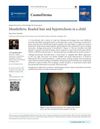
The document described a case of a 6-year-old Polish girl with monilethrix, a rare hair disorder characterized by fragile, beaded hair, which was observed after a fever. The condition was identified as a de novo mutation, as her family showed no signs of the disorder. The girl's symptoms included hair thinning, breakage, and keratosis pilaris on the arms. Diagnostic tools such as trichoscopy and microscopy confirmed the presence of monilethrix, showing characteristic hair shaft abnormalities. Despite treatment with a pharmacological mix, the symptoms persisted, although there was some improvement in hair density. The study highlighted the genetic basis of monilethrix, often linked to mutations in keratin genes, and emphasized the importance of trichoscopy in diagnosing cases with limited hair follicle involvement.