 19 citations
,
May 2016 in “Clinical, cosmetic and investigational dermatology”
19 citations
,
May 2016 in “Clinical, cosmetic and investigational dermatology” In this study, applying FGF-2-containing dalteparin/protamine nanoparticles to the scalp was associated with a significant increase in hair diameter over six months among participants with thin hair.
 15 citations
,
January 2014 in “BioMed Research International”
15 citations
,
January 2014 in “BioMed Research International” This review discusses the concept of drug repositioning and highlights fragmin and protamine as emerging biomaterials for tissue engineering and regenerative medicine, but it reports no new clinical results.
 53 citations
,
October 2012 in “The FASEB Journal”
53 citations
,
October 2012 in “The FASEB Journal” This study found that bimatoprost stimulated hair growth in both human scalp follicle cultures and mouse pelage in vivo, suggesting it might offer a promising treatment for scalp alopecias.
 43 citations
,
July 2013 in “Pharmacological reviews”
43 citations
,
July 2013 in “Pharmacological reviews” This article reviews the pharmacology of bimatoprost and prostamide F2α, highlighting bimatoprost's therapeutic applications in glaucoma, hair growth, and potential fat reduction, without reporting new experimental results.
 3 citations
,
July 2013 in “Journal of Cutaneous Pathology”
3 citations
,
July 2013 in “Journal of Cutaneous Pathology” This case report describes a 56-year-old woman whose nonscarring alopecia, consistent with alopecia areata with follicular mucinosis, resolved completely after treatment with oral prednisone.
 1 citations
,
October 2023 in “European journal of histochemistry”
1 citations
,
October 2023 in “European journal of histochemistry” This study demonstrated that treating platelet-rich plasma with ozone or procaine in vitro led to distinct changes in platelet activity, significantly enhancing the release of platelet-derived factors without damaging the platelets, indicating potential for improved regenerative therapies.
1 citations
,
January 2013 This review explores the therapeutic applications of bimatoprost, including its role in glaucoma treatment, hair growth stimulation, and potential effects on fat deposition, but reports no new experimental findings.
 April 2021 in “European medical journal”
 In this case report, the authors describe a patient with coronavirus disease where visible skin manifestations were the most prominent symptom.
December 2024 in “Biochemical and Biophysical Research Communications” LMWP-PDGFA shows promise for improving hair health and treating hair loss with fewer side effects.
21 citations
,
November 2023 in “International Journal of Molecular Sciences” This ex vivo study reported that melatonin significantly improved certain aging biomarkers in aged human skin, including reduced mTORC1 activity, increased fibrillin-1, and enhanced collagen and elastic fiber organization, though other key biomarkers remained unchanged.
2 citations
,
May 2020 in “The journal of investigative dermatology/Journal of investigative dermatology” This study describes a family where a TP63 mutation was linked with prominent alopecia and mild ectodermal dysplasia features.
 January 2014 in “Journal of Pigmentary Disorders”
 This review discusses age-related and environmental factors affecting scalp hair changes in women, highlighting diagnostic complexities and ongoing research into targeted treatments, without reporting new clinical results.
 January 2026 in “Acta Dermatovenerologica Alpina Pannonica et Adriatica”
 In this case report, a 62-year-old woman with suspected discoid lupus erythematosus experienced worsening skin and hair symptoms despite treatment with topical corticosteroids, immunomodulatory therapy, and hydroxychloroquine, leading to her referral to a tertiary dermatology center.
18 citations
,
January 2023 in “Nano Research” This study found that red OLED irradiation can significantly promote hair regrowth in mice, increasing hair length by 1.5 times and hair regrowth area by over 3 times after 20 days of treatment.
 10 citations
,
April 2013 in “Veterinary dermatology”
10 citations
,
April 2013 in “Veterinary dermatology” In this study, four dogs with a novel skin disease showed clinical lesions involving verrucous, crusted papules and plaques, and responded variably to immunosuppressive therapy, suggesting an immune-mediated cause.
3 citations
,
September 2017 in “Archives of dermatological research” Early diagnosis and tailored treatments are crucial for managing ichthyosis syndromes with hair abnormalities.
January 2024 in “Veterinary Dermatology” In this case report, proliferative, lymphocytic, infundibular mural folliculitis and dermatitis have been documented in a female Labrador retriever in a location outside North America for the first time, detailing the dog's clinical symptoms, histopathological findings, and treatment.
 166 citations
,
August 2011 in “Dermatologic Surgery”
166 citations
,
August 2011 in “Dermatologic Surgery” This study found that PRP combined with dalteparin and protamine microparticles may enhance hair growth by increasing hair thickness compared to PRP alone.
August 2016 in “Anaplastology” This study reports that controlled release PRP therapy using dalteparin and protamine micro-particles may be effective for hair growth and skin rejuvenation in women.
 October 2014 in “Faculty Opinions – Post-Publication Peer Review of the Biomedical Literature”
 Adding dalteparin and protamine microparticles to platelet-rich plasma can boost hair growth more than using platelet-rich plasma alone.
 69 citations
,
April 2010 in “Dermatologic Surgery”
69 citations
,
April 2010 in “Dermatologic Surgery” This review discusses the safety and efficacy of bimatoprost ophthalmic solution 0.03% for enhancing eyelash growth by influencing the eyelash hair cycle and follicles, and it reports no new results.
 38 citations
,
March 2017 in “Expert Opinion on Investigational Drugs”
38 citations
,
March 2017 in “Expert Opinion on Investigational Drugs” This review examines the potential of bimatoprost for treating various types of eyelash and eyebrow hypotrichosis, discussing its pharmacological properties but providing no new clinical results.
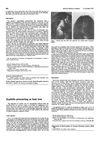 12 citations
,
October 1976 in “The BMJ”
12 citations
,
October 1976 in “The BMJ” This abstract reports an influenzalike illness with varying antibody titers observed in a woman and her husband, but it does not provide broader clinical findings.
 7 citations
,
May 2018 in “Curēus”
7 citations
,
May 2018 in “Curēus” In this case report, a 60-year-old woman with eyebrow hypotrichosis experienced significant and lasting eyebrow growth after daily use of bimatoprost 0.03% solution, highlighting its potential as an effective treatment for eyebrow hair restoration.
1 citations
,
January 2017 The document outlines criteria to identify and differentiate neoplasms based on follicular characteristics.
 53 citations
,
February 2020 in “Expert Opinion on Pharmacotherapy”
53 citations
,
February 2020 in “Expert Opinion on Pharmacotherapy” This review discusses pharmacologic and non-pharmacologic treatments for androgenetic alopecia, noting that current medications like finasteride and minoxidil can slow hair loss but only partially restore hair growth, with early treatment offering better outcomes.
November 2024 in “Dermatology and Therapy” In this review, cosmetic practices such as non-ablative lasers, autologous fat injections, and oral isotretinoin may help alleviate certain symptoms of frontal fibrosing alopecia, while treatments like deep chemical peels and ablative laser therapies are contraindicated due to potential scarring risks.
21 citations
,
September 2011 in “PubMed” This article reviews prominent variants of scalp hair folliculitis and their differential diagnosis, but reports no new clinical findings.
 June 2024 in “World Journal of Management Science”
 This abstract describes Upubscience Publisher as a prominent publisher of over 40 open access, peer-reviewed journals across numerous academic fields, supported by an editorial team of leading researchers. Results are not reported in this description.
 197 citations
,
June 2009 in “American journal of human genetics”
197 citations
,
June 2009 in “American journal of human genetics” This study found that previously undescribed WNT10A mutations are a prominent cause of various forms of ectodermal dysplasia, including OODD and Schöpf-Schulz-Passarge syndrome, with gender-specific phenotypic effects noted.