 January 2022 in “Dermatology Review”
 This study found that patients with chronic kidney disease-associated pruritus had elevated serum levels of interleukin 31, suggesting a possible role of this cytokine in the condition.
17 citations
,
September 2022 in “Biomaterials Research” This study found that the film-trigger applicator system enhanced drug delivery efficiency and skin penetration of dissolving microneedles compared to traditional patch systems in both lab and animal models.
 16 citations
,
December 2016 in “Skin appendage disorders”
16 citations
,
December 2016 in “Skin appendage disorders” This study analyzed patch test results to identify allergens causing scalp contact dermatitis, finding nickel, cobalt, and balsam of Peru among the most common in the patient population.
April 2005 in “Journal of Investigative Dermatology” This compilation reviews multiple dermatologic studies, reporting findings such as the lack of a psoriasis-susceptibility allele in cluster 17, and highlighting a mouse model for studying hair follicle formation, among others.
 17 citations
,
February 2015 in “Cell Death and Disease”
17 citations
,
February 2015 in “Cell Death and Disease” This study found that inhibiting AP1 transcription factor activity in the suprabasal epidermis of mice alters keratinocyte gene expression, reducing barrier integrity and mimicking human keratoderma.
 January 2026 in “Frontiers in Medicine”
 In this study, PP-PTKL exhibited antioxidant, anti-inflammatory, and pro-melanogenic effects in laboratory settings, suggesting its potential role in preventing or treating hair greying. Further animal and human studies are needed to verify these findings.
 15 citations
,
May 2003 in “The Laryngoscope”
15 citations
,
May 2003 in “The Laryngoscope” In this study, researchers observed that spiral ganglion neurites created more branched networks near FGF-1-coupled beads compared to control beads, highlighting FGF-1's role in hair cell innervation development.
 June 2023 in “British Journal of Dermatology”
 In this case report, researchers described a female child with total alopecia due to a mutation in the SNRPE gene, emphasizing the need for updated genetic testing as knowledge advances to avoid diagnostic delays in hereditary nonsyndromic hypotrichosis.
32 citations
,
July 2003 in “Histochemistry and Cell Biology” 1 citations
,
January 2001 in “PubMed” This study proposes that the terminal tuft structure in sensory nerve endings, involving Schwann cell processes and axon fingers, potentially plays a role in mechano-electric transduction in rats.
 5 citations
,
July 2022 in “Orphanet journal of rare diseases”
5 citations
,
July 2022 in “Orphanet journal of rare diseases” This study found that RSPO1 mutations in patients with a 46XX disorder of sexual development contribute to impaired skin integrity and increased risk of squamous cell carcinoma in areas subject to friction.
August 2021 in “The Journal of Physiology” This study found that GABA can depolarize murine sensory nerve axons via GABAA receptor activation, with the ß3 subunit being crucial to excitability, and that NKCC1 plays a vital role in mediating this effect.
90 citations
,
August 2006 in “British Journal of Dermatology” This paper describes the PRIDE syndrome associated with epidermal growth factor receptor inhibitors but reports no new clinical results.
207 citations
,
September 1973 in “Entomologia Experimentalis et Applicata” In this study, the researchers found that female Pieris brassicae butterflies have more "B-type" chemoreceptory hairs on their forelegs, which may be involved in selecting oviposition sites through detecting mustard oil glucosides.
 July 2024 in “Research Square (Research Square)”
 In this study, ATP-sensitive potassium channel openers, diazoxide and minoxidil, reduced scratching in cholestatic mice, suggesting these channels may play a role in cholestatic itch, while the channel blocker glibenclamide increased scratching behavior.
 17 citations
,
September 2014 in “PLoS ONE”
17 citations
,
September 2014 in “PLoS ONE” This study found that SK2 channels in sensory terminals of rat muscle spindles and hair follicles may play a crucial role in modulating mechanosensory transduction by influencing receptor potentials through Ca2+-activated K+ currents.

This review supports iron deficiency anemia as a valid cause of chronic generalized pruritus and suggests potential mechanisms by which iron deficiency may lead to pruritus, but reports no new clinical results.
29 citations
,
March 2012 in “Journal of Experimental Biology” This study found that ribbed hairs on tarantulas closely resemble chemoreceptors rather than silk-producing spigots, with no silk observed emitting from them under microscopy.
 November 2022 in “The journal of investigative dermatology/Journal of investigative dermatology”
 This study suggests that allergens like linalool found in personal care products may contribute to the pathobiology of frontal fibrosing alopecia by affecting immune responses and stem cell function in hair follicles.
26 citations
,
April 2024 in “Particle and Fibre Toxicology” In this study, researchers investigated the penetration and cellular responses to nanoplastics in human skin models with compromised barriers, finding that nanoplastics can penetrate the skin, accumulate in cells, and trigger inflammatory responses through specific signaling pathways.
 April 2023 in “Journal of Investigative Dermatology”
 In this study, the KPAI and KP-IGA scoring systems for assessing keratosis pilaris showed excellent interrater and intrarater reliability, offering standardized measures for clinical and research use.
 9 citations
,
August 2020 in “Journal of The American Academy of Dermatology”
9 citations
,
August 2020 in “Journal of The American Academy of Dermatology” This article discusses the therapeutic use of platelet-rich plasma (PRP) in dermatology, specifically its challenges and potential in treating conditions like lichen planopilaris, but reports no new findings.
1 citations
,
April 2015 in “Neurology” This study found that hyperpigmented skin changes resembling Schamberg’s purpura occur in areas affected by CRPS and can also appear on mirror-image locations of unaffected limbs, potentially improving with the condition's treatment.
211 citations
,
February 1994 in “Proceedings of the National Academy of Sciences” This study found that overexpression of parathyroid hormone-related peptide in transgenic mice skin disrupted normal hair follicle development, suggesting a role for the peptide in the early stages of follicle formation.
 9 citations
,
July 2002 in “Journal of the European Academy of Dermatology and Venereology”
9 citations
,
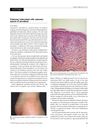
July 2002 in “Journal of the European Academy of Dermatology and Venereology” This article discusses multiple minute digitate hyperkeratosis in a dermatological context and reports no new clinical findings; the authors focus on a descriptive review.

In this study, upper-bulge epidermal stem cells in mouse hair follicles were shown to play a role in forming tactile sensory units by creating an extracellular matrix that supports nerve interactions.
70 citations
,
February 2016 in “EMBO reports” This study identified a subtype of itch-sensing neurons in mice, which express Ret and somatostatin, and found that their ablation reduces scratching induced by certain pruritogens.
1 citations
,
January 2020 in “Gastronomica The Journal of Food and Culture” This article reviews the cultural history and changing scientific perceptions of peppercorn as a "numbing spice," focusing on its historical, medical, and literary significance, but provides no new research findings.
19 citations
,
April 2020 in “Oxidative Medicine and Cellular Longevity” This study provides evidence that Fernblock® upregulates antioxidant pathways in cultured keratinocytes, potentially protecting against damage from fine pollutant particles.
 5 citations
,
January 2018
5 citations
,
January 2018 This study optimized a screening assay to identify molecules that inhibit or enhance TRPM5 ion channel activity, which may have implications for treating dysfunctions linked to cardiac arrhythmias and diabetes.