24 citations
,
July 2014 in “Journal of Investigative Dermatology” This study reports that a widespread founder SERPINB7 mutation underlies Nagashima-type palmoplantar keratosis, which is a common form of palmoplantar keratosis in Asian populations.
48 citations
,
January 2002 in “Journal of Structural Biology” This study reports that trichocyte intermediate filaments from rat vibrissae and human hair follicles may contain a hollow region at their core, suggesting unique structural properties.
80 citations
,
June 2002 in “Molecular Biology of the Cell” This study found that type II keratins in proliferating epithelial tissues are phosphorylated at a conserved motif during mitosis and stress, impacting keratin solubilization and reorganization.
 9 citations
,
January 2013 in “Acta dermato-venereologica”
9 citations
,
January 2013 in “Acta dermato-venereologica” The conclusion is that "trichoknesis" should be recognized as a separate condition from trichodynia, characterized by itching instead of pain.
12 citations
,
June 2020 in “Sultan Qaboos University medical journal” This review discusses the role of the TRPV4 channel in skin physiology and pathology, highlighting its potential as a therapeutic target for skin disorders, but reports no new clinical results.
 January 2025 in “Repository of the Academy's Library (Library of the Hungarian Academy of Sciences)”
 This study found that cytoplasmic nucleic acids significantly increase the expression of certain chemokines in human keratinocytes through NF-κB activation, though the specific receptors involved remain unidentified.
 8 citations
,
August 2015 in “Journal of dermatological science”
8 citations
,
August 2015 in “Journal of dermatological science” This study observed that the topical skin-whitening agent rhododendrol induced skin depigmentation in approximately 16,000 consumers, linked to melanocyte cytotoxicity and immune reactions.
3 citations
,
August 2017 in “Clinical case reports” A rare skin condition causes red and dark patches on the face and limbs.
 23 citations
,
March 2010 in “Medical hypotheses”
23 citations
,
March 2010 in “Medical hypotheses” This review explores potential new roles for Merkel cells, including involvement in magnetoreception, fingerprint formation, and transmitting environmental information, but reports no experimental results.
 94 citations
,
January 2016 in “Journal of the European Academy of Dermatology and Venereology”
94 citations
,
January 2016 in “Journal of the European Academy of Dermatology and Venereology” Sensitive skin is often caused by nerve fibers and environmental factors, and can be managed with mild skincare and professional advice.
 April 2018 in “Journal of Investigative Dermatology”
 This paper presents a new methodology combining magnetic tweezers and traction force microscopy to study keratinocyte mechanobiology, but reports no experimental results yet.
 5 citations
,
March 2023 in “bioRxiv (Cold Spring Harbor Laboratory)”
5 citations
,
March 2023 in “bioRxiv (Cold Spring Harbor Laboratory)” This study found that Piezo2 channels are primarily located on sensory axon membranes in mechanosensory end organs, supporting a model where mechanical stimuli activate Aβ RA-LTMR neurons via axon protrusions.
 28 citations
,
April 1996 in “Cell biology international”
28 citations
,
April 1996 in “Cell biology international” This review discusses changes in keratin structure or gene expression that result in various skin disorders and reports no new clinical findings.
 4 citations
,
January 2017 in “Annals of Dermatology”
4 citations
,
January 2017 in “Annals of Dermatology” Frequent hairdryer use may worsen hair fragility in people with Pili Annulati.
11 citations
,
November 1991 in “Journal of Neuropathology & Experimental Neurology” This study found that brindled mottled mice, a model of Kinky hair syndrome, exhibited abnormal development of catecholamine neurons, with increased TH-immunoreactive neurons and altered neurochemical profiles compared to controls.
7 citations
,
September 2003 in “Journal of Investigative Dermatology” In this study, researchers found that thrombin may influence cyclic hair growth through its receptor PAR-1, although it does not seem to stimulate dermal papilla cell proliferation physiologically.
 10 citations
,
November 2015 in “Plant Foods for Human Nutrition”
10 citations
,
November 2015 in “Plant Foods for Human Nutrition” This study found that the ethyl acetate fraction of Hibiscus rosa sinensis petals significantly reduced serum glucose and glycated hemoglobin levels in diabetic rats, showing effects comparable to the standard drug metformin.
 2 citations
,
September 2023 in “Frontiers in sustainable food systems”
2 citations
,
September 2023 in “Frontiers in sustainable food systems” This study found that Sinja Valley residents possess traditional knowledge of 13 edible oil-producing plant species, yet this knowledge is at risk due to sociocultural changes. Despite its benefits, including treating disorders like gastritis, use of indigenous oils is declining as commercial products become prevalent.
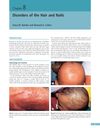 1 citations
,
January 2013 in “Elsevier eBooks”
1 citations
,
January 2013 in “Elsevier eBooks” The document reviews various hair and nail disorders, their causes, and treatments, emphasizing the need for proper diagnosis and the link between nail changes and systemic diseases.
 January 2025 in “International journal of Indian medicine”
 This review discusses nine Ayurvedic medicinal herbs listed in the Dhanvantari Nighantu as beneficial for hair, detailing their properties like promoting hair growth, enhancing hair thickness, and maintaining dark hair color, alongside supporting research on these effects.
 January 2024 in “Open access journal of pharmaceutical research”
 This study aimed to develop a herbal hair oil formulation using ingredients like hibiscus, amla, and coconut oil to address hair loss and related issues without causing the adverse effects associated with synthetic medications.
 May 2023 in “Jurnal farmasi sains dan praktis”
 In this research on cinnamon and virgin coconut oil hair tonics, F2 and F3 demonstrated stable physical properties and mild irritation potential, while formula 1 remained non-irritating but less stable regarding pH and viscosity.
 March 2022 in “Journal of Survey in Fisheries Sciences”
 This review discusses the diverse phytochemical constituents and medicinal applications of Asteraceae family plants, noting their significance in traditional and modern medicine, but provides no new clinical results.
 December 2021 in “International journal of minor fruits, medicinal and aromatic plants”
 This review identifies common medicinal plant species in Sri Lankan home gardens and discusses their traditional Ayurvedic uses, but it reports no new clinical results.
 October 1890 in “Science”
 Pilocarpin can cause hair regrowth and color change in some cases but not in others, and it may have side effects in animals.
October 2014 in “Archivio Istituzionale della Ricerca (Universita Degli Studi Di Milano)” This study identified a new subset of Ret-positive sensory neurons involved in itch perception, characterized by their unique expression profile and response to specific itch-inducing molecules.
24 citations
,
July 2018 in “British Journal of Dermatology” Contact allergies might contribute to frontal fibrosing alopecia.
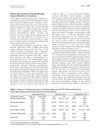 46 citations
,
January 2015 in “Journal of The American Academy of Dermatology”
46 citations
,
January 2015 in “Journal of The American Academy of Dermatology” This study suggests that trichoscopic features, such as perifollicular erythema and cicatricial white patches, are independently associated with pruritus and the severity of frontal fibrosing alopecia.
1 citations
,
December 2014 in “Journal of the Society of Cosmetic Scientists of Korea” This study found that corticotropin-releasing factor influences cytokine expression related to hair growth in human dermal papilla cells and suggests CRF receptor antagonists could be potential treatments for stress-induced hair loss.
5 citations
,
January 2009 in “International Journal of Trichology” This case report documents a rare association between atopic eczema and pili annulati in two siblings from north India, an unusual finding not previously reported in the literature.