1 citations
,
November 2024 in “Revista Foco” This review suggests that PRP is an effective and safe technique for skin rejuvenation in aesthetic procedures, based on existing literature.
15 citations
,
March 2021 in “EMBO Reports” PRSS35 enzyme may help start skin tumors and could be a target for cancer treatment.
 2 citations
,
March 2016 in “The Journal of Dermatology”
2 citations
,
March 2016 in “The Journal of Dermatology” The researchers reported that the facial Psoriasis Log-based Area and Severity Index (fPLASI) more reliably and sensitively captured clinical improvement in facial psoriasis than the existing facial Psoriasis Area and Severity Index (fPASI).
 August 2024 in “UPI Journal of Pharmaceutical Medical and Health Sciences”
 This review article discusses the current applications and research findings of platelet-rich plasma in musculoskeletal rehabilitation, highlighting its potential clinical utility but reporting no new clinical results.
 February 2025 in “Intisari Sains Medis”
 This article explores the potential mechanisms by which polydeoxyribonucleotide (PDRN) could improve skin quality, slow aging, and enhance skin regeneration, but reports no new clinical findings.
September 2020 in “Revista Digital de Postgrado” This review discusses the characteristics and dermatological applications of platelet-rich plasma and fibrin meshes and reports no new clinical results.
 1 citations
,
August 2023 in “Journal of Dentomaxillofacial Science”
1 citations
,
August 2023 in “Journal of Dentomaxillofacial Science” This study found that freeze-dried homologous platelet-rich plasma (FD HPRP) increased osteocalcin levels in cultured osteoblasts, suggesting its potential to support bone regeneration in periodontal treatment.
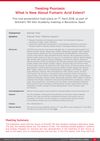 July 2018 in “European Medical Journal”
 This meeting review discusses recent advances in systemic psoriasis treatments, emphasizing the impact of dimethylfumarate monotherapy on understanding psoriasis and treatment strategies; it reports no new clinical results.
July 2025 in “Dermatologic Surgery” This article corrects a duplication error in a previous publication and reports no new research findings.
49 citations
,
January 2010 in “Plant and Cell Physiology” This study found that a phosphorus starvation-insensitive mutant of Arabidopsis thaliana shows altered root growth and auxin responses under low phosphate conditions compared to wild-type plants, suggesting a role for LPR1 in regulating these traits.
 September 2021 in “VNU Journal of Science: Medical and Pharmaceutical Sciences”
 This review discusses the diverse applications of platelet-rich plasma (PRP) across various medical fields and reports no new clinical results, advocating PRP as a promising therapy for future use.
 24 citations
,
July 1994 in “Molecular Endocrinology”
24 citations
,
July 1994 in “Molecular Endocrinology” Researchers found an RNA transcript that might help control a growth factor linked to tumor development.
 June 2020 in “Journal of Investigative Dermatology”
 This study found that FDA-cleared devices for preparing platelet-rich plasma showed inconsistent product quality, with variable platelet counts and inadequate quality control performance, suggesting clinical improvement may not rely on platelet concentration.
 May 2023 in “Elsevier eBooks”
 This study found that platelet-rich plasma may be an effective adjuvant treatment for androgenetic alopecia, especially when combined with antiandrogenetic medications and topical minoxidil, though factors like patient age and family history could influence outcomes.
April 2025 in “Dermatologic Surgery” This article reports no new research findings and corrects the affiliation for Dr. Shao-Wen Li in a previous publication.
January 2013 in “edoc (University of Basel)” This study found that TRF1 plays a crucial role in maintaining pluripotency and stem cell compartments, but it is not a suitable in vivo telomere length marker.
22 citations
,
March 2003 in “Steroids” This study found that both finasteride and a new steroidal compound, PM-9, competitively inhibit the 5α-reductase enzyme in Penicillium crustosum broth.
13 citations
,
July 2016 in “Indian Journal of Dermatology” This report describes two Saudi brothers with dermatopathia pigmentosa reticularis who exhibited normal hair shafts despite their condition.
August 2024 in “Journal of Clinical Medicine” This review examines quality control in preparing platelet-rich plasma, highlighting knowledge gaps in its clinical efficacy and safety, but reports no new clinical results.
 February 2025 in “Archives of Dermatological Research”
 In this study, researchers administered injectable platelet-rich fibrin (i-PRF) to 30 patients with androgenetic alopecia, finding an 80% response rate after 6 months, with improved hair density and reduced scalp symptoms, while reporting minimal adverse reactions.
 14 citations
,
April 2020 in “Journal of Cosmetic Dermatology”
14 citations
,
April 2020 in “Journal of Cosmetic Dermatology” In this study, intradermal injections of QR678 were found to significantly reduce hair fall in men with androgenetic alopecia over 6 months, with superior improvements in hair density and thickness compared to PRP.
39 citations
,
January 2006 in “Journal of Cosmetic and Laser Therapy” This study found that pneumatic skin flattening (PSF) significantly reduces pain and post-treatment erythema during high-energy IPL and laser hair removal while enhancing treatment efficacy.
7 citations
,
September 2024 in “PLANT PHYSIOLOGY” This study in Arabidopsis thaliana found that exposure to volatile compounds from Penicillium aurantiogriseum promotes root hair growth through signaling involving RALF22, ethylene, auxin, and photosynthesis, and that RALF22 plays a crucial role in the plants' response to these compounds.
9 citations
,
September 2024 in “Frontiers in Endocrinology” This study found that intrauterine PRP infusion is a safe and effective treatment for patients with refractory thin endometrium and implantation failures, with the improvement primarily driven by the angiogenic cytokines in PRP.
 January 2025 in “Bioengineering”
 This study evaluated the long-term effects of combining autologous platelet-rich stroma injection with transanal advancement flap repair for cryptoglandular transsphincteric fistulas and found that it resulted in primary clinical closure and radiological healing in a high percentage of patients, with low recurrence rates.
 December 2025 in “Lviv clinical bulletin”
 This review found that platelet-rich plasma therapy may enhance ovarian repair and fertility outcomes in ovarian insufficiency, but notes that optimal usage and long-term effects require further investigation.
 April 2024 in “Journal of cosmetic dermatology”
 This article discusses the development of liquid platelet-rich fibrin as a potential improvement over platelet-rich plasma for treating androgenetic alopecia and reports no new clinical results.
September 2025 in “Development” In this study, deleting the transcriptional pause factor Nelfb in mouse preadipocyte lineages led to defective dermal fat formation and lethal outcomes, while interventions targeting Pparg could rescue adipocyte differentiation and promote dermal white adipose tissue formation, underscoring Nelfb's critical role in adipogenesis.
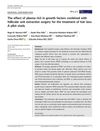 12 citations
,
October 2017 in “Journal of Cosmetic Dermatology”
12 citations
,
October 2017 in “Journal of Cosmetic Dermatology” This study found that plasma rich in growth factors (PRGF) as an adjuvant to follicular unit extraction (FUE) surgery may enhance hair graft performance and reduce post-surgical inflammation and pain in hair loss patients.
3 citations
,
February 2018 in “Experimental and Molecular Medicine/Experimental and molecular medicine” This study suggests that hair loss disorders like Marie Unna hereditary hypotrichosis may result from mutations that disrupt post-transcriptional regulation of HR protein expression by PCPB2 interacting with Hr mRNA.