69 citations
,
December 2015 in “BMC plant biology” This study provides evidence that five Hyp-O-GALT genes are crucial for AGP galactosylation and that AGP glycans are vital for various aspects of plant growth and development.
October 2013 in “한국생물공학회 학술대회” Poly-γ-glutamic acid may help reduce hair loss.
63 citations
,
May 2015 in “PloS one” This study found that GALT5 and GALT2 are redundant enzymes essential for O-glycosylation of AGPs, with mutations leading to significant growth and development defects in plants.
22 citations
,
August 2020 in “Cells” This review discusses the role of TGM3 in skin and hair follicle biology, human tumor pathology, and genetic abnormalities, and reports no novel results; the authors highlight its potential as a cancer diagnostic biomarker.
35 citations
,
July 2010 in “The FEBS journal” In this study, researchers identified a highly reactive, isozyme-specific sequence for TGase 3, contributing to understanding its distinct functional role and activity distribution in the mouse epidermis.
125 citations
,
February 1971 in “Biochemistry” Specific cross-linkages help make hair proteins stable and strong.
 28 citations
,
May 2020 in “BMC plant biology”
28 citations
,
May 2020 in “BMC plant biology” This study concluded that GLCAT14A-C genes are crucial for the function of glucuronic acid transfer to AGPs in Arabidopsis, affecting various growth and reproductive traits such as seed germination and root hair growth.
138 citations
,
December 1976 in “Journal of Biological Chemistry” This study purified a transglutaminase enzyme from human epidermis that requires calcium or strontium for activity and forms cross-linked polymers, but its detailed activation mechanism remains unclear.
2 citations
,
October 2016 in “OPAL (Open@LaTrobe) (La Trobe University)” This study reports that the Swedish newborn screening program for phenylketonuria, galactosaemia, and biotinidase deficiency is effective, with high sensitivity and specificity, and lower false positive rates compared to other countries, while genetic variants impact detection and incidence patterns in Sweden.
 6 citations
,
September 2023 in “Experimental physiology”
6 citations
,
September 2023 in “Experimental physiology” In this study, researchers identified the PLD-mGluR protein in primary mechanosensory terminals as the homomeric GluK2 kainate receptor, functioning purely metabotropically, which is suggested to be common to various sensory endings.
 June 2022 in “International Journal of Advanced Research in Science, Communication and Technology”
 This article discusses the composition and benefits of multivitamin gummies, emphasizing their palatability and potential health effects, but reports no new clinical findings.
31 citations
,
November 1991 in “Brain Research” Aδ-LTMRs have complex synapses with glycine, while Aβ-LTMRs have simpler ones.
14 citations
,
February 2009 in “PLoS ONE” This study found that the enzyme glutamine synthetase is distributed throughout the epidermis and its activity in keratinocytes is notably increased by ammonium ions, suggesting the skin serves as a reservoir for glutamine generation.
 February 2025 in “Advanced Composites and Hybrid Materials”
 This study reported that in animal studies of androgenetic alopecia, a biodegradable microneedle patch releasing glutamic acid promoted hair regeneration more effectively than daily minoxidil, with higher hair follicle counts and less frequent dosing, showing the potential for clinical application.
12 citations
,
February 1986 in “PubMed” This study found that newborn mice given 6-aminonicotinamide developed skin, intestinal, and central nervous system lesions, offering insights into the mechanisms of pellagra.
97 citations
,
December 2011 in “New England Journal of Medicine” This article discusses the FDA's decision not to approve 5α-reductase inhibitors for prostate cancer prevention, citing an increase in high-grade tumors but no mortality evidence, and reports no new results.
October 2019 in “DOAJ (DOAJ: Directory of Open Access Journals)” This study found that the developed hydrogel nanoparticles showed potential for enhancing hair growth by effectively delivering and releasing hair growth-promoting herbal extracts into hair follicles.
 9 citations
,
March 2009 in “Psychoneuroendocrinology”
9 citations
,
March 2009 in “Psychoneuroendocrinology” This study found that variations in the androgen receptor gene influenced memory function in women, with GGN repeat polymorphisms significantly affecting logical memory performance only in females.
September 2017 in “The journal of investigative dermatology/Journal of investigative dermatology” The researchers reported that TGM2 appears to play a crucial role in sebocyte differentiation and may act as a negative regulator of lipid metabolism in sebaceous glands.
30 citations
,
August 2008 in “The journal of investigative dermatology/Journal of investigative dermatology” This study suggests that TGase 3 may contribute to hair fiber scaffolding by forming specific isopeptide bonds between keratin intermediate filaments and keratin-associated proteins.

In this case study, a patient developed a rash consistent with acute generalized exanthematous pustulosis after increasing the dose of semaglutide, suggesting that the reaction was likely due to the excipient propylene glycol, highlighting the importance of ingredient analysis and multidisciplinary collaboration for patient safety.
1 citations
,
January 1984 10 citations
,
June 2021 in “Journal of Investigative Dermatology” GNPTAB gene is crucial for normal hair color in humans and mice.
 February 2025 in “medRxiv (Cold Spring Harbor Laboratory)”
 This study observed an increased risk of alopecia areata among new users of GLP-1 agonists semaglutide and liraglutide compared to users of bupropion-naltrexone, highlighting potential hair loss concerns with these medications.
 59 citations
,
August 2021 in “Frontiers in Endocrinology”
59 citations
,
August 2021 in “Frontiers in Endocrinology” This review discusses the roles and therapeutic effects of GLP-1 receptor agonists on the nervous, cardiovascular, and endocrine systems, but reports no new clinical results, emphasizing the need for further research on their impact on metabolism and tumor relationships in type 2 diabetes patients.
1 citations
,
November 2024 in “Orphanet Journal of Rare Diseases” Changes in genes FGA, VWF, and ACTG1 may contribute to pemphigus vulgaris.
November 2024 in “Journal of Investigative Dermatology” Dermal IgA deposition without symptoms is rare in Dermatitis herpetiformis risk groups.
 9 citations
,
March 2015 in “Journal of Microbiology and Biotechnology”
9 citations
,
March 2015 in “Journal of Microbiology and Biotechnology” This study found that ultra-high molecular weight poly-γ-glutamic acid promoted hair growth in telogenic C57BL/6 mice by inhibiting 5-alpha reductase activity and inducing the anagen phase.
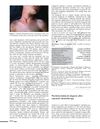
This abstract discusses pellagra as a nutritional disorder characterized by a known set of symptoms but reports no new clinical findings; the authors review existing knowledge and suggest further research.
1 citations
,
July 1990 in “European Journal of Pharmacology”