6 citations
,
January 2024 in “Frontiers in Bioengineering and Biotechnology” This study developed a smart PVA-TPE/HA-AMP/SF/ALG wound dressing that shows promise in infected wound healing by providing bacterial resistance, promoting cell proliferation, and modulating inflammation through various signaling pathways, potentially reducing scar formation.
 3 citations
,
January 2020 in “PubMed”
3 citations
,
January 2020 in “PubMed” This study found that using insulin-like growth factor 1 with bone marrow-derived mesenchymal stem cells in a collagen-chitosan scaffold enhanced wound healing and hair follicle regeneration in rats.
2 citations
,
May 2024 in “Nanomaterials” This study reports the synthesis of a hectorite/phenanthroline nanomaterial which acts as a potential fluorescent sensor for detecting Zn ions in water, offering a solution to the low solubility issue of traditional metal ion-detecting molecules.
November 2025 in “Biomacromolecules” This research found that four types of biocompatible nanochitin promoted hair growth in mice, with partially deacetylated and phosphoric acid hydrolyzed nanochitins showing the best results, while amphoteric nanochitin provided the most balanced overall effect.
March 2024 in “Veterinary sciences” This study is the first to detail major geriatric diseases in aged Julia Creek dunnarts, particularly highlighting hormonal issues like cystic glandular hyperplasia in females and testicular degeneration in males, suggesting these conditions are linked to aging and potentially hormonal dysregulation.
This review examines the potential of stem cells and their derived products, such as exosomes and conditioned media, in improving burn wound healing but presents no new clinical data.
 March 2025 in “Dental Journal (Majalah Kedokteran Gigi)”
 This study developed a biodegradable gelatin and chitosan hemostatic sponge, enhanced with pomegranate peel extract, for dental applications, highlighting its effective antibacterial properties, improved blood absorption, and reduced clotting time, suggesting potential for use in clinical dental and wound care procedures.
September 2018 in “Digital Access to Scholarship at Harvard (DASH) (Harvard University)” In this study, FN-based fiber scaffolds designed using Rotary Jet-Spinning were shown to enhance wound healing and reduce scar formation in a mouse model, suggesting potential for regenerating healthy skin structure.
 July 2025 in “JOJ Dermatology & Cosmetics”
 This study observed that both polynucleotides (PN HPT™) and platelet-rich plasma (PRP) improved hair density and quality in men with androgenetic alopecia, with comparable outcomes and no significant adverse events.

This study found that glycerol most significantly influenced the spreadability and initial viscosity of a saw palmetto anti-hair loss cream, while PEG 400 predominantly affected viscosity changes over time.
 67 citations
,
February 1983 in “The Journal of Dermatologic Surgery and Oncology”
67 citations
,
February 1983 in “The Journal of Dermatologic Surgery and Oncology” This study suggests that Vigilon®, a new occlusive wound dressing with high water content, may promote better wound healing than other similar dressings in dermatologic surgery.
 140 citations
,
August 2011 in “Biomaterials”
140 citations
,
August 2011 in “Biomaterials” This study observed that keratose, derived from human hair, integrated well in mouse tissue and remodeled with collagen, suggesting potential as a non-toxic biomaterial for regenerative applications.
2 citations
,
December 2010 in “PubMed” This study reported that a new two-point bending stiffness method effectively correlated with sensory assessments for hair styling gels but not for hair styling sprays, likely due to differences in polymer/hair composites.
7 citations
,
October 2019 in “Frontiers in bioengineering and biotechnology” This study found that pretreatment with KP-Cryst fusion proteins effectively protected Asian and Caucasian virgin hair from thermal damage by maintaining higher water content and preventing structural changes during heat application.
1 citations
,
March 2004 in “Patty's Toxicology” This review discusses the uses and toxicological data of eleven unsaturated halogenated hydrocarbons, including dichloroacetylene, allyl chloride, hexachlorobutadiene, β-chloroprene, vinyl chloride, trichloroethylene, and perchloroethylene, but presents no new findings.
513 citations
,
February 2022 in “Advanced Science” This study demonstrated that incorporating PDA@Ag nanoparticles into a cationic guar gum hydrogel significantly enhanced photothermal conversion efficiency, achieving superior antibacterial efficacy both in vitro and in vivo, advancing the potential of PDA as a photothermal antibacterial agent.
January 2025 in “Regenerative Biomaterials” In this study, a cerium-polypeptide hydrogel was found to effectively treat MRSA-infected wounds by promoting faster wound repair and reducing inflammation compared to a standard hydrogel.
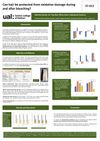 September 2018 in “University of the Arts London Research Online (University of the Arts London)”
 This study assessed three materials—L-arginine, hydrolysed keratin, and cystine-silanol copolymer—ex vivo for their potential to reduce undesirable effects of hair bleaching, such as damage to hair proteins.
 2 citations
,
December 2019 in “Textile Research Journal”
2 citations
,
December 2019 in “Textile Research Journal” This study found that L-cystine-modified rabbit hair fibers had improved dye adsorption and spinnability, due to changes in secondary structure and surface characteristics.
October 2023 in “Biomimetics” This study developed a biocompatible hair-dyeing technology using a dark polyphenol complex, which demonstrated effective hair coating, improved mechanical strength, and strong antioxidant properties while maintaining high cell viability.
12 citations
,
October 1947 in “Journal of the Society of Dyers and Colourists” This study found that treatment with mercuric acetate modifies the elastic properties of Lincoln wool fibers more rapidly than human hair, explaining the enhanced unshrinkable quality of wool under certain conditions.
10 citations
,
February 2021 in “Pharmaceutics” In this study, the novel fatty acid-conjugated tetrapeptide Palmitoyl-GDPH enhanced wound healing in rats by improving re-epithelialization and collagen deposition with minimal toxicity observed at the used dosage.
3 citations
,
May 2019 in “Journal of Cosmetic Dermatology” This study suggests that the dipeptide Pro-Ile has FGF18-like activity, can penetrate model human epidermis, and may have potential as a cosmetic ingredient for skin and hair regulation.
 August 2026 in “Clinical Cosmetic and Investigational Dermatology”
 In this study, combining Polynucleotides High Purification Technology with hyaluronic acid significantly reduced atrophic post-acne scar areas and improved Goodman-Baron scores in a majority of treated patients over six months, reaffirming the approach's beneficial effects in a real-world outpatient setting.
4 citations
,
March 2007 in “Annales de Dermatologie et de Vénéréologie” This review discusses the adverse effects of hair care products, highlighting irritation dermatitis and allergic contact eczema due to common allergens like paraphenylenediamine and glycerol monothioglycolate, but reports no clinical results.
36 citations
,
July 2017 in “Journal of controlled release” In this study, a new formulation of all-trans retinoic acid bound to polyvinyl alcohol showed reduced skin inflammation and sustained drug release for up to six days compared to free ATRA in vitro and in vivo.
12 citations
,
January 1934 in “Proceedings of the Royal Society of London Series B Containing Papers of a Biological Character” This study found that the X-ray patterns of stretched mammalian hair (β-keratin) are similar to those of natural silk (fibrion), suggesting a similar elastic mechanism involving reversible intra-molecular transformations.
1 citations
,
January 1998 in “Cosmetics and toiletries” Both amodimethicone and dimethicone copolyol amine are effective hair conditioners.
11 citations
,
February 2025 in “Journal of Science Advanced Materials and Devices” This study reported that nanofibrous scaffolds made from a PVA and flaxseed extract combination showed enhanced antimicrobial activity and significantly better wound healing in vitro compared to pure PVA fibers.
11 citations
,
January 2024 in “Regenerative Biomaterials” This research reported that a newly developed dually crosslinked gelatin-alginate-based hydrogel scaffold enhances mechanical strength, promotes corneal tissue regeneration, and reduces scarring in rabbit models, suggesting potential applications in corneal tissue engineering.