 6 citations
,
January 2020 in “Czech Journal of Animal Science”
6 citations
,
January 2020 in “Czech Journal of Animal Science” This study found that specific SNPs in the sheep FAT1 gene are significantly associated with wool quality traits, suggesting potential markers for improving wool crimp, fibre length, and fibre diameter in breeding.
January 2026 in “Open MIND” This study identified candidate compounds from a natural-product library that may interact with the PIEZO1 and MLCK pathways, potentially countering a non-androgen cause of hair follicle miniaturization, all based on computer simulations; experimental validation is necessary.
 November 2022 in “The journal of investigative dermatology/Journal of investigative dermatology”
 This study found that cPPARγ and dnPPARγ isoforms are differentially expressed in healthy human skin, suggesting that PPARγ modulators may have compartment-specific effects depending on isoform presence.
 June 2024 in “International Journal of Pharmaceutical Quality Assurance”
 This study established a new reverse-phase high-performance liquid chromatography method to accurately and precisely quantify silodosin and dutasteride in mixtures, meeting International Council of Harmonization validation criteria for stability, sensitivity, and recovery.
9 citations
,
April 1970 in “Biochemical pharmacology” This study found that stilbamidine and hydroxystilbamidine can inhibit the release of specific enzymes from lysosomes and mitochondria in rabbit liver at certain concentrations, with effects similar to cortisol and chloroquine.
 10 citations
,
June 2018 in “Aaps Pharmscitech”
10 citations
,
June 2018 in “Aaps Pharmscitech” The flutamide-loaded hydrogel is a promising, skin-friendly treatment for acne and hair loss, potentially requiring less frequent application.
6 citations
,
February 2023 in “Genes” This study found that overexpression of the CUX1 protein promotes proliferation of Hu sheep dermal papilla cells and affects key genes in the Wnt/β-catenin signaling pathway.
22 citations
,
July 2010 in “Drug Testing and Analysis” This study presents a rapid method for detecting multiple xenobiotics in urine, effectively identifying 45 compounds banned in sports with detection limits below WADA's performance levels.
 14 citations
,
January 2020 in “Korean Journal of Family Medicine”
14 citations
,
January 2020 in “Korean Journal of Family Medicine” This case study reported a rare occurrence of lepromatous leprosy with Lucio phenomenon in a 50-year-old Indonesian living in Malaysia, highlighting the necessity for primary care practitioners, even in non-endemic areas, to recognize this serious leprosy reaction to prevent complications and transmission.
3 citations
,
December 2024 in “Iraqi Journal of Pharmaceutical Sciences ( P-ISSN 1683 - 3597 E-ISSN 2521 - 3512)” This study reported that meloxicam-loaded spanlastics, created using the ethanol injection method, demonstrated potential as a drug delivery system with sustained release and effective entrapment efficiency.
February 1999 in “PubMed” The document's conclusion cannot be summarized because the content is not available.
 108 citations
,
December 2003 in “Clinical breast cancer”
108 citations
,
December 2003 in “Clinical breast cancer” The authors concluded that pegylated liposomal doxorubicin may offer comparable efficacy to conventional doxorubicin with reduced toxicity in metastatic breast cancer treatment.
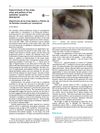 1 citations
,
January 2015 in “Actas dermo-sifiliográficas/Actas dermo-sifiliográficas”
1 citations
,
January 2015 in “Actas dermo-sifiliográficas/Actas dermo-sifiliográficas” Latanoprost eye drops caused excessive cheek hair growth and eyelash whitening in a woman.
21 citations
,
September 1997 in “British Journal of Dermatology” This study found that monilethrix in three unrelated European families is linked to the type II keratin gene cluster on chromosome 12q13, with no evidence of defects in type I keratins.
 January 2025 in “Scripta Medica”
 In this study, PDO, PLLA, and PCL thread implants in ageing rat skin did not alter MMP1 gene expression but maintained collagen levels similar to young skin without UV-B exposure, suggesting possible benefits for skin collagen but not gene expression modification.
 March 2024 in “Authorea (Authorea)”
 This retrospective case series reports on the use of STRAVIX PL, a shelf-stable human umbilical tissue allograft, in managing recurrent pilonidal cyst wounds, suggesting potential benefits in reducing recurrence and providing durable wound coverage compared to traditional methods.
 October 2024 in “Current Issues in Molecular Biology”
 In this experimental study, the researchers observed that Platycladus orientalis leaf extract promoted hair growth by enhancing dermal papilla cell proliferation and increasing growth factor expression, particularly through ACK1 activation and modulation of Wnt/β-catenin signaling pathways in cultured human cells and a 12-week topical application.
 7 citations
,
May 2019 in “European Journal of Human Genetics”
7 citations
,
May 2019 in “European Journal of Human Genetics” This study describes three new cases of MCOPS6 with BMP4 variants, noting expanded phenotypic variability but no clinically apparent microphthalmia in these individuals, which is commonly reported in the disorder.
 September 2021 in “CRC Press eBooks”
 This review discusses the clinical and trichoscopic features of lichen planopilaris and notes its potential underdiagnosis prior to hair transplant, but it reports no new findings.
14 citations
,
November 2024 in “Pharmaceuticals” This study found that using spanlastics, a nano, surfactant-based drug delivery system, improved the bioavailability, drug release characteristics, and pharmacokinetic behavior of famotidine, a poorly soluble drug, by enhancing its dissolution and membrane permeation.
 November 2020 in “Journal of The American Academy of Dermatology”
 This study reported that using plain bottles instead of commercial kits for extracting platelet-rich plasma may be an effective method for treating hair loss.
14 citations
,
August 2020 in “Journal of cosmetic dermatology” This consensus report provides detailed recommendations for using Polynucleotides Highly Purified Technology™ in aesthetic skin rejuvenation, highlighting its potential as a biostimulatory booster for face and body revitalization.
 January 2025 in “Cellular and Molecular Biology”
 This study found that in Liaoning cashmere goats, overexpression of the PIP5K1A gene enhances skin fibroblast proliferation, while interference with this gene reverses melatonin-induced proliferation, and PIP5K1A regulates certain miRNA expressions, suggesting a role in improving cashmere yield and quality.
2 citations
,
September 2020 in “bioRxiv (Cold Spring Harbor Laboratory)” This study demonstrated that ablation of individual somatostatin-expressing interneurons increased activity in nearby neurons of the mouse motor cortex during motor learning.
 206 citations
,
September 2010 in “PLoS ONE”
206 citations
,
September 2010 in “PLoS ONE” This study found that using a Picosecond IR Laser (PIRL) on mouse skin led to less tissue damage and scarring compared to conventional surgical lasers and tools.
 13 citations
,
November 2019 in “Scientific reports”
13 citations
,
November 2019 in “Scientific reports” This study found that inhibiting 5α-reductase in molluscs provokes a specific shell morphology, suggesting gastropods might have unique 5α-reductase substrates absent in vertebrates.
12 citations
,
January 2023 in “AAPS PharmSciTech”