1 citations
,
January 2023 in “eCite Digital Repository (University of Tasmania)” This study suggests that the differences in aluminium tolerance between ET8 and ES8 wheat cultivars are linked to a complex suite of physiological mechanisms, including variations in malate and K+ release, Ca2+ homeostasis, and SV channel properties, rather than solely malate efflux.
November 2025 in “Biocell” This article explores how the integrated stress response and senescence-associated secretory phenotype influence stem cell fate decisions, highlighting their dual roles in both protecting and disrupting stem cell integrity.
 April 2019 in “Journal of Investigative Dermatology”
 This study demonstrated that gene-corrected 3D skin constructs from RDEB patient-derived iPSCs, grafted onto immunocompetent mice, showed normal collagen VII expression after two months.
 April 2023 in “Journal of Investigative Dermatology”
 This study found that human epidermal stem cells can adapt to small temperature variations via mTOR signaling, and that prolonged mTORC1 inhibition supports stem cell maintenance.
 1 citations
,
April 2018 in “Journal of Investigative Dermatology”
1 citations
,
April 2018 in “Journal of Investigative Dermatology” This study found that Polycomb repressive complex 1 is crucial for skin development and stem cell specification, influencing gene activity beyond its known repressor functions.
 13 citations
,
January 2019 in “Colloids and Surfaces B: Biointerfaces”
13 citations
,
January 2019 in “Colloids and Surfaces B: Biointerfaces” This study found that incorporating a block copolymer significantly alters the size and morphology of niosome drug delivery systems made of non-ionic surfactants and cholesterol, affecting their stability.
18 citations
,
May 2023 in “Science Advances” In this study, transiently activating the sonic hedgehog signaling pathway in chickens transformed reticulate scales on the feet into feathers comparable to body feathers, without ongoing treatment, suggesting this pathway affects the diversity of bird skin appendages.
 January 2007 in “Proceedings of the Korean Fiber Society Conference”
 New resin B makes artificial hair fibers hold curls longer than traditional resin A.
 12 citations
,
June 2020 in “Frontiers in Cell and Developmental Biology”
12 citations
,
June 2020 in “Frontiers in Cell and Developmental Biology” This study found that the PP2A-B55α regulatory subunit is crucial for ectodermal development in mice, with knockout embryos displaying severe neural and epidermal defects and failing to survive to birth.
 September 2015 in “The European physical journal. E, Soft matter and biological physics/The European physical journal. E, Soft matter”
 In this study, a mechanical model was developed to describe and validate the effectiveness of overnight hair curling, suggesting that combining it with hair fixatives can maintain a desired curl for over a day.
2 citations
,
May 2024 in “BMC Genomics” This study analyzed the genetics of the patchiness phenotype in New Zealand rabbits and found that the gene KRT82, with identified SNPs in its promoter, may serve as a potential biomarker for breeding these rabbits.
6 citations
,
April 2001 in “The Anatomical Record” This study introduces a method for determining the orientation of collagen fibers in skin by analyzing the anisotropic shape of hair pores, which may aid in skin grafting procedures.
3 citations
,
May 2025 in “Journal of Applied Polymer Science” This study developed a multifunctional, sprayable hydrogel with temperature responsiveness, showing strong antimicrobial properties against E. coli and S. aureus, antioxidant activity, and cytocompatibility, indicating potential for wound healing applications.
 1 citations
,
June 2010 in “Development”
1 citations
,
June 2010 in “Development” This review summarizes discussions from a 2010 stem cell biology meeting, covering the origin, behavior, and therapeutic potential of pluripotent and multipotent stem cells, without reporting new experimental findings.
 April 2026 in “Nature Communications”
 This study found that dedifferentiated corneal epithelial cells can revert to a stem-cell-like state, aiding tissue homeostasis and repair, with this plasticity limited to the epithelial lineage and enhanced by niche-derived cytokines.
 February 2024 in “Universal Library of Innovative Research and Studies”
 In this study, researchers found that the primary cause of slippage and detachment of keratin capsules in hair extensions is the re-contamination by oily residues from the hairdresser's hands, rather than the use of hair care products like masks or conditioners.
October 2022 in “Journal of Natural Fibers”  January 2024 in “Wiadomości Lekarskie”
 This review discusses the therapeutic potential of stem cells from postnatal tissues for regenerative medicine, emphasizing their paracrine effects and the pluripotent potential of very small embryonic-like stem cells.
 February 2019 in “PubMed”
 This study explores torsional measurements of single hair fibers to differentiate the effects of cosmetic treatments on hair structure, highlighting their potential to reveal shear stiffness changes related to cuticle damage.
23 citations
,
July 1994 in “Journal of Dermatological Science” This study found that the twisted hair shafts characteristic of pili torti may result from uneven outer root sheath cell development, leading to irregular hair shaft modeling and twisting.
85 citations
,
October 2007 in “International Journal of Dermatology” In this study, researchers found that the curliness of human hair is associated with an asymmetric structure at the cellular level, particularly in the differentiation of the precortex.
 18 citations
,
February 2015 in “Acta Crystallographica Section D: Structural Biology”
18 citations
,
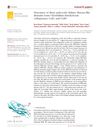
February 2015 in “Acta Crystallographica Section D: Structural Biology” This study reports that Ca 2+ binding alters the dynamics and surface properties of PKD-like domains in Clostridium histolyticum collagenases, enhancing their stability and potentially aiding in collagen-targeting vehicle development.
This study assessed genetic variability and combining ability in winter squash for various traits related to yield and plant architecture, finding significant variability in eight traits and highlighting specific parents and hybrid combinations as promising for breeding programs focused on oil production.
3 citations
,
July 2023 in “Acta Biomaterialia” This study demonstrates that a bioinspired peptide, PepACS, can efficiently and safely perm hair by interacting with keratin's sulfhydryl group without compromising tensile strength, and it shows potential for hair repair and dyeing applications in the hair care industry.
March 2026 in “Pigment Cell & Melanoma Research” At a workshop highlighted during the 2025 ESPCR meeting, researchers discussed the challenges and variability in culturing skin-related cells, identifying key factors such as media composition and species differences that affect experimental reproducibility, and emphasized the importance of transparent practices to advance pigment cell research.
14 citations
,
March 2016 in “Regenerative Biomaterials” This article proposes a broad interpretation of tissue engineering as systematically controlling the body's cells, matrices, and fluids, suggesting many existing therapies may fall under this category.
3 citations
,
September 2023 in “Stem Cell Research & Therapy” In this study, researchers successfully generated functional and long-lived melanocytes from human embryonic stem cells, demonstrating their biocompatibility and high engraftability in mice, which may aid in developing treatments for pigmentary skin disorders.
4 citations
,
June 1990 in “PubMed” This review discusses the variability of hair protein keratin in forensic hair comparison, focusing on species identification and individual discrimination, but it reports no new results.
In this study, researchers developed a photocurable polyurethane resin for 3D printing, creating high-resolution elastomeric microwell arrays that effectively promote uniform spheroid formation and growth of A549 cells, which could aid in disease modeling and organoid research.
This study mapped the curly mutation in mice to a specific region on chromosome 11, identifying it as a candidate model for studying human genetic hair disorders.