37 citations
,
November 2007 in “Journal of Biological Chemistry” This study found that increased intracellular expression of thymosin β4 is necessary and sufficient to induce PAI-1 gene expression in endothelial cells, potentially mediated through Ku80 as a novel receptor.
9 citations
,
February 2024 in “mBio” This study found that biliverdin beta and delta, metabolites of heme, play a critical role in Pseudomonas aeruginosa iron acquisition and cooperative behaviors, which are crucial for the bacterium's long-term infection in cystic fibrosis patients, suggesting potential targets for new therapies.
8 citations
,
June 2020 in “The journal of investigative dermatology/Journal of investigative dermatology” This study provides definitive evidence that a homozygous mutation in the DSC3 gene causes skin fragility and hypotrichosis in humans.
 14 citations
,
October 2015 in “PLoS ONE”
14 citations
,
October 2015 in “PLoS ONE” This study found that keratins 5, 7, 8, and 19 are expressed in human trophoblast cells while vimentin is solely expressed in stromal-mesenchymal cells, aiding in placental cell type identification.
17 citations
,
January 2016 in “Journal of Drug Delivery” In this study, PEG and keratin scaffolds selectively influenced protein release rates based on charge and size, suggesting their potential for targeted delivery of protein therapeutics.
 3 citations
,
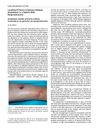
March 2012 in “Actas Dermo-Sifiliográficas”
3 citations
,
March 2012 in “Actas Dermo-Sifiliográficas” An elderly man with skin amyloidosis and abnormal blood proteins was monitored without finding widespread disease after 18 months.
16 citations
,
January 2023 in “Regenerative Biomaterials” This study examined 3D-printed scaffolds coated with polydopamine and observed that they significantly enhanced osteogenesis and angiogenesis in vitro and in a rat cranium defect model, suggesting their potential for repairing large bone defects.
 January 2026 in “Frontiers in Medicine”
 In this study, PP-PTKL exhibited antioxidant, anti-inflammatory, and pro-melanogenic effects in laboratory settings, suggesting its potential role in preventing or treating hair greying. Further animal and human studies are needed to verify these findings.
 1 citations
,
January 2024 in “Scientific reports (Nature Publishing Group)”
1 citations
,
January 2024 in “Scientific reports (Nature Publishing Group)” This study explored using keratin extracted from human hair waste to create biodegradable bioplastic films, revealing promising potential for applications in packaging and disposable items due to their uniform surface morphology and ability to degrade with keratinophilic fungi.
3 citations
,
August 2018 in “Journal of Structural Biology” KAP8.1 protein is crucial for hair structure and interacts with keratin 85.
21 citations
,
June 2022 in “Pharmaceutics” This study found that bioactive extracts from goat placenta, particularly when delivered via dissolving microneedles, enhanced fibroblast proliferation and skin regeneration without being toxic to skin cells, suggesting a promising dermal application for improving skin health.
 9 citations
,
March 2022 in “Terapevticheskii arkhiv”
9 citations
,
March 2022 in “Terapevticheskii arkhiv” This article reviews human placenta hydrolysates and their complex molecular mechanisms in treating various conditions but does not present new clinical findings.
November 2023 in “Applied sciences” This study found that platelet dry powder can be mass-produced from pig blood by adding calcium chloride, resulting in a stable material with high growth factor concentrations, which could enhance supply for industrial product development.
31 citations
,
September 2011 in “European journal of pharmaceutics and biopharmaceutics” This study found that biodegradable PLA particles released fluorochromes in a time-dependent manner on human skin, with BP-PLA particles releasing rapidly and DiAsp-PLA particles providing sustained release and accumulation in hair follicles.
 April 2019 in “Journal of Investigative Dermatology”
 This study found that DPP4 is significantly involved in matrix deposition and fibrosis in human skin fibroblasts, although the exact functions of DPP4 remain unclear.
2 citations
,
July 2025 in “Cells” This study reports that human adipose-derived stem cells cultured with platelet lysate instead of fetal bovine serum demonstrate enhanced stress resistance, reduced cellular aging, and faster wound healing in mice, due in part to upregulated stress response and proliferation genes.
 4 citations
,
April 2025 in “Scientific Reports”
4 citations
,
April 2025 in “Scientific Reports” This study found that platelet-rich plasma can transiently inhibit bacterial growth in vitro against multidrug-resistant strains from diabetic foot infections, although its efficacy diminished over time and did not affect biofilm formation.
 December 2025 in “Eastern Ukrainian Medical Journal”
 This study reviews current methods for making and using platelet-rich plasma and fibrin, emphasizing the variability in clinical outcomes due to differences in preparation protocols, and calls for standardized guidelines and large-scale studies for better effectiveness in regenerative medicine.
13 citations
,
October 2016 in “Acta Biochimica et Biophysica Sinica” This study found that GhPLDα1 in upland cotton may be involved in fiber development, correlating with increased hydrogen peroxide and cellulose biosynthesis during secondary cell wall thickening.
January 2024 in “Doria (University of Helsinki)” This study found that in mouse pancreatic β-cells, the disruption of keratin filaments due to a specific mutation in keratin 18 resulted in altered GLUT2 localization, with less GLUT2 present on the plasma membrane compared to cells with normal keratin.
May 2005 in “Molecular Carcinogenesis” This study found that mrp/plf-mRNA expression in murine skin increases in response to different tumor promoters, suggesting its potential as a short-term biomarker for chemical carcinogenesis.
16 citations
,
August 2023 in “Tissue Engineering and Regenerative Medicine” 51 citations
,
January 2007 in “The journal of investigative dermatology/Journal of investigative dermatology” This study identified a novel keratin-associated protein, KAP24.1, which is specifically expressed in the human scalp and located in the hair cuticle.
April 2017 in “Journal of dermatological science” This study found that while epidermal PLCγ1 is not necessary for keratinocyte differentiation in interfollicular epidermis, it is crucial for normal hair and sebaceous gland formation in mice.
6 citations
,
March 2023 in “Materials” In this study, researchers developed an acellular bioscaffold made from ovine tendon collagen with an antibacterial coating for treating skin wounds. They found that genipin crosslinking improves the scaffold's properties, and with plasma polymerisation, it enhances antibacterial activity, potentially benefiting wound healing.
 2 citations
,
November 2023 in “Revista Ibero-Americana de Humanidades, Ciências e Educação”
2 citations
,
November 2023 in “Revista Ibero-Americana de Humanidades, Ciências e Educação” This review discusses the use of platelet-rich plasma in aesthetic treatments, emphasizing its benefits and potential as a promising and safe alternative for enhancing appearance and self-confidence, without presenting new clinical results.
27 citations
,
April 2018 in “Artificial Cells Nanomedicine and Biotechnology” This study reported that recombinant human hair keratins, K37 and K81, showed higher purity and enhanced fibrin clot formation compared to traditional extracts, reducing bleeding time and blood loss in rat injury models.
 28 citations
,
February 1999 in “Journal of Investigative Dermatology”
28 citations
,
February 1999 in “Journal of Investigative Dermatology” This study found that neonatal mice without the urokinase-type plasminogen activator (uPA) gene had reduced epidermal proliferation rates, suggesting uPA's involvement in promoting keratinocyte proliferation.
 April 2016 in “The journal of investigative dermatology/Journal of investigative dermatology”
 The researchers reported that disrupting the RPGRIP1L gene in mice impaired desmosome function, causing skin blistering, and their findings suggest that PKCβII inhibition could help treat pemphigus.