 May 2024 in “Journal of molecular structure”
 This study found that a novel thiohydantoin derivative, 3a, effectively inhibited androgen receptor activity in LNCaP cells and showed promising in vivo results by reducing testosterone-induced prostate changes, outperforming finasteride in mitigating prostate index and histopathological alterations.
![Synthesis and In Vitro Study of 17β-[N-Ureylene-N,N′-Disubstituted]-4-Methyl-4-Aza-5α-Androstan-3-Ones as Selective Inhibitors of Type I 5α-Reductase](/images/assets/d19df8a7-8de6-4430-8a0d-4ffa1f502985/small/15608.jpg) 5 citations
,
February 1997 in “Bioorganic & Medicinal Chemistry”
5 citations
,
February 1997 in “Bioorganic & Medicinal Chemistry” This study found that among 17 beta-(N-ureylene-N,N'-disubstituted)-4-azasteroids, those with an N'-phenyl moiety were the most effective inhibitors of human type I 5 alpha-reductase.
![Synthesis, Biological Evaluation, and Molecular Docking of 4-Amino-2H-benzo[h]chromen-2-one Analogs Containing the Piperazine Moiety](/images/assets/2ecf4eed-7dbe-4f1a-83db-739625546cdd/small/31808.jpg) 7 citations
,
August 2019 in “Bioorganic & medicinal chemistry”
7 citations
,
August 2019 in “Bioorganic & medicinal chemistry” This study identified novel 4-Amino-2H-benzo[h]chromen-2-one analogs as potent androgen receptor antagonists that show strong antiproliferative activity against prostate cancer cells, suggesting them as potential lead compounds for therapy development.
 451 citations
,
March 2005 in “Endocrine Reviews”
451 citations
,
March 2005 in “Endocrine Reviews” This paper discusses the role of steroid sulfatase in hormone-dependent tumors and highlights the development of potent inhibitors, noting the commencement of a phase I trial for one inhibitor in postmenopausal breast cancer patients.
 45 citations
,
August 2005 in “Bioorganic & medicinal chemistry”
45 citations
,
August 2005 in “Bioorganic & medicinal chemistry” This study found that novel androgen antagonists incorporating a carborane moiety showed anti-androgenic activity comparable to flutamide in a laboratory setting.
![Synthesis and Activity of 8-Substituted Benzo[c]quinolizin-3-ones as Dual Inhibitors of Human 5α-Reductases 1 and 2](/images/assets/efc54340-66d6-4f27-9930-045ac023f903/small/15248.jpg) 9 citations
,
November 2004 in “Bioorganic & Medicinal Chemistry Letters”
9 citations
,
November 2004 in “Bioorganic & Medicinal Chemistry Letters” This study identified potent dual inhibitors of 5α-reductases 1 and 2 that may aid in designing new drugs for related diseases.

In this study, 1'-S-1'-acetoxychavicol acetate (ACA) from Alpinia galanga showed potential in suppressing testosterone-induced hair loss by inhibiting Nox isozymes in a mouse model of androgenetic alopecia.
 August 2025 in “ACS Omega”
 This study synthesized and evaluated hydroxycinnamate derivatives for their ability to inhibit human SRD5A1, finding that three compounds showed significant inhibitory activity and low cytotoxicity. Compound 10a notably reduced SRD5A1 protein expression in cells, suggesting potential for nonsteroidal treatment of androgen-related conditions.
 20 citations
,
June 2022 in “Molecules”
20 citations
,
June 2022 in “Molecules” This review discusses three classes of thiazole-bearing compounds in drug development and presents preclinical findings but reports no new experimental results, highlighting the need for further drug discovery.
December 2022 in “Scientific Reports” This study found that caffeic acid amide derivative, compound 4, effectively inhibited steroid 5α-reductase type 1 in vitro, suggesting potential for development as a treatment for androgenic alopecia.

This study found that four synthesized thiazolidinone derivatives showed potential anticancer activity against MCF7 and HeLa cell lines, suggesting their further investigation for anticancer drug development.
 January 2024 in “Molecules (Basel. Online)”
 In this study, researchers examined juglone's potential as a restoring agent for hair keratin damaged by permanent or bleaching treatments, finding that juglone formed Michael adducts with cysteine residues, leading to a more regular hair surface as observed via IR spectroscopy and SEM analysis.
 4 citations
,
August 2010 in “Acta Biologica Hungarica”
4 citations
,
August 2010 in “Acta Biologica Hungarica” This study found that novel compounds moderately inhibited 5α-reductase type 1 activity compared to finasteride, offering valuable data on structure-activity relationships.
 13 citations
,
August 2007 in “Bioorganic & medicinal chemistry letters”
13 citations
,
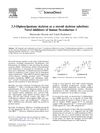
August 2007 in “Bioorganic & medicinal chemistry letters” This study developed a new competitive 5alpha-reductase inhibitor with an IC(50) of 0.84 microM using a novel chemical structure.
 72 citations
,
December 2009 in “Organic and Biomolecular Chemistry”
72 citations
,
December 2009 in “Organic and Biomolecular Chemistry” This study describes Hg(OTf)2 as a new and efficient catalyst for various organic synthesis reactions, including alkyne hydration and C–C bond forming cyclizations.
 12 citations
,
January 2009 in “Journal of Oleo Science”
12 citations
,
January 2009 in “Journal of Oleo Science” The researchers reported that sterol surfactants with a bulky planar structure effectively solubilized ultraviolet ray absorbers, offering a stable solution more efficiently than other surfactants.
18 citations
,
December 2005 in “Journal of Medicinal Chemistry” In this study, novel substituted benzoyl benzoic acids and phenylacetic acids were potent and selective inhibitors of human steroid 5alpha-reductase type 2, with one compound showing promising bioavailability in rats for potential clinical evaluation.
 23 citations
,
January 2001 in “Chemical & Pharmaceutical Bulletin”
23 citations
,
January 2001 in “Chemical & Pharmaceutical Bulletin” This study found that several synthesized pregnane derivatives exhibited significant inhibitory effects on testosterone conversion to dihydrotestosterone and reduced related androgenic parameters in multiple pharmacological models.
 3 citations
,
August 2017 in “Synlett”
3 citations
,
August 2017 in “Synlett” This study reports a novel method for synthesizing substituted hydantoins, including the anticonvulsant drug ethotoin, using safer reagents and fewer steps compared to conventional protocols.
 20 citations
,
September 2005 in “Endocrinology”
20 citations
,
September 2005 in “Endocrinology” This study identified novel selective androgen receptor modulators with enhanced in vivo pharmacological activity through structure-activity relationship analysis in castrated rats.
 13 citations
,
May 2011 in “Bioorganic & Medicinal Chemistry”
13 citations
,
May 2011 in “Bioorganic & Medicinal Chemistry” This study identified certain benzopyran derivatives with a bulky tert-butyloxycarbonylamino group as effective KATP channel openers that inhibit insulin secretion in rat pancreatic islets.
 6 citations
,
March 2003 in “Archiv Der Pharmazie”
6 citations
,
March 2003 in “Archiv Der Pharmazie” This study reported that newly synthesized nonsteroidal compounds were effective at inhibiting prostatic 5 alpha reductase isozyme 2, especially the compound with an N, N-diisopropylcarbamoyl substituent, suggesting potential for treating benign prostatic hyperplasia.
 5 citations
,
July 2003 in “Drug Development Research”
5 citations
,
July 2003 in “Drug Development Research” In this study, using a novel topical androgen receptor suppressor, fluridil, significantly increased the percentage of growing hairs in males with androgenetic alopecia without systemic absorption or adverse side effects.
 4 citations
,
January 2014 in “RSC Advances”
4 citations
,
January 2014 in “RSC Advances” A new, less toxic and more efficient method to create the anti-baldness compound RU58841 was developed in 2014.
 January 2009 in “Side effects of drugs annual”
 This study observed no teratogenic effects of oral decongestants and surprisingly favorable neonatal outcomes in Swedish women who used them during pregnancy.
 29 citations
,
September 1990 in “Biochemical Journal”
29 citations
,
September 1990 in “Biochemical Journal” This study reports the purification of a specific sulphotransferase from rat liver that catalyzes the sulphation of minoxidil, potentially implicating it in minoxidil's bioactivation.
This chapter reviews various types of aromatic compounds and provides references, but reports no new experimental results.
 42 citations
,
May 2003 in “Mini-reviews in Medicinal Chemistry”
42 citations
,
May 2003 in “Mini-reviews in Medicinal Chemistry” This study found that newly synthesized steroidal trienones demonstrated stronger 5α-reductase inhibitory activity compared to dienones in various biological models, suggesting potential for developing enhanced antiandrogenic drugs.
 37 citations
,
October 2006 in “Steroids”
37 citations
,
October 2006 in “Steroids” This paper describes recent advancements in the synthesis of thiasteroids but reports no new experimental results, noting that introducing heteroatoms in steroidal structures has potential biological effects.
 34 citations
,
February 1993 in “Journal of steroid biochemistry and molecular biology/The Journal of steroid biochemistry and molecular biology”
34 citations
,
February 1993 in “Journal of steroid biochemistry and molecular biology/The Journal of steroid biochemistry and molecular biology” This study found that 4-MA is a potent inhibitor of testosterone 5α-reductase in human tissues, promising potential for treating androgen-dependent skin conditions like male pattern baldness.