5 citations
,
April 2014 in “Journal of Lipid Research” This study demonstrates a method to noninvasively assess lipid classes in rodent sebum via high-field proton NMR, observing significant lipid reductions in rats treated with an SCD1 inhibitor.
2 citations
,
November 2024 in “PLoS ONE” This study assessed breeding value estimation methods for Korean Sapsaree dogs, finding varied accuracy across BLUP approaches and identifying significant genomic regions affecting traits like body height and hair length. The researchers suggest these findings can enhance breeding strategies for this culturally significant breed.
7 citations
,
June 2015 in “EMBO Reports” This article discusses how DNA-based phenotyping is used by police to create visual profiles of suspects from crime scene samples, but reports no new research findings.
 2 citations
,
December 2024
2 citations
,
December 2024 In this study, the researchers observed that the evolution of Curtobacterium flaccumfaciens pv. flaccumfaciens, which causes tan spot in Australian mungbeans, is driven by clonal expansion from existing genetic variations, emphasizing the need for informed breeding strategies to manage resistance against this pathogen.
1 citations
,
August 2025 in “The Egyptian Journal of Internal Medicine” This paper reviews obesity diagnosis and screening methods, emphasizing BMI's practicality in low- and middle-income countries, but provides no new clinical results.
19 citations
,
October 2023 in “Bioengineering” This study reviewed the efficacy of mechanical fractionation techniques to produce tissue stromal vascular fraction (tSVF) and found that tSVF injections are particularly effective for conditions like osteoarthritis and wound healing, with centrifugation before fractionation improving isolation efficiency regardless of preparation method.
 10 citations
,
March 2022 in “Communications biology”
10 citations
,
March 2022 in “Communications biology” In this study, researchers found that non-invasive analysis of skin surface lipid RNAs revealed alterations in gene expression patterns associated with atopic dermatitis, suggesting its potential for understanding skin disease pathophysiology.
 5 citations
,
October 2022 in “Cosmetics”
5 citations
,
October 2022 in “Cosmetics” This article reviews in-vitro and cell-free methods for assessing the efficacy of herbal ingredients in cosmetic formulations for skin health and hair growth, but it reports no new clinical results.
1 citations
,
July 2025 in “BMC Medicine” The authors concluded that establishing and standardizing methods for data collection are crucial to improving PCOS diagnosis and research due to challenges observed in data harmonization across diverse international cohorts.
 May 2026 in “Journal of Health and Allied Sciences NU”
 This study concluded that human epidermal stem cells cultured in MEM-α and EpiLife media with growth factors show high proliferation potential and plasticity, suggesting potential use in skin regenerative medicine.
 January 2024 in “Wiadomości Lekarskie”
 This research by Dr. Lester Fehmi suggests that exercises to shift attention from focused to dispersed may enhance alpha wave synchronization in the brain, potentially reducing pain perception.
 8 citations
,
November 2022 in “International Journal of Cosmetic Science”
8 citations
,
November 2022 in “International Journal of Cosmetic Science” This review discusses the limitations of current hair classification systems and highlights the need for standardized reporting of key hair characteristics to improve study comparisons; it reports no new results.
6 citations
,
April 2024 in “Journal of Investigative Dermatology” This review highlights recent advances in CRISPR-based lineage tracing methods that can improve our understanding of skin stem cell behavior, regeneration, and disease, with potential applications in organoids and model organisms.
 November 2025 in “International Journal of Clinical Obstetrics and Gynaecology”
 This study found evidence for a genetic basis of polycystic ovary syndrome, indicating an autosomal dominant pattern of inheritance among first-degree relatives.
5 citations
,
October 2021 in “American Journal of Medical Genetics Part A” This case report identifies a novel maternally inherited MBTPS2 variant associated with an expanded phenotypic spectrum of BRESHECK syndrome, including cytopenias, bone marrow fibrosis, and chronic diarrhea.
3 citations
,
June 2019 in “Clinical nursing studies” In this study, the researchers reported that polycystic ovary syndrome negatively impacts the quality of life for women due to associated phenotypic characteristics like obesity and hirsutism.
September 2025 in “Biological Procedures Online” This study presented a refined surgical protocol for a fetal mouse model that improves pregnancy success, reduces fetal loss, and allows for consistent phenotypic outcomes, enhancing research in scarless skin regeneration.
 January 2026 in “Cosmetics”
 This study highlights emerging regenerative strategies, such as stem cell-derived therapies and machine learning tools, that may advance hair loss treatment beyond traditional methods by promoting follicle regeneration and offering personalized care.
 October 2025 in “Animal Bioscience”
 This review summarizes the application of genome wide association studies and selection signature analyses in sheep and goat breeding in China, highlighting genomic regions that influence traits like reproductive performance and body size.
 November 2023 in “bioRxiv (Cold Spring Harbor Laboratory)”
 This study found that mature adipocytes can dedifferentiate into fibroblast-like cells, driven by PDGF and TGFβ signaling, which may play a role in wound repair and fibrosis.
 14 citations
,
March 2022 in “Clinical Endocrinology”
14 citations
,
March 2022 in “Clinical Endocrinology” This review outlines a diagnostic approach for identifying non-PCOS pathology in women with androgen excess, emphasizing the importance of clinical history and biochemical phenotyping but reports no new clinical results.
 101 citations
,
April 1994 in “Baillière's clinical endocrinology and metabolism”
101 citations
,
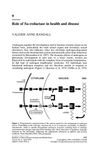
April 1994 in “Baillière's clinical endocrinology and metabolism” This review discusses the role of 5α-reductase enzymes in androgen action and related disorders, noting that their specific inhibitory drugs show promise for conditions like benign prostatic hypertrophy; it reports no new clinical results.
 97 citations
,
July 2006 in “Dermatologic therapy”
97 citations
,
July 2006 in “Dermatologic therapy” This article reviews the diagnosis and treatment approaches for cutaneous manifestations of PCOS, reporting on various treatment options without presenting new clinical results.
66 citations
,
January 2020 in “Acta Dermato Venereologica” This article reviews genetic advances in resolving inherited ichthyoses using next generation sequencing and notes that new sequencing methods may clarify unknown types in the future.
 44 citations
,
January 2019 in “Journal of Translational Medicine”
44 citations
,
January 2019 in “Journal of Translational Medicine” This study found that macrophages are crucial for skin regeneration during tissue expansion, as their depletion in rats led to inhibited skin growth and reduced secretion of key growth factors.
 26 citations
,
December 2011 in “Journal of Investigative Dermatology”
26 citations
,
December 2011 in “Journal of Investigative Dermatology” This review discusses major advances in understanding inherited hair diseases through genetic research and reports no new clinical results; the authors emphasize the potential for new preventive and therapeutic tools.
16 citations
,
March 2024 in “International Journal of Molecular Sciences” This review highlights how natural compounds can enhance wound healing by influencing fibroblast behavior and discusses innovative biomimetic engineering and delivery methods. This source emphasizes combining traditional and modern approaches for effective and scar-free healing, while noting challenges in clinical translation.
 9 citations
,
January 1997 in “Endocrine Journal”
9 citations
,
January 1997 in “Endocrine Journal” This study found a significant association between patients' sex of rearing and external genitalia in those with gonadal dysgenesis, while noting lower testosterone levels compared to controls.
5 citations
,
February 2022 in “Molecular genetics & genomic medicine” This study identified genetic variants in the DSG4 gene associated with the autosomal recessive form of monilethrix in Chinese patients, expanding the understanding of its phenotypic spectrum and clinical features.
 2 citations
,
December 2022 in “International Journal of Infertility & Fetal Medicine”
2 citations
,
December 2022 in “International Journal of Infertility & Fetal Medicine” This study found that women with PCOS who are obese had an altered lipid profile and increased waist-hip ratio compared to lean counterparts, without differences in endocrine parameters.