 6 citations
,
November 1988 in “Journal of the American Academy of Dermatology”
6 citations
,
November 1988 in “Journal of the American Academy of Dermatology” The document concludes that hair analysis is not good for assessing nutrition but can detect long-term heavy metal exposure.
 5 citations
,
March 2017 in “Natural Product Research”
5 citations
,
March 2017 in “Natural Product Research” This study identified and characterized eight compounds, including furanocoumarins and pterocarpans, from the aerial parts of Bituminaria basaltica, with β-caryophyllene and germacrene D as main constituents of its essential oil.
 5 citations
,
September 2012 in “Journal of Investigative Dermatology”
5 citations
,
September 2012 in “Journal of Investigative Dermatology” This study found that knocking down P-cadherin expression in cultured human hair follicles recreates the hair abnormalities seen in patients with hypotrichosis with juvenile macular dystrophy.
 4 citations
,
May 2025 in “Open Access Journal of Contraception”
4 citations
,
May 2025 in “Open Access Journal of Contraception” This study suggests that lower-dose ethinyl estradiol formulations and progestin-only contraceptives may offer safer options for managing PCOS in obese women due to minimal metabolic effects.
 2 citations
,
April 2021 in “bioRxiv (Cold Spring Harbor Laboratory)”
2 citations
,
April 2021 in “bioRxiv (Cold Spring Harbor Laboratory)” This study found that skin surface lipids contain measurable mRNAs, providing a non-invasive way to study skin diseases, with specific gene expression changes observed in atopic dermatitis patients.
 2 citations
,
December 2016 in “Experimental cell research”
2 citations
,
December 2016 in “Experimental cell research” This study reveals that CSPG4-positive basal cell keratinocytes show distinct global gene expression from CSPG4-negative cells, despite similar colony-forming efficiency.
 1 citations
,
May 2026 in “Signal Transduction and Targeted Therapy”
1 citations
,
May 2026 in “Signal Transduction and Targeted Therapy” This review highlights the promising role of stem cell therapy in treating resistant diseases, while also addressing the challenges in production and clinical application, emphasizing the need for standardized manufacturing and quality assurance to enhance efficacy and safety in clinical translational research.
 1 citations
,
May 2011 in “Molecular Medicine Reports”
1 citations
,
May 2011 in “Molecular Medicine Reports” This study found no association between the -866G/A polymorphism in the UCP2 gene and the development of polycystic ovary syndrome.
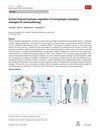
This review highlights that surface mechanical regulation can program macrophage behavior through specific mechanical cues on material surfaces, potentially advancing immunotherapies and regenerative medicine by enabling precise control over macrophage functions.
 January 2026 in “Frontiers in Molecular Biosciences”
 This study identified a four-gene loop as a non-invasive biomarker that selectively activates in alopecia areata, providing a precise target for JAK inhibitor treatments.
 January 2026 in “Nano-Micro Letters”
 This review discusses the principles, materials, and applications of melt electrowriting-based 4D printing for creating biomimetic scaffolds, but reports no new clinical results; it highlights recent advancements and remaining challenges in the field.
August 2025 in “Acta Biomaterialia” This study presents a novel hydrogel scaffold made from tilapia collagen, which when activated by ultrasound, reprograms macrophages to promote wound healing, enhance angiogenesis, and stimulate hair follicle regeneration, offering a potential new method for treating inflammatory wounds.
 January 2024 in “Wiadomości Lekarskie”
 This source reports that clinical trials using advanced Deep Brain Stimulation systems, augmented with AI to integrate kinematic data, eye tracking, and cognitive assessments, show promise in improving diagnostic accuracy and monitoring symptoms for patients with Parkinson's disease.
 January 2024 in “Wiadomości Lekarskie”
 This study reported the development of fluorescent markers using wide band gap metal oxides with rare earth ions for early tumor detection and treatment. Testing in animals showed high efficiency and selectivity, with potential applications in contrast-enhanced MRI, targeted drug delivery, and photodynamic cancer therapy.
 January 2024 in “Regenerative Biomaterials”
 This review introduces the potential of metal-organic framework-based functional composite materials in tissue engineering but reports no new results, emphasizing the need for further innovation in the field.
 January 2024 in “Wiadomości Lekarskie”
 In this study, researchers at the Laboratory of Regenerative Medicine WUM are exploring the long-term effects of SARS-CoV-19 infection, focusing on stem cell mobilization and engraftment processes, and utilizing advanced diagnostic techniques to develop algorithms for rare disease classification, including amyloidosis.
 January 2024 in “Wiadomości Lekarskie”
 This study reports that while primary treatment for uveal melanoma has a very high success rate, treating distant metastases, particularly in the liver, remains challenging. Tebentafusp, dependent on HLA-A expression, is the first drug to extend patient survival.
 January 2024 in “Wiadomości Lekarskie”
 This historical overview commemorates Grzegorz Józef Wojciech Ziembicki, a pioneering surgical leader at Lviv General Hospital, highlighting his contributions to surgical education, innovative procedures, and anesthesia practices during his tenure from 1882 to 1915.
 January 2024 in “Wiadomości Lekarskie”
 This study from the State Institute of Otolaryngology in Kiev reports that a comprehensive and targeted approach to treat sensorineural hearing loss caused by combat acoustic trauma was effective in 89.7% of cases.
 January 2019 in “Springer Reference Medizin”
 This article reviews the role of factor Xa inhibitors like Rivaroxaban and suggests they may eventually replace vitamin K antagonists, but their side effects require further clarification.

The conclusion is that a more comprehensive and precise approach is needed for diagnosing PCOS to address its broader health risks.
 April 2017 in “Journal of Investigative Dermatology”
 This study observed that a 3D culture model of hair follicle cells showed an anagen-like phase between days 3 to 6 and transitioned to a catagen-like phase by day 7, highlighting cell differentiation and structural development over time.
This review discusses the roles and characteristics of skin stem cells, their niches, and signaling pathways in skin maintenance, aging, and cancer, highlighting their potential in therapeutic applications but presenting no new clinical findings.
 October 2015 in “Elsevier eBooks”
 Aldesleukin can treat certain cancers and increase HIV patient CD4+ counts but often causes severe side effects.
 January 1999 in “American Journal of Medical Genetics Part A”
 This case report describes a rare occurrence of ectodermal dysplasia features in a 14-year-old with MBTPS1 gene variants, expanding the known spectrum of related disorders.
 189 citations
,
March 2018 in “Human Reproduction Update”
189 citations
,
March 2018 in “Human Reproduction Update” This study reported that women with polycystic ovary syndrome had a higher prevalence of impaired glucose tolerance and type 2 diabetes, with variations influenced by ethnicity and obesity.
 103 citations
,
October 2003 in “Birth Defects Research”
103 citations
,
October 2003 in “Birth Defects Research” This review discusses the multifactorial etiology of hypospadias, including genetic predispositions and possible environmental factors, and highlights the need for further studies on genetic and environmental contributions to its increasing prevalence, without presenting new findings.
 60 citations
,
June 2019 in “Ageing Research Reviews”
60 citations
,
June 2019 in “Ageing Research Reviews” This review discusses the potential of adipose-derived tissue components like nanofat and stem cells for aesthetic rejuvenation, covering their use in hair growth, scar reduction, and more, without reporting new clinical results.
 28 citations
,
January 2013 in “Stem cells”
28 citations
,
January 2013 in “Stem cells” This study found that the CD44(+) ALDH(+) population of neonatal human keratinocytes exhibited enhanced stem cell properties, including significantly increased long-term epidermal regeneration and multipotency, compared to unfractionated cells.
 14 citations
,
January 2018 in “Advances in Clinical Chemistry”
14 citations
,
January 2018 in “Advances in Clinical Chemistry” This review discusses the evaluation of hyperandrogenemia in women and hypogonadism in men across different life stages and presents biomarkers used for diagnosing male hypogonadism, reporting no new clinical results.