 September 2019 in “Asian Journal of Pharmaceutical and Clinical Research”
 In this study, researchers found that the methanolic seed extract of Tectona grandis, known for its use in traditional medicine, demonstrated strong analgesic properties in Swiss albino mice, being effective at doses of 200–250 mg/kg and safe up to 1000 mg/kg.
 May 2020 in “JOJ Dermatology & Cosmetics”
 This report describes a rare case of Trichostasis Spinulosa on the heel, an uncommon location for this type of lesion.
 January 2026 in “JOURNAL OF CLINICAL AND DIAGNOSTIC RESEARCH”
 In this case study, a 62-year-old male with a history of uncontrolled diabetes and chronic kidney disease was diagnosed with perforating folliculitis after presenting with dark, raised, pruritic lesions on his limbs, confirmed by histopathological examination showing collagen extruding into hair follicles.
1 citations
,
October 2023 in “BMC Genomics” This study identified miRNAs within the Dlk1-Gtl2 region on chromosome 18 as potential epigenetic regulators of lamb fur traits, with possible implications for the PI3K-AKT signaling pathway.
 April 2023 in “Tropical Animal Health and Production”
 Giving melatonin to sheep before the non-breeding season can improve their chances of reproducing in northwest Mexico.
10 citations
,
July 2019 in “Advances in Wound Care” This study suggests that Flightless I may inhibit the activation of epidermal stem cells during wound repair by disrupting Wnt/β-catenin signaling, potentially delaying wound reepithelialization.
10 citations
,
October 2023 in “Mycoses” This study reviewed 131 cases of White Piedra and found it predominantly affects young women, often asymptomatic, with the presence of hair nodules commonly linked to hair-related factors such as long hair and use of hair accessories.
 February 2024 in “Acta dermato-venereologica”
 This study reports that folliculitis decalvans and lichen planopilaris phenotypic spectrum is an underdiagnosed form of cicatricial alopecia, potentially treatable with anti-inflammatory drugs used for lichen planopilaris.
13 citations
,
January 2001 in “Pediatric dermatology” This study reports pseudopili annulati in a dark-haired Chinese girl, identifying the unique appearance and structural characteristics of her hair without finding abnormalities in the cuticle and cortex.
 October 2022 in “Asian journal of healthy and science”
 This study found that a 20% concentration of mother-in-law's tongue leaf extract promoted hair growth in male rabbits, with effectiveness comparable to a positive control.
 1 citations
,
January 2020 in “Qucosa (Saxon State and University Library Dresden)”
1 citations
,
January 2020 in “Qucosa (Saxon State and University Library Dresden)” This paper conducts a scientific evaluation of fine hair issues in American bovine hides and suggests measures to minimize this seasonal problem, particularly in winter production.
8 citations
,
June 1934 in “Archives of Dermatology and Syphilology” This review discusses cases of ringworm of the scalp, highlighting the potential for spontaneous cure when the infection is caused by an organism pathogenic to animals, and reports no new clinical results.
1 citations
,
January 2012 in “CINECA IRIS Institutial research information system (University of Pisa)” 4 citations
,
November 2020 in “Case reports in dermatology” This report summarizes recent cases of the rare condition erythromelanosis follicularis faciei et colli to illustrate its varied clinical presentations.
February 2026 in “Small Ruminant Research” This study found that specific genetic variations in the IRF2BP2 gene influence fleece structure in sheep, with one variant completely determining coat type and another significantly modifying fiber characteristics, providing valuable insights for improving fleece quality through selective breeding.
2 citations
,
December 2021 in “Pharmaceutics” This study demonstrated that a finasteride-loaded proniosome significantly enhanced transfollicular delivery and hair growth in mice without causing skin irritation, with effects comparable to a 2% minoxidil solution.
 6 citations
,
February 2013 in “Veterinary Dermatology”
6 citations
,
February 2013 in “Veterinary Dermatology” This case report describes the first documented occurrence of pili torti in a healthy young adult cat, marked by noninflammatory and nonpruritic symmetrical multifocal alopecia.
1 citations
,
January 2001 in “PubMed” This study proposes that the terminal tuft structure in sensory nerve endings, involving Schwann cell processes and axon fingers, potentially plays a role in mechano-electric transduction in rats.
2 citations
,
June 2024 in “Heliyon” This study identified 1965 different metabolites in various tissues of *Oresitrophe rupifraga* Bunge using a targeted metabolomics approach and found significant metabolic differences between its aboveground and underground parts, providing insights into the plant's unique growth traits and potential cultivation and utilization.
This study found that peptides from Lablab purpureus, particularly fraction 2, demonstrated potential anticancer effects by exhibiting significant antioxidant and apoptotic activities, selectively inhibiting cancer cells with minimal impact on healthy cells.
 25 citations
,
October 2018 in “PloS one”
25 citations
,
October 2018 in “PloS one” This study explored hair follicle gene expression in Inner Mongolia Cashmere goats and identified potential regulators of the transition between growth phases, including IL17RB and ZNF genes.
April 2024 in “Natural Product Communications” This study identified that the pruning woods from Juniperus phoenicea and Juniperus thurifera could serve as renewable sources of bioactive natural products, with compounds like cedrol showing potent antitick and antifungal activities.
 2 citations
,
January 2023 in “Curēus”
2 citations
,
January 2023 in “Curēus” In this study, low-dose naltrexone significantly reduced erythema in patients with frontal fibrosing alopecia and lichen planopilaris after one year, but no significant improvements were seen in other symptoms.
 63 citations
,
October 2011 in “Archives of Dermatology”
63 citations
,
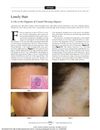
October 2011 in “Archives of Dermatology” Isolated long hairs at the original hairline can help diagnose Frontal Fibrosing Alopecia.
5 citations
,
August 2001 in “International Journal of Dermatology” This case study reports a 20-year-old laborer's progressive hair loss with scalp and body lesions, diagnosed as lichen planopilaris, leading to scarring alopecia resembling male-pattern baldness.
4 citations
,
January 1981 in “PubMed” This study found that medullary cell content in mammal hair evolves from an amorphous form to a biphasic phase, with human and anthropoid hair containing both macrofibrils and microfibrils.
 37 citations
,
August 1991 in “International Journal of Dermatology”
37 citations
,
August 1991 in “International Journal of Dermatology” This study reported a predominance of adult patients, mostly women, with Trichophyton violaceum tinea capitis in southern Taiwan, noting a bimodal age distribution and questioning whether this represents a new trend.
 April 2018 in “Journal of Investigative Dermatology”
 This study identified the osteopontin-derived peptide, FOL-005, as a potential inhibitor of unwanted human hair growth by promoting catagen development without reducing stem cell numbers or showing toxicity.
 8 citations
,
January 2007 in “International journal of experimental pathology”
8 citations
,
January 2007 in “International journal of experimental pathology” This study observed that hairless HRS/J mice were resistant to Bacillus anthracis infection at the skin's surface, suggesting resistance may be due to increased dermal neutrophils rather than non-functional hair follicles.
January 2026 in “Case Reports in Dermatological Medicine” This report identified a family of Iranian siblings with diverse clinical forms of Lichen Planus, suggesting potential genetic and environmental involvement in its pathogenesis.