 May 2026 in “International Journal of Zoology and Applied Biosciences”
 This study developed and tested an herbal shampoo powder using medicinal plants, finding that formulation F6—which includes Tulsi and Neem—showed the highest antimicrobial efficacy against Pityrosporum ovale and Escherichia coli, with the formulations remaining non-irritant to skin and providing a stable alternative to synthetic shampoos.
 January 2026 in “International Journal of Innovative Research in Engineering & Multidisciplinary Physical Sciences”
 This study developed and tested an herbal hair serum containing aloe vera, hibiscus, rose extract, ginger, amla, argan oil, and vitamin E, finding it to be safe, non-irritating, and effective in improving hair shine, reducing frizz, and enhancing manageability.
 January 2024 in “Zenodo (CERN European Organization for Nuclear Research)”
 This study formulated and tested a new herbal hair oil combining fenugreek and aloe vera, reporting enhanced hair growth, effective dandruff protection, and a glossy finish, outperforming a marketed product while having minimal side effects.
7 citations
,
June 2021 in “Journal of Cosmetic Dermatology” This study concluded that among 11 formulations tested, the herbal shampoo formulation H2, containing fermented Cyclea peltata, had superior organoleptic and physicochemical properties.
 January 2026 in “Zenodo (CERN European Organization for Nuclear Research)”
 This study found that formulation F6 of the tested creams had superior stability and antioxidant potential, making it the most effective among the formulations.
1 citations
,
June 2021 in “Preprints.org” This study demonstrated that hair relaxers containing common chemicals significantly reduced cell viability and increased apoptosis in human skin cells, suggesting potential toxicity that could be assessed with advanced in vitro technologies rather than animal testing.

In this study, a pH-responsive microneedle patch was developed, showing potential in rat models for treating spinal cord injuries by reducing inflammation, promoting nerve regeneration, and supporting neurogenesis, which contributed to improved motor and neurological recovery.
 January 2026 in “Zenodo (CERN European Organization for Nuclear Research)”
 In this research, the authors developed and tested three types of hair conditioners—Herbal, Synthetic, and Ayurvedic—by analyzing their organoleptic properties and physicochemical parameters to assess their effects on hair manageability and appearance.
 May 2025 in “Journal of research in pharmaceutical science.”
 In this study, researchers developed and tested a herbal hair serum using hibiscus, flaxseed, and aloe vera, finding that the optimal formulation effectively reduces frizz, enhances hair smoothness and glossiness, and provides moisturizing benefits without harmful ingredients compared to conventional hair serums.
 June 2026 in “Zenodo (CERN European Organization for Nuclear Research)”
 In this study, researchers developed and tested an herbal antidandruff shampoo using plant extracts like neem, fenugreek seed, aloe vera, and clove, demonstrating antibacterial and antifungal activity against common scalp microbes and offering a potential natural alternative for dandruff treatment.
 June 2026 in “Zenodo (CERN European Organization for Nuclear Research)”
 In this study, researchers developed and tested three formulations of a herbal hair serum containing ingredients like Aloe vera and rose water, finding that all formulations exhibited acceptable properties for scalp application, with the H3 batch shown to have superior viscosity, homogeneity, and stability.
 December 2025 in “Zenodo (CERN European Organization for Nuclear Research)”
 In this study, researchers developed and tested a polyherbal hair serum containing several plant extracts, demonstrating its stability, safety, and effectiveness in promoting hair growth and improving hair quality, providing support for natural alternatives to synthetic hair care products.
 3 citations
,
October 2024 in “International Journal of Advanced Research in Science Communication and Technology”
3 citations
,
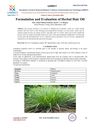
October 2024 in “International Journal of Advanced Research in Science Communication and Technology” In this study, lemon grass hair oil was formulated using various herbs and evaluated on parameters such as viscosity, saponification value, and pH to explore its potential for general hair application.
1 citations
,
October 2021 in “International journal of pharmaceutics and drug analysis” This study found that a herbal shampoo containing Aloe Vera and essential oils performed better in tests for smoothness, shine, and conditioning compared to a marketed shampoo.
 January 2024 in “Indonesian Journal of Pharmaceutical Education”
 In this experimental laboratory study, three cream formulations containing 1% Caffeine Herbasome® were developed and evaluated for stability, homogeneity, pH, dispersion, and adhesion, with results showing satisfactory stability and suitable adhesion properties for skin application.
 July 2026 in “Zenodo (CERN European Organization for Nuclear Research)”
 This study evaluated a herbal anti-dandruff shampoo containing fenugreek and hibiscus and found it had good cleansing action, stable foam, satisfactory pH, and caused no skin irritation, suggesting it may be an effective alternative to synthetic shampoos.
 July 2026 in “Zenodo (CERN European Organization for Nuclear Research)”
 This study formulated a herbal anti-dandruff shampoo using Fenugreek and Hibiscus extracts and found that it provided effective cleansing, stable foam, a satisfactory pH, and no skin irritation, suggesting it as a potential alternative to synthetic shampoos.
 June 2026 in “Zenodo (CERN European Organization for Nuclear Research)”
 In this study, a polyherbal Ayurvedic hair regrowth oil was formulated and tested, demonstrating significant hair growth-promotion in albino rats compared to untreated controls, suggesting potential as a natural remedy for hair loss, though further clinical trials in humans are recommended.
May 2026 in “Riset Informasi Kesehatan” This experimental study evaluated shampoo formulations with varying concentrations of candlenut oil, concluding that the 12% formulation (Formula 2) demonstrated optimal physical characteristics and quality standards, with acceptable pH and viscosity but reduced foam stability at higher oil concentrations.
May 2020 in “riUfes (Universidade Federal do Espírito Santo)” This study found that finasteride is stable under various stress conditions except for basic hydrolysis at extreme pH levels and identified compatible and incompatible excipients in pharmaceutical formulations, suggesting formulation changes for increased safety.
This study reported that the HG3 formulation of a Ketoconazole anti-dandruff gel exhibited superior drug release and antifungal efficacy without causing skin irritation, compared to other formulations tested.
This study concluded that a shampoo with 10% sodium lauryl sulfate showed the best physical properties among the tested formulas, aligning closely with the Indonesian National Standard.
 1 citations
,
March 2024 in “International Journal of Applied Pharmaceutics”
1 citations
,
March 2024 in “International Journal of Applied Pharmaceutics” This study found that varying the concentration of propylene glycol in rice water shampoo gel affects physical properties such as viscosity and foam height, without impacting organoleptic qualities or pH stability.
July 2025 in “Agroindustrial Technology Journal” In this study, researchers evaluated shampoo formulations with varying concentrations of rosemary essential oil, finding that the 2% formulation was most preferred based on sensory tests, and complied well with quality standards, indicating its potential as an effective component in hair care products.
 December 2024 in “Media Farmasi Jurnal Ilmu Farmasi”
 In this study, the researchers developed an optimum liquid shampoo formula using chia plant components and found it to meet specific physical characteristics and stability requirements, with viscosity and foam height tested within acceptable ranges.
 16 citations
,
January 2012 in “Asian pacific Journal of Tropical Biomedicine”
16 citations
,
January 2012 in “Asian pacific Journal of Tropical Biomedicine” This study found that a 2% polyherbal phyto-complex cream containing aqueous extracts of Trichosanthes cucumerina and Abrus precatorius effectively promoted hair growth in preclinical tests, comparable to minoxidil 2%.
 4 citations
,
February 2018 in “Jurnal teknologi”
4 citations
,
February 2018 in “Jurnal teknologi” This study found that Kaempferia galanga ethanolic extract has potential as an antifungal agent in an oil-in-water cream formulation, exhibiting stable physicochemical properties in laboratory tests.
4 citations
,
March 2017 in “Zenodo (CERN European Organization for Nuclear Research)” The study formulated a hair application Ayurvedic herbal oil using various plant materials, including Neem and Amla, and reported that all evaluated parameters, such as specific gravity and irritation tests, were acceptable and within standard limits.
2 citations
,
June 2023 in “Zenodo (CERN European Organization for Nuclear Research)” The authors outlined fundamental aspects of hair conditioners, including their purpose for enhancing hair management and luster, and evaluated three types—Herbal, Synthetic, and Ayurvedic—based on various properties such as pH and moisturization, focusing on ingredients like Aloe vera and flaxseed for potential hair repair benefits.
 1 citations
,
April 2025 in “International Journal for Research in Applied Science and Engineering Technology”
1 citations
,
April 2025 in “International Journal for Research in Applied Science and Engineering Technology” In this study, researchers developed an herbal face pack using ingredients like turmeric and neem, assessing its safety and efficacy. They reported that the formulation's properties, such as pH and stability, support its potential as a safe and effective alternative to synthetic skincare products.