January 2021 in “Hair therapy & transplantation” This study reports encouraging results in treating androgenetic alopecia by combining injectable PRF and PDO thread insertion on the scalp.
2 citations
,
September 2018 in “Clinical and Experimental Dermatology” This study found that pemphigus-associated alopecia indicates severe and treatment-resistant pemphigus, with higher disease activity and antibody levels compared to patients without alopecia.
 January 2026 in “RSC Advances”
 This study found that the natural polymer-based hydrogel Gel/SA@PL released growth factors in a controlled way, which enhanced tissue regeneration and minimized scarring in the healing of diabetic wounds.
November 2025 in “Free Radical Biology and Medicine” This study identified ten potential therapeutic targets and biomarkers for androgenic alopecia, with SOD1 and KL as particularly promising candidates for future therapies.
 January 2024 in “Journal of Cosmetics, Dermatological Sciences and Applications”
 This study found that electronically-operated pneumatic injections for administering a peptide-hyaluronic acid combination were well tolerated and led to significant improvement in hair density and thickness for men with androgenic alopecia over six months, though the exact mechanism remains uncertain.
 September 2026 in “Mendeley Data”
 This study found that the polyurethane-cellulose acetate scaffold containing plasma rich in growth factors enhanced gene expression linked to wound healing compared to controls.
 May 2024 in “Indian Journal of Dermatology”
 In this case report, a 22-year-old female was diagnosed with follicular Dowling-Degos disease based on clinical and histological findings, with symptoms including skin lesions confined to hair follicles. The report emphasizes the importance of differentiating this rare variant from similar conditions for proper management.
 1 citations
,
August 2019 in “Environmental Toxicology”
1 citations
,
August 2019 in “Environmental Toxicology” This study observed that low-dose intrauterine exposure to finasteride alters postnatal prostate development in male and female Mongolian gerbils, showing sex-specific differences in receptor expression and tissue changes.
 2 citations
,
January 2025 in “Frontiers in Pharmacology”
2 citations
,
January 2025 in “Frontiers in Pharmacology” In a rat model of benign prostatic hyperplasia, this study found that purple corn extract may improve symptoms by inhibiting prostate enlargement, reducing androgen receptor signaling, and exerting anti-inflammatory effects.
 98 citations
,
November 2002 in “Contact Dermatitis”
98 citations
,
November 2002 in “Contact Dermatitis” This study found that adverse reactions to para-phenylenediamine in hair dye, including severe allergic contact dermatitis, may be more common than currently reported and often misdiagnosed.
16 citations
,
June 2022 in “Journal of Pediatric Endocrinology and Metabolism” This study found an association between higher phthalate exposure and increased incidence of precocious puberty in girls, suggesting a need to reduce children's exposure to these endocrine disruptors.
13 citations
,
March 1997 in “Research in Veterinary Science/Research in veterinary science” This study found that epithelial keratin K 6 is associated with hyperkeratotic and ulcerated changes in the gastric pars oesophagea of pigs, suggesting epithelial proliferation plays a role in ulcer development.
3 citations
,
May 2019 in “Journal of Cosmetic Dermatology” This study suggests that the dipeptide Pro-Ile has FGF18-like activity, can penetrate model human epidermis, and may have potential as a cosmetic ingredient for skin and hair regulation.
October 2022 in “Frontiers in Bioengineering and Biotechnology” This study demonstrated that in a mouse model of androgenic alopecia, PLGA-DUT/siAR@DPCM nanoparticles effectively delivered drugs to hair follicles, suppressed androgen-related targets, promoted cell proliferation, and showed significant therapeutic effects with minimal adverse effects, suggesting their potential for clinical application.
 June 2026 in “HAL (Le Centre pour la Communication Scientifique Directe)”
 This infographic compares the safety profiles of SH‑1, a cosmetic ingredient, which showed no systemic absorption, and PP405, an investigational drug with dose-dependent systemic uptake and potential threshold breaches, highlighting differences in safety between cosmetic and investigational substances according to this report.
58 citations
,
January 2015 in “Journal of the American Academy of Dermatology” Pioglitazone may help treat lichen planopilaris, but more research is needed.
 April 2024 in “Nepal journal of dermatology, venereology & leprology”
 This article discusses the challenges in understanding and treating premature graying of hair and calls for more extensive research, reporting no new findings.
1 citations
,
January 2002 in “PubMed” The researchers reported that both finasteride and PM-9 competitively inhibit the 5 alpha-reductase enzyme in P. crustosum broth.
 9 citations
,
November 2017 in “Journal of Glaucoma”
9 citations
,
November 2017 in “Journal of Glaucoma” This case report documents a patient experiencing paradoxical depigmentation of the periocular skin after one year of using latanoprost, a finding not previously associated with this medication.
December 2021 in “Figshare” This study found that BBS7 expression is crucial for maintaining Sonic hedgehog signaling and periodontal ligament homeostasis in occlusal hypofunctional conditions.
 1 citations
,
June 2021 in “The Indonesian Biomedical Journal”
1 citations
,
June 2021 in “The Indonesian Biomedical Journal” This study concluded that 2-hour oral glucose tolerance tests are crucial for screening glycemic disorders in women with PCOS, as HbA1c was found to be an unsatisfactory tool for predicting glycemic disorders within this group.
 86 citations
,
March 2018 in “ACS Biomaterials Science & Engineering”
86 citations
,
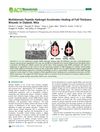
March 2018 in “ACS Biomaterials Science & Engineering” This study found that MDP hydrogel significantly accelerated wound healing and improved tissue formation in diabetic mice compared to a standard clinical hydrogel and control buffer.
 8 citations
,
March 2020 in “Frontiers in Cell and Developmental Biology”
8 citations
,
March 2020 in “Frontiers in Cell and Developmental Biology” This study developed a DPC cell line by introducing mutant CDK4, Cyclin D1, and TERT, making it a promising tool to study downstream signaling pathways activated by testosterone in androgenetic alopecia.
 September 2021 in “VNU Journal of Science: Medical and Pharmaceutical Sciences”
 This review discusses the diverse applications of platelet-rich plasma (PRP) across various medical fields and reports no new clinical results, advocating PRP as a promising therapy for future use.
 June 2018 in “Journal of Clinical Periodontology”
 Finasteride may cause gum side effects in some patients.
 20 citations
,
January 2003 in “Chemical and Pharmaceutical Bulletin”
20 citations
,
January 2003 in “Chemical and Pharmaceutical Bulletin” This study reports that five new progesterone derivatives demonstrated inhibitory activity against the 5α-reductase enzyme and binding affinity for the androgen receptor in an in vitro hamster model.
 21 citations
,
January 2015 in “The Journal of Steroid Biochemistry and Molecular Biology”
21 citations
,
January 2015 in “The Journal of Steroid Biochemistry and Molecular Biology” In this study, researchers demonstrated that in a mouse model, the stimulation of mammary tumor growth due to progesterone is primarily caused by its metabolite, 5αP, not progesterone itself.
 June 2020 in “The journal of investigative dermatology/Journal of investigative dermatology”
 This pilot study suggests that a new preparation of platelet-rich plasma gel may improve symptoms and tissue regeneration in patients with en coup de sabre scleroderma, though further trials are needed to clarify its role.
16 citations
,
October 1987 in “British journal of dermatology/British journal of dermatology, Supplement” This study found that a topical vitamin D3 analogue had an anti-proliferative effect on guinea pig skin epidermis.
 3 citations
,
April 2021 in “PLoS ONE”
3 citations
,
April 2021 in “PLoS ONE” The authors concluded that controlling voltage, pulse width, and calcium concentration in pulse electric field-activated platelet-rich plasma enhances the release of growth factors and serotonin without causing clot formation, suggesting potential clinical advantages over bovine thrombin-activated PRP.