 1 citations
,
April 2017 in “Journal of Investigative Dermatology”
1 citations
,
April 2017 in “Journal of Investigative Dermatology” This study reports that tofacitinib, a JAK inhibitor, may stabilize hair loss in patients with classic lichen planopilaris and frontal fibrosing alopecia, though hair regrowth was not robust.

This study analyzed the phytochemical content of two Portulaca species and found that extracts from Portulaca oleracea L. and Portulaca grandiflora H. demonstrated suitable characteristics for hair tonic formulations, meeting Indonesian National Standards for cosmetic products.
12 citations
,
January 2016 in “Skin Appendage Disorders” This study reports an association between frontal fibrosing alopecia and lupus erythematosus, noting progressive alopecia in the frontotemporal hairline despite treatment with hydroxychloroquine.
 January 2025 in “Journal of Food Biochemistry”
 In this study, 2′‐Fucosyllactose (2′‐FL) administration significantly reduced hair loss and increased hair length and thickness in a testosterone-induced androgenic alopecia mouse model, suggesting potential as a therapeutic agent for AGA.
1 citations
,
December 2014 in “Journal of the Society of Cosmetic Scientists of Korea” This study found that corticotropin-releasing factor influences cytokine expression related to hair growth in human dermal papilla cells and suggests CRF receptor antagonists could be potential treatments for stress-induced hair loss.
 8 citations
,
April 2020 in “Facial Plastic Surgery Clinics of North America”
8 citations
,
April 2020 in “Facial Plastic Surgery Clinics of North America” This article discusses the advancements in follicular unit transplantation for hair restoration and reports no clinical results; it emphasizes improved aesthetic outcomes using updated techniques.
 November 2025 in “The Bioscan.”
 This case report describes a 30-year-old man with alopecia areata who experienced recovery following treatment with the homeopathic medication Pix Liquida.
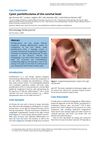 March 2026 in “Dermatology Online Journal”
 In this case report, the authors describe a rare cystic panfolliculoma in an 84-year-old man's right conchal bowl, noting its potential to mimic other tumors like basal cell carcinoma, which complicates diagnosis.
 64 citations
,
July 2016 in “Cold Spring Harbor Perspectives in Medicine”
64 citations
,
July 2016 in “Cold Spring Harbor Perspectives in Medicine” The p53 protein has complex, sometimes contradictory functions, including tumor suppression and promoting cell survival.
February 2025 in “Pediatric Dermatology” In this study, researchers used the CRISPR/Cas9 system to edit the FGF5 gene in Dorper sheep, observing increased density and finer wool, along with changes in cortisol levels and antioxidant enzyme activity linked to hair follicle development.
 April 2016 in “Plastic and reconstructive surgery. Global open”
 This article lists online educational resources from the American Society of Plastic Surgeons but reports no new research findings.
28 citations
,
January 1985 in “Journal of the American Academy of Dermatology” This report presents a case of pili torti in a young girl with citrullinemia, a novel association not previously documented.
 28 citations
,
January 2012 in “International Journal of Trichology”
28 citations
,
January 2012 in “International Journal of Trichology” This study observed that specific trichoscopic features like white peripilar signs, scalp pigmentation, and focal atrichia are associated with advanced female pattern hair loss in Fitzpatrick skin type III patients.
 January 2024 in “Dermatology practical & conceptual”
 In this study, researchers found that the peripilar sign in patients with androgenetic alopecia does not indicate perifollicular infiltrate but is more frequent in individuals with lighter skin types due to contrast with the skin.
 18 citations
,
April 2010 in “Actas Dermo-Sifiliográficas”
18 citations
,
April 2010 in “Actas Dermo-Sifiliográficas” This review discusses the current procedure for follicular unit hair transplantation, emphasizing its natural and reproducible results, but does not report new clinical findings.
 15 citations
,
December 2017 in “Journal of The European Academy of Dermatology and Venereology”
15 citations
,
December 2017 in “Journal of The European Academy of Dermatology and Venereology” This letter discusses potential pathogenetic links among frontal fibrosing alopecia, androgenetic alopecia, and fibrosing alopecia in a pattern distribution and reports no new clinical findings.
23 citations
,
July 1994 in “Journal of Dermatological Science” This study found that the twisted hair shafts characteristic of pili torti may result from uneven outer root sheath cell development, leading to irregular hair shaft modeling and twisting.
June 2026 in “Dermatologic Clinics”  August 2023 in “Journal of analytical & pharmaceutical research”
 In this study, microneedle-assisted human basic fibroblast growth factor therapy was reported to significantly improve hair regeneration in both male and female patients with androgenetic alopecia, alopecia areata, and telogen effluvium, showing greater effectiveness in males.
21 citations
,
January 2010 in “Skin pharmacology and physiology” In this study, researchers found that barrier-enhancing formulations significantly reduced the penetration of proteins into hair follicles in porcine skin models, with effectiveness varying by formulation.
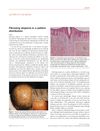 16 citations
,
February 2010 in “Journal of the European Academy of Dermatology and Venereology”
16 citations
,
February 2010 in “Journal of the European Academy of Dermatology and Venereology” This article is a letter to the editor about fibrosing alopecia in a pattern distribution and reports no new research findings.
January 2009 in “Lishizhen Medicine and Materia Medica Research” The researchers reported that the aqueous extract of Urtica fissa E.Pritz inhibited 5α-reductase activity in vitro.
 15 citations
,
September 2016 in “Hair transplant forum international”
15 citations
,
September 2016 in “Hair transplant forum international” This abstract reviews the evolution of hair restoration techniques, from 19th-century surgical scalp flaps to modern FUE and FUT methods, without providing new clinical findings.
 May 2026 in “AAPS PharmSciTech”
 This study found that PEGylated LUT-Aspasomes significantly improved neuroprotective effects in stressed rats, enhancing spatial memory, reducing depressive-like behavior, and preserving hippocampal architecture better than free luteolin. Additionally, it increased brain delivery and stability, suggesting potential for treating stress-related neurobehavioral disorders.
 17 citations
,
December 2010 in “Journal of Investigative Dermatology”
17 citations
,
December 2010 in “Journal of Investigative Dermatology” This study found that higher levels of the protein Flii were associated with enhanced hair follicle regeneration and longer hair fibers in a mouse model.
 February 2011 in “Journal of the American Academy of Dermatology”
 This study found that polycystic ovary syndrome was the most common cause of hirsutism among premenopausal women in Algeria.
March 2022 in “Oncology Times” In this study, tebentafusp-tebn improved overall survival in patients with metastatic uveal melanoma compared to standard therapies, despite higher rates of significant adverse events.
 March 2021 in “bioRxiv (Cold Spring Harbor Laboratory)”
 This study found that the absence of Hif-p4h-2 in specific mouse skin cells disrupted hair follicle development, leading to hair loss due to irregular keratin formation and pathway signaling.