November 2023 in “Вопросы современной педиатрии” This study reported that genetic testing is crucial for accurately diagnosing hypotrichosis, especially in cases with subtle symptoms or coexisting severe atopic dermatitis, as demonstrated in a young girl with a DSG4 gene mutation.
 May 2023 in “Dermatology and therapy”
 This study aims to provide a practical guide for managing common causes of madarosis, highlighting the need to identify underlying causes to ensure effective treatment for eyelash and eyebrow loss.
 February 2023 in “Asian journal of pharmaceutical research and development”
 This survey reports on the types and extraction factors of flavonoids in three aquatic plants from Iraqi marshlands but notes limited information on individual flavonoid profiles and their biological impacts.
 January 2023 in “Asian Journal of Pediatric Research”
 This study identified black dots as the most common trichoscopic sign in children with alopecia areata, which is crucial for diagnosis and understanding disease severity and prognosis.
 January 2023 in “Pediatric Endocrinology Diabetes and Metabolism”
 This review discusses current knowledge of isolated premature pubarche in infants and reports no new findings, highlighting it as a mild, self-limiting condition that necessitates exclusion of serious causes.
 January 2023 in “Frontiers research topics”
 This article describes the Frontiers journal series, highlighting its open-access approach and tiered publishing system, but it presents no new empirical findings.
 December 2022 in “Rossijskij žurnal kožnyh i veneričeskih boleznej”
 This source highlights that the incidence of alopecia areata is increasing among children, and while corticosteroids and Janus kinase inhibitors show potential effectiveness and safety, they remain unapproved by the FDA for pediatric use.
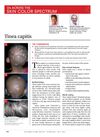 October 2022 in “The Journal of Family Practice”
 This article describes cases of tinea capitis in young Black and Latina children, highlighting the condition's diverse presentations such as erythema, scaling, and subtle signs like comma hairs, but reports no new clinical results.
 September 2022 in “Dermatology and therapy”
 This review summarizes current evidence on the use of contact immunotherapy, excluding alopecia areata, for various skin diseases, discussing its safety, efficacy, and the underlying mechanisms as reported from studies in the PubMed database.
 July 2022 in “medRxiv (Cold Spring Harbor Laboratory)”
 This review supports an autoimmune hypothesis for Satoyoshi syndrome, noting associations with autoantibodies and autoimmune diseases, and reports an observed improvement in most patients with corticosteroid or immunosuppressant treatments.
 February 2022 in “Research Square (Research Square)”
 This study identified candidate genes related to hair follicle development in Merino sheep, providing insights for improving sheep wool quality and potentially understanding human hair growth mechanisms.
 January 2022 in “Dermatology Review”
 This study found that patients with chronic kidney disease-associated pruritus had elevated serum levels of interleukin 31, suggesting a possible role of this cytokine in the condition.
 October 2021 in “Dermatology practical & conceptual”
 A Saudi girl was diagnosed with Loose Anagen Hair Syndrome, a rare condition causing easy hair loss without scarring.
This review found an increased prevalence of common skin disorders, such as infectious and inflammatory conditions, in patients with Down syndrome and highlighted the need for improved screening and management guidelines.
 May 2021 in “Open Access Macedonian Journal of Medical Sciences”
 This study found that individuals with premature hair graying had significantly lower levels of antioxidants compared to controls, but the severity of graying did not significantly correlate with oxidative stress levels.
 January 2021 in “Advances in health sciences research/Advances in Health Sciences Research”
 This case report describes two siblings with gray patch tinea capitis, highlighting exposure to cats and inappropriate corticosteroid use as risk factors, and treatment with griseofulvin and terbinafine.
 January 2021 in “Journal of clinical and cosmetic dermatology”
 This review highlights the role of the skin's photosensory system in mediating responses to UVA radiation, contributing both to immediate protective effects and to broader circadian and seasonal adaptations, but reports no new experimental results.
 January 2019 in “Springer eBooks”
 Acne is linked to inflammation and insulin resistance, and is associated with various syndromes that require different treatments.
 July 2018 in “Elsevier eBooks”
 This article reviews the clinical presentation, diagnosis, and treatment options for discoid lupus erythematosus and reports no new clinical results.
 April 2018 in “Routledge eBooks”
 This article discusses the assumptions linking sex, gender identity, gender role, and sexual orientation, highlighting that these inferences are often incorrect, but it reports no new empirical results.
 January 2018 in “Springer eBooks”
 Terbinafine is the most effective medicine for fungal nail infections, especially for diabetics and those with weak immune systems.
 January 2014 in “HAL (Le Centre pour la Communication Scientifique Directe)”
 This review provides an update on sex hormone-associated dermatoses in dogs, detailing known conditions like feminization syndrome and exploring less understood issues such as alopecia X, without presenting new clinical findings.
 July 2011 in “British Journal of Dermatology”
 Dermatologists give better information on pathology forms, hypersensitivity vasculitis is a common skin issue, misdiagnoses can occur, and various skin conditions are linked to loss of elastin or genetic factors.
 December 2008 in “Enzyme and Microbial Technology”
 New patents include innovations in skin and hair care, disease treatment, plant stress tolerance, and protein purification.
 June 2026 in “Frontiers in Immunology”
 This review discusses the role of epithelial–mesenchymal transition in cutaneous fibrotic disorders and highlights potential molecular targets for therapy, but reports no new clinical results.
 May 2026 in “International Journal of Scientific Research in Chemistry”
 This study examined finasteride degradation under stress conditions, identifying three unique degradation products in acidic environments, providing insights into impurity profiling and quality control for finasteride formulations.
 May 2026 in “Research Square”
 This research reports that the polyG fragment within the Hoxc13 protein alters its gene regulatory functions, which could have influenced mammalian hair evolution by affecting pathways related to hair follicle development.
 April 2026 in “International Journal of Impotence Research”
 This review outlines the major health consequences of anabolic-androgenic steroid abuse, with a focus on sexual and reproductive issues, and suggests management prioritizes cessation and relapse prevention due to lack of robust randomized trials.
 April 2026 in “Experimental & Molecular Medicine”
 This study used integrated single-cell chromatin and transcriptomic analyses in developing mouse skin to uncover gene networks involved in skin lineage specification and identified Mef2c+ upper fibroblasts as potential precursors to certain muscle-like structures, with cross-species findings in human skin.
 April 2026 in “Dermatology and Therapy”
 This study reviews the efficacy and safety of advanced therapies like TNFα inhibitors and IL-17/IL-23 inhibitors for dissecting cellulitis of the scalp, finding TNFα inhibitors particularly effective for severe or refractory cases, although prospective validation is needed for early intervention benefits.