This abstract provides contact information for Dr. Ban Kamoona at the Medical University – Sofia and contains no research findings.
This study found that inhibiting AP-1 transcription factors in mice causes squamous tumors to transform into sebaceous tumors and regulates tumor cell lineage.
In a hair-growth mouse model, this study reported that the novel AR antagonist candidate 39, derived from structural optimization of 14-P1, achieved similar efficacy to pyrilutamide with faster response and maintained safety, demonstrating potent AR antagonism and favorable pharmacokinetics with lower systemic toxicity risk.
147 citations
,
August 2005 in “The Plant Cell” This study identified a key Arabidopsis thaliana gene, TIP1, whose product is involved in S-acylation crucial for normal plant cell growth, particularly affecting root hair development.
3 citations
,
October 2024 in “Frontiers in Pharmacology” This laboratory study found that PI extract, along with its metabolites Ang and Mac, inhibited cell proliferation and protein expression linked to pathways involved in BPH, suggesting potential for therapeutic use, although the Ang-Mac combination showed no significant effect on apoptosis through the p53 pathway.
1 citations
,
January 2010 in “Institutional Repository of Leibniz Universität Hannover (Leibniz Universität Hannover)”  September 2024 in “Frontiers in Genetics”
 In this study, researchers found a significant association between the rs13405699 SNP at 2q31.1 and male pattern baldness among Han Chinese men, suggesting genetic influence on this condition in this population.
6 citations
,
January 2022 in “Database” This database provides detailed physiological parameters of porcine skin to enhance the MPML MechDermA Model, improving dermal absorption predictions for human studies in the Simcyp Simulator.
124 citations
,
July 1997 in “Journal of Biological Chemistry” This study found that overexpression of an enzyme in transgenic mice led to distorted polyamine levels, resulting in permanent hair loss and female infertility.
 September 2016 in “Journal of Dermatological Science”
 This study found that knockout mice lacking SMS1 showed reduced body weight and hair loss, indicating a role for SMS1 in normal growth and hair health.
December 2024 in “Regenerative Therapy” This study found that altering levels of SFRP1 in human dermal papilla cells affects cell function and regulates Wnt/β-catenin signaling or telomerase activity, suggesting that targeting SFRP1 could potentially offer a new approach to treat hair loss diseases.
5 citations
,
May 2022 in “Diagnostics” This study found that certain lncRNA gene polymorphisms in HOTAIR and MALAT1 are associated with increased susceptibility to systemic lupus erythematosus, potentially informing clinical applications.

This study found that inhibiting AP-1 activity in mice can induce lineage transdifferentiation between squamous and sebaceous tumors, suggesting AP-1's role in maintaining tumor cell identity.
 7 citations
,
March 2011 in “Hormone and Metabolic Research”
7 citations
,
March 2011 in “Hormone and Metabolic Research” This study found that in PCOS patients, variations in the lipin 1 gene, particularly the intron 1 SNP, may protect against insulin resistance and glucose intolerance, highlighting a potential genetic factor in the disorder's cardiometabolic complications.
December 2021 in “Figshare” This study found that downregulation of BBS7 in periodontal ligament cells was associated with reduced Sonic hedgehog signaling, which plays a crucial role in maintaining PDL homeostasis.
 36 citations
,
June 2021 in “Experimental & Molecular Medicine”
36 citations
,
June 2021 in “Experimental & Molecular Medicine” This study found that mechanical stress activates a WISP-1/Hedgehog signaling axis that contributes to ligamentum flavum hypertrophy and fibrosis, identifying Hedgehog signaling as a potential therapeutic target.
41 citations
,
December 2011 in “The journal of investigative dermatology/Journal of investigative dermatology” This study reported that deleting the MED1 subunit from the MED complex in keratinocytes resulted in disrupted hair differentiation and cycling, leading to hair loss in mice.
 April 2017 in “Journal of Investigative Dermatology”
 In this study, HPH-15, a newly synthesized compound, demonstrated potential in reducing skin fibrosis in a mouse model by targeting underlying pathogenic mechanisms and exhibited a good safety profile, warranting further clinical trials for fibrotic skin disorders like systemic sclerosis.
March 2009 in “European Urology Supplements” July 2026 in “Research Square” November 2020 in “Journal of animal science/Journal of animal science ... and ASAS reference compendium” This study identified several genetic variants associated with cattle hair coat length, which may help breed more heat-tolerant animals by facilitating efficient heat loss.
52 citations
,
January 2003 in “Journal of Investigative Dermatology” This study found that thrombospondin-1 plays a critical role in hair follicle cycle regulation, with deficiency prolonging follicle growth and overexpression delaying it through antiangiogenic effects.
 20 citations
,
September 2010 in “Cell Cycle”
20 citations
,
September 2010 in “Cell Cycle” This study reports that in MRL mice, loss of p53 does not impair ear regeneration, suggesting p21's potential role in this process may involve the Tgfb/Smad pathway.
28 citations
,
January 2015 in “Journal of Cell Science” In this study, PINCH-1 gene loss in mouse epidermis led to detachment from the basement membrane, thickened skin, and hair loss, with findings suggesting PINCH-1 plays a role in keratinocyte adhesion through both ILK and EPLIN pathways.
26 citations
,
September 2009 in “Clinical genetics” This study identified four novel and one recurrent mutation in the AIRE gene among Arab families with APS1, suggesting these contribute to the disorder.
 September 2025 in “Journal of the American Academy of Dermatology”
 Reducing SFRP1 can promote hair growth and may help treat hair loss.
 1 citations
,
January 2018 in “Acta dermato-venereologica”
1 citations
,
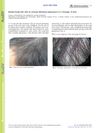
January 2018 in “Acta dermato-venereologica” A teenager's hair with alternating white and dark bands, known as Pili annulati, is a genetic condition that is usually harmless and often considered attractive.
January 2002 in “映像情報メディア学会技術報告” This study found that 60% of examined prostate tumors had new somatic substitutions in the SRD5A2 gene, affecting enzyme activity and potentially influencing prostate cancer progression.
12 citations
,
July 2004 in “Molecular genetics and genomics” This study identifies a new mutation in the Scd1 gene in a strain of Kunming mice, causing skin and hair defects with the mildest impact among similar mutations.
 4 citations
,
July 2012 in “Linguistic Annotation Workshop”
4 citations
,
July 2012 in “Linguistic Annotation Workshop” This study found that greater root surface area due to root hairs contributed to better growth and zinc uptake of wild-type barley compared to its root-hairless mutant in zinc-deficient soil.