9 citations
,
October 2017 in “Frontiers in plant science” This study found that the peach gene CTG134 mediates auxin-ethylene crosstalk, affecting root hair growth and hormone-regulated processes in plants.
1 citations
,
January 2020 In this study, researchers found that cepharanthine significantly inhibited the growth of non-small cell lung cancer cells by inducing apoptosis through ROS generation and altering multiple signaling pathways, suggesting potential as a novel lung cancer treatment.
 1 citations
,
April 2016 in “The American Journal of the Medical Sciences”
1 citations
,
April 2016 in “The American Journal of the Medical Sciences” This article discusses the characteristics of lichen planus pigmentosus and frontal fibrosing alopecia but reports no new clinical findings; the authors review existing knowledge.
2 citations
,
July 2009 in “Mayo Clinic Proceedings” This case report describes a 66-year-old woman diagnosed with porphyria cutanea tarda, characterized by painless vesicular lesions on sun-exposed areas and associated with hemochromatosis, and managed effectively with phlebotomy.
23 citations
,
July 2003 in “Journal of Investigative Dermatology” Genetic testing for hairless gene mutations is crucial to correctly diagnose and treat atrichia with papular lesions.
 8 citations
,
January 2016 in “Annals of Dermatology”
8 citations
,
January 2016 in “Annals of Dermatology” This study found that the ALAVAX complex, containing 5-ALA and GHK peptide, may increase hair count in male pattern hair loss patients over 6 months without adverse events.
1 citations
,
January 2025 in “Proceedings of the National Academy of Sciences” This study used cryoelectron microscopy to unveil the structure of LPA-bound human LPAR6, revealing unique ligand binding and recognition modes distinct from LPAR1, which may aid in designing targeted compounds for hair loss and cancer.
1 citations
,
November 2022 in “Journal of Investigative Dermatology” This study found that ALRN-6924, a clinical-stage dual inhibitor, can selectively protect human scalp hair follicles from paclitaxel-induced toxicity and damage by inducing transient cell cycle arrest in healthy cells without affecting cancer cells, potentially reducing chemotherapy-induced alopecia.
 May 2022 in “Benha Journal of Applied Sciences”
 This study found that programmed death-ligand 1 (PD-L1) levels correlated with the severity of alopecia areata, suggesting its potential as an indicator and possible target for new treatments.
 January 2023 in “Annals of Dermatology”
 This study found that alopecia areata patients with a CCHCR1 gene variant had higher recurrence rates and structural abnormalities in hair compared to those without the variant.

This case report details a 38-year-old woman in Sri Lanka diagnosed with systemic lupus erythematosus-associated protein-losing enteropathy, identified through hypoalbuminemia and EULAR criteria in a resource-limited setting.
May 2010 in “Europe PMC (PubMed Central)” This chapter discusses the synthesis and analysis of near-infrared fluorescent activity-based probes for imaging cysteine protease activity, reporting potential benefits for disease diagnosis but noting challenges in imaging specific locations with high cathepsin activity.
17 citations
,
April 1997 in “American Journal of Dermatopathology” This report provides the first microscopic description of pachyonychia congenita-associated alopecia, identifying a combination of histological features that might be unique to this condition.
 4 citations
,
May 2023 in “Research Square (Research Square)”
4 citations
,
May 2023 in “Research Square (Research Square)” This study found that cephalanthine inhibited the growth of gastric cancer cells in vitro and in vivo by inducing oxidative stress and altering energy metabolism, suggesting its potential as a treatment for gastric cancer.
September 2024 in “Journal of the American Academy of Dermatology” Alopecia areata often recurs after treatment with diphenylcyclopropenone.
6 citations
,
August 2022 in “International journal of molecular sciences” This study demonstrated that α-phellandrene promotes dermal papilla cell proliferation through a cAMP-mediated pathway and upregulates VEGF expression, suggesting its potential use in hair loss prevention.
 2 citations
,
January 2018 in “International Journal of ChemTech Research”
2 citations
,
January 2018 in “International Journal of ChemTech Research” This study used phytochemical screening and FTIR spectroscopy with PCA to reveal slight chemical differences between two varieties of Eclipta alba, providing a method for their effective discrimination.

This study introduced Cadd4, a peptide-based degrader developed using computer-aided drug design, which effectively reduced PCSK9 levels and increased LDL receptor expression, resulting in decreased plasma cholesterol and LDL-C levels in hypercholesterolemic mice, without liver toxicity.
 April 2025 in “Egyptian journal of Immunology”
 In this study, researchers reported significantly higher serum calprotectin levels in alopecia areata patients compared to controls and that these levels were associated with the disease's severity, type, duration, and nail involvement, suggesting calprotectin as a potential marker for inflammation in these patients.
 1 citations
,
September 2011 in “Journal of Dermatology”
1 citations
,
September 2011 in “Journal of Dermatology” This letter reports a woman with nevoid basal carcinoma syndrome and pronounced androgenic alopecia associated with a novel PTCH gene mutation p.Leu1159fsx32, suggesting a genetic link in this case study.
February 2026 in “Chemical Engineering Journal” This study found that a novel nano-engineered platform, PCA, significantly promoted hair regeneration in an androgenetic alopecia mouse model by enhancing angiogenesis and hair follicle stem cell proliferation, showing promise for future hair regrowth treatments.
2 citations
,
October 2016 in “OPAL (Open@LaTrobe) (La Trobe University)” This study reports that the Swedish newborn screening program for phenylketonuria, galactosaemia, and biotinidase deficiency is effective, with high sensitivity and specificity, and lower false positive rates compared to other countries, while genetic variants impact detection and incidence patterns in Sweden.
 7 citations
,
December 2015 in “International Journal of Dermatology”
7 citations
,
December 2015 in “International Journal of Dermatology” In this study, researchers identified a novel and two previously reported pathogenic mutations in the HR gene associated with atrichia with papular lesions in five Pakistani families.
 October 2017 in “The Indian Journal of Animal Sciences”
 This study found that prolactin gene polymorphism in Changthangi goats showed no significant association with Cashmere quality traits, indicating the need for further research with larger sample sizes.
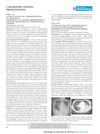 May 2025 in “The Journal of Rheumatology”
 This case report highlights a rare instance of diffuse alveolar hemorrhage in a patient with catastrophic antiphospholipid syndrome, emphasizing the importance of early recognition and multidisciplinary management.
2 citations
,
October 2018 in “Journal of Mind and Medical Sciences” In this study, researchers developed and validated a method to quantify pyrrolizidine alkaloids in honey and flour, increasing alkaloid recovery rates through successive extractions, achieving up to 86% recovery for honey and 76% for flour.
2 citations
,
March 2007 in “The journal of investigative dermatology/Journal of investigative dermatology” This study strongly suggests that a distinct form of hereditary localized alopecia in a Chinese family is linked to a novel locus on chromosome 2p25.1–2p23.2.
 1 citations
,
April 2017 in “Journal of Investigative Dermatology”
1 citations
,
April 2017 in “Journal of Investigative Dermatology” This study suggests that alkaline phosphatase-regulated expression of CCL5 contributes to the trichogenicity of human dermal papilla spheres.
 13 citations
,
November 2012 in “PLoS ONE”
13 citations
,
November 2012 in “PLoS ONE” This study identified a novel recessive mutation in mice causing lethal congenital lamellar ichthyosis, with skin and hair follicle alterations similar to human congenital ichthyoses, linked to a specific genetic defect affecting Fatp4.
 August 2016 in “Journal of Investigative Dermatology”
 This case report identifies a novel LIPH gene mutation linked to autosomal recessive woolly hair/hypotrichosis in a Japanese boy, expanding the spectrum of known mutations associated with this condition.