 10 citations
,
June 2011 in “Archives of Dermatology”
10 citations
,
June 2011 in “Archives of Dermatology” Finasteride caused blisters on hands and feet.
 December 2025 in “Journal of Pakistan Association of Dermatologists”
 This case report highlights a rare instance of erosive pustular dermatosis of the scalp in a patient on afatinib, underlining the importance of early recognition and management of this adverse effect.
5 citations
,
August 2024 in “Frontiers in Immunology” In this study, upadacitinib was reported as effective in rapidly treating psoriasiform eczema in five male patients and showed varying degrees of effectiveness on other immune-mediated comorbidities like alopecia areata, vitiligo, ulcerative colitis, and hidradenitis suppurativa.
20 citations
,
October 2017 in “Stem Cell Reports” This study found that loss of the ACER1 gene in mice led to increased ceramide levels and progressive hair loss, highlighting ACER1's role in maintaining hair follicle stem cell homeostasis.
 May 2024 in “Nano letters”
 This study developed a quercetin-encapsulated and polydopamine-integrated nanosystem that reshapes the perifollicular microenvironment, showing potential for rescuing hair follicle viability and regenerating hair follicles in androgenic alopecia by scavenging reactive oxygen species and promoting angiogenesis.
 1 citations
,
May 2025 in “The Journal of Rheumatology”
1 citations
,
May 2025 in “The Journal of Rheumatology” In this case report, two female patients with refractory systemic lupus erythematosus showed significant improvement after treatment with the JAK inhibitor upadacitinib, indicating potential as a promising option for difficult cases, although further research is needed to confirm its broader safety and efficacy.
 9 citations
,
May 2016 in “Veterinary dermatology”
9 citations
,
May 2016 in “Veterinary dermatology” This case report describes how a long-term combination of oral fatty acids and topical therapy appeared beneficial for managing autosomal recessive congenital ichthyosis in a goldendoodle with a PNPLA1 mutation.
4 citations
,
May 2023 in “Cells” In this study, baricitinib treatment improved the differentiation of skin-derived precursors into adipocytes for diseases like Hutchinson-Gilford progeria syndrome, suggesting potential benefits when combined with lonafarnib.
 5 citations
,
July 2022 in “Orphanet journal of rare diseases”
5 citations
,
July 2022 in “Orphanet journal of rare diseases” This study found that RSPO1 mutations in patients with a 46XX disorder of sexual development contribute to impaired skin integrity and increased risk of squamous cell carcinoma in areas subject to friction.
 33 citations
,
October 2013 in “Journal of The American Academy of Dermatology”
33 citations
,
October 2013 in “Journal of The American Academy of Dermatology” In this study, pioglitazone treatment in patients with lichen planopilaris showed limited success, with significant improvement seen in only a minority of cases.
 September 2021 in “Physiology News”
 This abstract contains only graphic design specifications and reports no new research findings.
 1 citations
,
October 2022 in “International journal of endocrinology”
1 citations
,
October 2022 in “International journal of endocrinology” This study found that dihydrotestosterone treatment in female rats altered anterior pituitary gland gene expression, with significant repression of prolactin and inhibition of GnRH receptor gene expression, suggesting specific hormone production changes.
78 citations
,
October 2007 in “Journal of Investigative Dermatology” Delta1 is crucial for controlling skin cell growth and preventing tumors in mice.

This case study observed that a patient with multiple refractory inflammatory conditions, including psoriasis, alopecia areata, and psoriatic arthritis, experienced significant improvements after three months of treatment with upadacitinib. The report suggests potential benefits of upadacitinib for similar conditions, recommending further clinical trials.
 13 citations
,
November 2010 in “Experimental Dermatology”
13 citations
,
November 2010 in “Experimental Dermatology” This study found that L-ascorbic acid 2-phosphate could reduce DHT-induced DKK-1 expression in balding scalp cells, suggesting potential for treating androgen-driven hair loss.
38 citations
,
April 2016 in “The Journal of Pathology” This study found that mice lacking alkaline ceramidase 1 with elevated skin ceramide levels showed disrupted skin homeostasis, including altered hair follicle structures, increased water loss, and a hypermetabolism phenotype.
10 citations
,
June 2019 in “Dermatologic therapy” In this study, treatment with DPCP alone was more effective for hair regrowth and presented fewer side effects in chronic extensive alopecia areata compared to combination therapy with DPCP and anthralin.
July 2025 in “Journal of Investigative Dermatology” Hhip-Cre effectively targets dermal papilla cells for gene manipulation in hair biology.
This study observed that the development of the pars intermedia in long-tailed macaques is closely associated with changes in skin pigmentation during pre- and postnatal periods through melanocyte-stimulating hormone and ACTH activity.
41 citations
,
April 2009 in “Journal of comparative neurology” In this study, researchers observed that P2X3-immunoreactive fibers extensively innervate the epidermis of rats, suggesting a primary role in detecting noxious stimuli in cutaneous tissue.
2 citations
,
May 2025 in “Journal of Clinical Medicine” This study reported that in a case series of three adolescents with alopecia areata and atopic dermatitis, treatment with 15 mg/day of upadacitinib led to rapid improvement in skin symptoms and significant hair regrowth over 12 months, with no severe adverse events observed.
1 citations
,
November 2022 in “Journal of Investigative Dermatology” This study found that ALRN-6924, a clinical-stage dual inhibitor, can selectively protect human scalp hair follicles from paclitaxel-induced toxicity and damage by inducing transient cell cycle arrest in healthy cells without affecting cancer cells, potentially reducing chemotherapy-induced alopecia.
 April 2023 in “Journal of Investigative Dermatology”
 This research reexamined transcriptomic data to study stem and progenitor cell proliferation in psoriasis, finding that the number of committed progenitor cells increased eight-fold in psoriatic skin without altering stem cell numbers, potentially identifying new therapeutic targets.
 1 citations
,
June 2023 in “Animals”
1 citations
,
June 2023 in “Animals” In this study, researchers found that overexpression of CRABP2 enhanced the proliferation of dermal papilla cells in Hu sheep through activation of the Wnt/β-catenin pathway, even when the pathway was inhibited.
2 citations
,
January 2020 in “Evidence-based Complementary and Alternative Medicine” This study found that Hataedock may alleviate atopic dermatitis symptoms in mice by maintaining skin homeostasis and improving skin barrier formation through the endocannabinoid system.
 13 citations
,
August 2007 in “Bioorganic & medicinal chemistry letters”
13 citations
,
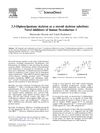
August 2007 in “Bioorganic & medicinal chemistry letters” This study developed a new competitive 5alpha-reductase inhibitor with an IC(50) of 0.84 microM using a novel chemical structure.
 September 2022 in “JAAD case reports”
 This case study of a 45-year-old man from Tonga describes the identification of pachyonychia congenita through genetic testing, revealing a mutation in the keratin gene KRT16, associated with chronic painful skin and nail conditions.
 5 citations
,
June 2015 in “British Journal of Dermatology”
5 citations
,
June 2015 in “British Journal of Dermatology” This article discusses the role of lysophosphatidic acid-induced histamine release in generalized pruritus among patients with primary sclerosing cholangitis and reports no new clinical results.
6 citations
,
February 2023 in “Genes” This study found that overexpression of the CUX1 protein promotes proliferation of Hu sheep dermal papilla cells and affects key genes in the Wnt/β-catenin signaling pathway.
39 citations
,
January 2008 in “World Journal of Gastroenterology” This report documents the first known case of acute inflammatory demyelinating polyneuropathy potentially linked to pegylated interferon-alpha 2a in a woman undergoing treatment for chronic hepatitis C.