19 citations
,
January 2020 in “Journal of Biophotonics” This study found that using a PEG-400/oleic acid mixture as an optical clearing agent enhanced the detection depth of particles in skin without causing dehydration, based on tests in rats and further testing in vivo.
July 2022 in “Journal of Investigative Dermatology” The combination of a plant extract and a peptide can increase hair pigmentation and may reverse greying.
 79 citations
,
January 1982 in “The American Journal of Medicine”
79 citations
,
January 1982 in “The American Journal of Medicine” This study reports that VP-16-213 (etoposide) shows significant therapeutic activity in several cancers including small cell bronchogenic carcinoma and certain leukemias, with hematologic toxicity being the primary side effect.

This research developed a pig graph pangenome assembly of 27 genomes, revealing the importance of structural variations in adaptation and breed-specific traits, with BTF3 identified as a key gene influencing intramuscular fat and meat quality.
12 citations
,
January 1987 in “Carcinogenesis” This study found that a single application of TCDD on the skin of hairless mice altered epidermal differentiation, changing keratin expression patterns similarly to a known tumor promoter.
44 citations
,
May 2023 in “MedComm” This review highlights the potential of PROTAC technology in drug discovery for previously undruggable targets, particularly in cancer therapy, while emphasizing the urgent need to discover more E3 ligase recruiters to optimize targeted protein degradation.
 4 citations
,
April 2018 in “Journal of Investigative Dermatology”
4 citations
,
April 2018 in “Journal of Investigative Dermatology” This study suggests that hydroxypinacolone retinoate (HPR) may be an effective alternative to tretinoin for anti-aging skin treatments, offering similar collagen production benefits without increased skin irritation.
 1 citations
,
January 2013 in “MedChemComm”
1 citations
,
January 2013 in “MedChemComm” This study characterized the SARM PF-05314882, finding it demonstrates anabolic activity in rats with minimal effects on the prostate, seminal vesicles, and luteinizing hormone levels.
 68 citations
,
July 2011 in “Journal of Biochemistry/The journal of biochemistry”
68 citations
,
July 2011 in “Journal of Biochemistry/The journal of biochemistry” This review discusses newly identified non-Edg family lysophosphatidic acid receptors, detailing their roles in vascular development, platelet activation, and hair growth, and reports no clinical results.
5 citations
,
September 2024 in “Biomolecules and Biomedicine” This study found that total glucosides of paeony (TGP) reduced hair loss and inflammation in alopecia areata mice by inhibiting cellular pyroptosis.
 6 citations
,
October 2012 in “Journal of Heredity”
6 citations
,
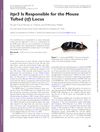
October 2012 in “Journal of Heredity” This study identified the Itpr3 gene as responsible for the tufted hair loss phenotype in the BTBR mouse strain.
 April 2016 in “The Journal of Sexual Medicine”
 This study analyzed 3,295 cases from the FDA Adverse Event Reporting System to describe demographics and reporting trends of post-finasteride syndrome, finding that most reports came from patients rather than health professionals.
 13 citations
,
January 2019 in “Colloids and Surfaces B: Biointerfaces”
13 citations
,
January 2019 in “Colloids and Surfaces B: Biointerfaces” This study found that incorporating a block copolymer significantly alters the size and morphology of niosome drug delivery systems made of non-ionic surfactants and cholesterol, affecting their stability.
September 2019 in “Pakistan Journal of Pharmaceutical Sciences” This study found that combining pemetrexed with platinum drugs led to better treatment outcomes and fewer adverse reactions in elderly patients with advanced lung adenocarcinoma compared to pemetrexed alone.
 April 2019 in “Radiotherapy and oncology”
 HPV infection is linked to better survival in advanced anal cancer, higher radiation doses improve survival, especially in HPV-negative patients, and prostaglandin E₂ pretreatment can protect mouse hair follicles from radiation damage.
October 2010 in “한국식품영양과학회 산업심포지움발표집” Fermented Liriope platyphylla helps hair grow in mice with hair loss.
 13 citations
,
June 2020 in “BMC genomics”
13 citations
,
June 2020 in “BMC genomics” This study found that chi-miR-30b-5p was more expressed in the telogen phase than in the anagen phase and inhibited dermal papilla cell proliferation by targeting CaMKIIδ.
12 citations
,
September 2015 in “Drug Design Development and Therapy” This study found that the DOX derivative AD198 more effectively inhibited cell viability and induced apoptosis in canine cancer cell lines K9TCC and K9OSA compared to DOX in vitro.
 13 citations
,
May 2019 in “Cancer Prevention Research”
13 citations
,
May 2019 in “Cancer Prevention Research” This study found that a three-month regimen of leucoselect phytosome, a grape seed extract complex, was well tolerated and significantly reduced bronchial proliferation markers in heavy active and former smokers.
 4 citations
,
February 2018 in “Journal of Investigative Dermatology”
4 citations
,
February 2018 in “Journal of Investigative Dermatology” This study suggests that thermal imaging may aid in diagnosing cellulitis, potentially improving patient care, although its applicability to certain cases requires further investigation.
 15 citations
,
April 2001 in “Journal of Dermatological Science”
15 citations
,
April 2001 in “Journal of Dermatological Science” This study found that KF19418 stimulated hair follicle growth in vitro and accelerated hair regrowth in a mouse alopecia model, with effects comparable to minoxidil.
 August 2023 in “Journal of Cosmetic Dermatology”
 This study observed that in a mouse model of androgenetic alopecia, treatments with LTF, 5% minoxidil, and LTF-DPC-EXO significantly promoted hair regeneration compared to the model group, potentially through modulation of the PI3K/AKT signaling pathway.
 11 citations
,
October 2019 in “Journal of Cancer Immunology”
11 citations
,
October 2019 in “Journal of Cancer Immunology” This article discusses the role of external beam radiotherapy as a primary treatment method for cancer and reports no new clinical findings.
April 2026 in “Proceedings of the National Academy of Sciences” In this study, Tmem30b was identified as a key regulator of outer hair cell structure in mice, and its modulation may offer a therapeutic approach for certain types of hearing loss.
 106 citations
,
April 2010 in “ACS Nano”
106 citations
,
April 2010 in “ACS Nano” This study found that about 80% of known fullerene-binding proteins rank in the top 10% of scorers for C60 docking sites, confirming the accuracy of the predictive model used.
 June 2025 in “International Journal of Nephrology and Renovascular Disease”
 This study suggests that PLA2R1 overexpression in PMN affects the podocyte cycle and may involve an additional immune response, which could provide new directions for PMN treatment development.
57 citations
,
January 2019 in “Stem Cell Research & Therapy” OCT4 helps hair stem cells renew and fight aging, potentially aiding hair regrowth.
 19 citations
,
November 1993 in “Mammalian Genome”
19 citations
,
November 1993 in “Mammalian Genome” This study reports that transgene insertion in homozygous transgenic mice causes irreversible hair loss and impaired immune function, linked to interruption of the hairless locus on Chromosome 14.
 3 citations
,
December 2019 in “International Journal of Pharmacology”
3 citations
,
December 2019 in “International Journal of Pharmacology” This study found that Poria cocos extract may enhance human follicle dermal papilla cell proliferation through the AKT signaling pathway, indicating its potential for hair growth promotion.
March 2026 in “Bioconjugate Chemistry” This review highlights the potential of peptide-based PROTACs (pPROTACs) in expanding the target range of protein degraders beyond small-molecule limitations, particularly for undruggable proteins, by utilizing advances in design, conjugation, and bioPROTAC technology.