54 citations
,
October 2007 in “The FASEB Journal” This study suggests that hairlessness in nude mice may be due to insufficient expression of phospholipase C-δ1, a molecule essential for normal hair development downstream of the Foxn1 gene.
9 citations
,
January 1975 in “PubMed” In this study, researchers using a mouse model found that the hairlessness in nude mice is likely due to a shared defect in the thymus and skin, not thymic dysgenesis alone.
 30 citations
,
January 2021 in “Journal of Clinical Immunology”
30 citations
,
January 2021 in “Journal of Clinical Immunology” This study describes various clinical phenotypes associated with FOXN1 mutations, finding that affected individuals may develop different severities of immunodeficiency based on their genetic mutations.
41 citations
,
October 2001 in “Experimental Dermatology” This review discusses the molecular and functional aspects of the nude gene in skin biology, providing insights into its role and evolutionary development, but reports no new results.
1 citations
,
April 2008 in “Pigment Cell & Melanoma Research” This study suggests that Foxn1 expression in keratinocytes influences pigmentation in mice, highlighting differences in the molecular mechanisms between mouse and human pigmentation processes.
75 citations
,
April 2000 in “Developmental Dynamics” This study suggests that the structural integrity and physical proximity of Whn's DNA binding and activation domains are crucial for hair keratin gene activation and may explain the nude phenotype.
58 citations
,
November 2004 in “The journal of investigative dermatology/Journal of investigative dermatology” This study found that mutations in the Foxn1 gene in nude mice affect not only hair but also nail structure and differentiation, offering insights into nail hypergranulosis pathogenesis relevant to human nail diseases.
22 citations
,
January 2009 in “Advances in experimental medicine and biology” This review discusses the human Nude/SCID phenotype and FOXN1 gene's role in immunological disorders affecting T-cell development but reports no new clinical findings.
 32 citations
,
January 2017 in “Orphanet journal of rare diseases”
32 citations
,
January 2017 in “Orphanet journal of rare diseases” This article reviews the genetic basis, diagnostic approaches, and treatment options for nude severe combined immunodeficiency, but does not present any new research findings.
 86 citations
,
October 2005 in “Experimental Dermatology”
86 citations
,
October 2005 in “Experimental Dermatology” This review explores the role of Foxn1 in mammalian skin biology, discussing its influence on hair follicle function and the potential for further research to enhance understanding of epithelial differentiation.
27 citations
,
January 2000 in “Developmental Dynamics” This study reports that a new nude allele, nu(StL), encodes a truncated Whn transcription factor affecting T-cell development and keratin gene expression, with notable differences from the original Whn(nu) mutation.
68 citations
,
December 2010 in “The journal of investigative dermatology/Journal of investigative dermatology” This study suggests a regulatory model where HOXC13 activates Foxn1, affecting hair and nail differentiation, supported by similarities in Hoxc13(tm1Mrc) and Foxn1(nu) mice phenotypes and gene expression patterns.
 69 citations
,
January 2013 in “Frontiers in Immunology”
69 citations
,
January 2013 in “Frontiers in Immunology” This review summarizes existing knowledge on the role of FOXN1 as a key regulator of thymic epithelial cell lineage and function, reporting no new experimental results.
 December 2022 in “Scientific Reports”
 This study found that transplanted hair follicle-associated pluripotent stem cells in mice differentiated into keratinocytes and stimulated hair growth by producing mature hair shafts.
 23 citations
,
November 2001 in “Archives of Dermatology”
23 citations
,
November 2001 in “Archives of Dermatology” This review discusses recent advances in the genetic understanding of inherited hair and nail disorders and reports no new clinical results.
This article reviews the history and characteristics of the rare nude phenotype SCID, primarily distinguished by severe T cell immunodeficiency and notable skin and hair abnormalities, but reports no new clinical findings.
 69 citations
,
August 1999 in “Developmental biology”
69 citations
,
August 1999 in “Developmental biology” This study found that ectopic expression of Whn in transgenic mice caused impaired differentiation in epidermis and hair follicles, with hair growth defects and severe urinary tract issues leading to hydronephrosis.
 21 citations
,
November 2010 in “Journal of molecular medicine”
21 citations
,
November 2010 in “Journal of molecular medicine” This study found that deleting FoxN1 in specific thymic epithelial cells disrupted the 3D thymic structure and led to age-dependent formation of 2D epithelial cysts, highlighting FoxN1's critical role in thymic morphogenesis.
 October 2018 in “InTech eBooks”
 This research suggests that mouse mutants and genomics can help study hair biology and epithelial differentiation by focusing on the role of the Foxn1 gene.
 22 citations
,
October 2012 in “Cell Transplantation”
22 citations
,
October 2012 in “Cell Transplantation” This study found that adding Wnt-10b to the culture medium of dermal papilla cells maintained their ability to induce hair follicles over 100 days in vitro.
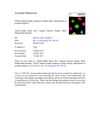 17 citations
,
June 2017 in “Gene”
17 citations
,
June 2017 in “Gene” This is the first report of the FOXN1 p.R255X mutation from India, demonstrating the global spread of this genetic mutation previously found only in an Italian community.
 10 citations
,
January 2010 in “Veterinary pathology”
10 citations
,
January 2010 in “Veterinary pathology” This study found that a newly identified mutation in the hairless gene in mice led to decreased Hr mRNA levels and changes in gene expression related to hair follicle development.
 3 citations
,
January 2008 in “Endocrine journal”
3 citations
,
January 2008 in “Endocrine journal” In this case report, the authors describe a partial androgen insensitivity syndrome patient with a novel AR gene mutation, highlighting challenges in gender assignment decisions for infants with partial AIS.
 93 citations
,
April 2003 in “Proceedings of the National Academy of Sciences of the United States of America”
93 citations
,
April 2003 in “Proceedings of the National Academy of Sciences of the United States of America” This study identified an unexpected critical role for the FATP4 protein in skin and hair development in mice, linking it to a potential candidate gene for restrictive dermopathy in humans.
 55 citations
,
November 2018 in “American journal of human genetics”
55 citations
,
November 2018 in “American journal of human genetics” This study identified five mutations in the gene LSS in individuals with unexplained hypotrichosis simplex, highlighting a potential role of mislocalized LSS proteins in disrupting hair follicle biology.
 40 citations
,
October 2002 in “Endocrinology”
40 citations
,
October 2002 in “Endocrinology” In this study, synthetic vitamin D3 analogs stimulated hair growth and formation of normal hair follicles in nude mice, unlike the natural form 1,25 dihydroxyvitamin D3.
 16 citations
,
October 2014 in “Cell death and disease”
16 citations
,
October 2014 in “Cell death and disease” This study found that over- and ectopic-expression of FoxN1 in early life negatively affected the development of thymic epithelial cells, T and B cells, and skin epithelial cells.
 November 2020 in “International journal of contemporary pediatrics”
 This study reports two siblings with severe combined immunodeficiency due to a mutation in the FOXN1 gene, characterized by T-cell immunodeficiency, alopecia totalis, and nail dystrophy.
 2 citations
,
October 2010 in “Journal of dermatological treatment”
2 citations
,
October 2010 in “Journal of dermatological treatment” In this study, researchers observed that in nude mice, exogenous stimulations lengthened the hair-existing phase and shortened the no-hair phase, with minoxidil influencing male and female mice differently.
 May 2026 in “Scientific Reports”
 In this study, researchers overexpressed Lrig3 in mouse skin and observed hair loss linked to changes in skin protein profiles and signaling pathways, suggesting a potential role for Lrig3 in maintaining skin homeostasis.