
In this study, researchers found two non-synonymous SNPs in the TERT gene associated with mean wool staple strength in sheep, suggesting TERT as a potential candidate gene for improving wool traits.
 21 citations
,
September 2013 in “Journal of circadian rhythms”
21 citations
,
September 2013 in “Journal of circadian rhythms” In this study, heavy nighttime physical exercise delayed the circadian phase of clock gene expression by 2 to 4 hours in a professional fighter, suggesting potential implications for managing circadian disorders.
 12 citations
,
January 2019 in “Sleep medicine”
12 citations
,
January 2019 in “Sleep medicine” This study found that night shift work disrupts clock gene expression in Japanese men, particularly affecting rhythms and levels of Period3 and Nr1d2, based on the shift schedule.
 55 citations
,
June 2007 in “Journal of Statistical Planning and Inference”
55 citations
,
June 2007 in “Journal of Statistical Planning and Inference” This study introduces an extended approach to the Bonferroni procedure that accounts for correlations among endpoints, aiming to improve test power while maintaining strong control of the family-wise type I error rate in clinical trials.
March 2023 in “The Journal of Urology” This study observed that despite the increase in nocturia cases from 2016 to 2021, the use of pharmacotherapy for the condition declined, suggesting potential undertreatment.
4 citations
,
September 1993 in “Steroids” This paper details a method for measuring testosterone metabolism into seven androgens using digital autoradiography, which offers high sensitivity and reduces the need for radioactive materials.
 February 2018 in “The Journal of Sexual Medicine”
 The researchers reported that using Natesto® testosterone gel improved erectile function and mood in hypogonadal men over a 90-day period.
25 citations
,
March 2004 in “Regulatory Toxicology and Pharmacology” Using testosterone-stimulated weanling rats can effectively replace castrated rats for anti-androgen testing, reducing animal stress.
1 citations
,
July 2023 in “Journal of the European Academy of Dermatology and Venereology”  December 2025 in “npj Systems Biology and Applications”
 This study found that cold exposure disrupts the circadian rhythm in cultured human cells by reducing oscillation amplitude, which is restored upon rewarming, while human hair follicle cells showed minimal amplitude sensitivity to temperature changes, suggesting an evolutionary advantage related to Hopf bifurcation dynamics.
1 citations
,
February 2025 in “Journal of the Neurological Sciences” This study suggests that BTP levels in cerebrospinal fluid might help diagnose CIDP and predict therapy response but require validation in larger cohorts.
 5 citations
,
December 2016 in “International journal of biometeorology”
5 citations
,
December 2016 in “International journal of biometeorology” In this study, bright light exposure during the daytime did not significantly affect clock gene expression in humans, although Rev-erb-ß expression appeared stronger under bright light compared to dim light.
 March 2009 in “The Journal of Urology”
 This paper discusses the potential of PSA doubling time after radical prostatectomy to predict overall survival but reports no new results.
 October 2023 in “Spectrochimica acta. Part A, Molecular and biomolecular spectroscopy”
 This study introduces three spectrophotometric techniques for accurately determining finasteride and tadalafil in their combined pharmaceutical form, demonstrating their sustainability, sensitivity, and suitability for quality assurance, alongside a dissolution study following FDA guidelines.

This abstract contains subscription and access information for Wolters Kluwer Health journals but reports no research findings.
February 2026 in “Advanced Science” This study found that the combination of TTNPB and CHIR99021 enhanced the derivation of highly advanced neural stem cells from human pluripotent stem cells, with improved chromatin accessibility and neuroectodermal gene expression, and these cells successfully engrafted in rat hippocampi to ameliorate depression-like symptoms.
19 citations
,
October 2016 in “Nutrition in clinical practice” This article provides guidelines by ASPEN for managing parenteral nutrition shortages but reports no new clinical findings.
In this study, introducing the rat OTC gene into spf-ash mice led to increased OTC activity and normalized hair growth and biochemical markers like urinary orotic acid and serum citrulline, partially correcting the symptoms of OTC deficiency.
11 citations
,
December 2002 in “Controlled Clinical Trials” This study suggests that simple absolute threshold monitoring rules for compliance using the biomarker DHT perform similarly to more complex methods in the Prostate Cancer Prevention Trial.
 October 2018 in “bioRxiv (Cold Spring Harbor Laboratory)”
 This study investigated NNAT expression in embryonic and postnatal rat tissues, finding its localization in both undifferentiated and differentiated cells across tissues such as the pancreas, tongue, and testis.

In this study, researchers assessed the physical-chemical and microbiological stability of various pharmaceutical ingredients in the vehicle TrichoSolTM, finding differing beyond-use dates for the compounds, such as 180 days for cetirizine hydrochloride, but only 90 days for progesterone at higher concentrations.
This study measured the force required to pluck anagen and telogen hair from volunteers, suggesting that trichotillometry could assess hair strength in alopecia patients and evaluate treatment efficacy.
January 2024 in “Indian Journal of Psychiatry” This study found that precision 40Hz gamma-transcranial alternating current stimulation significantly improved negative and cognitive symptoms in patients with schizophrenia compared to a sham group, suggesting promising potential for this neuromodulation technique in treating these symptoms.
 5 citations
,
June 2012 in “The journal of investigative dermatology/Journal of investigative dermatology”
5 citations
,
June 2012 in “The journal of investigative dermatology/Journal of investigative dermatology” This study found that applying topical thymidine dinucleotide (pTT) to newborn mice before UV exposure delayed and reduced melanoma development compared to untreated controls.
1 citations
,
October 2013 in “MacSphere (McMaster University)” This study found that increased δ¹⁵N values in hair keratin could indicate physiological stress among early settlers with pathological conditions in Belleville, Ontario, while δ¹³C values remained relatively stable.
 6 citations
,
October 2012 in “Journal of Heredity”
6 citations
,
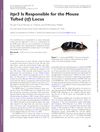
October 2012 in “Journal of Heredity” This study identified the Itpr3 gene as responsible for the tufted hair loss phenotype in the BTBR mouse strain.
 June 2023 in “British Journal of Dermatology”
 This pilot study found that night shift workers showed fewer signs of wrinkle formation compared to day workers, but there were no significant differences in DNA amplification or collagen percentage.
 14 citations
,
March 2019 in “Plant methods”
14 citations
,
March 2019 in “Plant methods” This study introduced a new adaptive microrhizotron for non-destructive observation of pepper root traits, finding that specific installation patterns significantly enhanced root interception probability while effectively measuring root architecture for plant research.
 12 citations
,
July 2017 in “Scientific reports”
12 citations
,
July 2017 in “Scientific reports” In this study, researchers developed a simple, non-invasive method to monitor circadian gene expression using whole hair root cultures, finding that elderly dementia patients' peripheral clocks still oscillate similarly to younger, healthier individuals, which suggests cellular senescence minimally affects some aspects of circadian rhythms.
August 2025 in “BMC Pharmacology and Toxicology” The LTF gene may help predict and manage nonspecific orbital inflammation.