 September 2022 in “Anais Brasileiros de Dermatologia”
 This case study reports a female adult patient with annular elastolytic giant cell granuloma on the scalp, observed through dermoscopy showing multiple yellowish/orange follicular dots against an erythemato-whitish background.
 5 citations
,
April 2014 in “The American Journal of Dermatopathology”
5 citations
,
April 2014 in “The American Journal of Dermatopathology” This article reports on a typical case of lichen planopilaris with foreign-body granulomas around hair shaft material, suggesting these may be an additional criterion for diagnosing late-stage LPP/FFA.
 2 citations
,
October 2019 in “Current sports medicine reports”
2 citations
,
October 2019 in “Current sports medicine reports” This case report describes a high school wrestler whose forearm rash was initially misdiagnosed as eczema, later identified as Majocchi's granuloma, and successfully treated with oral antifungal therapy after a biopsy.
49 citations
,
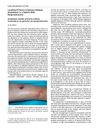
July 2007 in “Ophthalmic Plastic and Reconstructive Surgery” This report describes a case of granulomatous reaction to injectable poly-L-lactic acid in the periorbital area and suggests surgical excision as an effective treatment for persistent nodules.
8 citations
,
October 1983 in “Archives of Dermatology” This case report describes a 35-year-old man with Malassezia folliculitis occurring alongside granuloma annulare and alopecia areata, which had not been previously documented together.
 22 citations
,
December 2003 in “Veterinary clinical pathology”
22 citations
,
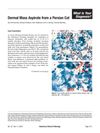
December 2003 in “Veterinary clinical pathology” This case study reported a diagnosis of dermatophytic pseudomycetoma in a Persian cat with dermal nodules, highlighting potential heritable predisposition and suggesting systemic antifungal therapy for fair prognosis.
28 citations
,
January 1999 in “Dermatology” This case report describes a dermatophytic granuloma caused by Microsporum canis in a heart-lung transplant recipient, emphasizing the need for systemic antifungal treatment in such deep infections.
24 citations
,
June 1999 in “The Pediatric Infectious Disease Journal” In this case report, a 2-year-old boy initially diagnosed with Sweet syndrome was later found to have chronic granulomatous disease, highlighting the importance of considering CGD in unusual cases of Sweet syndrome.
23 citations
,
February 2003 in “British Journal of Dermatology” This case study describes a 40-year-old man diagnosed with pilotropic mycosis fungoides, a form of folliculotropic cutaneous T-cell lymphoma, characterized by lymphocytic infiltration of hair follicles and eccrine glands.
35 citations
,
July 1977 in “PubMed” This case report describes a woman with systemic lupus erythematosus who developed both pneumonitis and nephritis, with identical immune complexes found in her lungs and kidneys, suggesting a common pathogenetic mechanism.
29 citations
,
July 2008 in “British Journal of Dermatology” This case report examines a patient with myasthenia gravis, invasive thymoma, and paraneoplastic pemphigus associated with alopecia areata, notably without the usual mucosal involvement.
 June 2018 in “Journal of Clinical Periodontology”
 A patient with "strawberry gingivitis" improved after correct treatment for Granulomatosis with polyangiitis, highlighting the need for early diagnosis.
 November 2025 in “SKIN The Journal of Cutaneous Medicine”
 Granuloma faciale can occur on the scalp, especially in people with advanced hair loss, and may improve with treatment.
 October 2022 in “JAAD case reports”
 This case report identifies necrolytic migratory erythema associated with a glucagonoma in a 40-year-old man, presenting with distinct skin lesions, weight loss, and diarrhea.
7 citations
,
October 2008 in “Arthritis Care & Research” This case report describes a 32-year-old woman with a history of undifferentiated connective tissue disease who presented with cardiogenic shock, and endomyocardial biopsy revealed giant cell myocarditis, possibly indicating an association with her autoimmune condition.
 24 citations
,
May 2021 in “Nature Communications”
24 citations
,
May 2021 in “Nature Communications” In this study, a dual recombinase-mediated genetic system showed that cavity macrophages accumulate on the surface of visceral organs during lung and liver injury but do not penetrate or contribute to tissue repair.
September 2025 in “Journal of Clinical Medicine” This study found that patients with vitiligo and alopecia areata had significantly higher serum granulysin levels compared to healthy controls, indicating a potential pathogenic role and suggesting that elevated levels may serve as a biomarker for monitoring disease activity, particularly in active vitiligo cases.
 3 citations
,
July 2021 in “Cutis”
3 citations
,
July 2021 in “Cutis” This case report described a 62-year-old woman with dermatomyositis whose multiple subcutaneous nodules persisted despite treatment with prednisone and methotrexate, prompting further dermatological evaluation.
5 citations
,
July 2014 in “Respirology Case Reports” This case report describes a woman diagnosed with paraneoplastic autoimmune multiorgan syndrome associated with Castleman's disease, leading to constrictive bronchiolitis and multiple organ involvement despite corticosteroid treatment.
2 citations
,
May 2020 in “JAAD case reports” This review discusses the potential role of JAK inhibitors, like ruxolitinib, as emerging therapeutic agents in dermatology, but reports no new clinical results.
 3 citations
,
March 2012 in “Actas Dermo-Sifiliográficas”
3 citations
,
March 2012 in “Actas Dermo-Sifiliográficas” An elderly man with skin amyloidosis and abnormal blood proteins was monitored without finding widespread disease after 18 months.
 November 2023 in “The Bovine practitioner”
 In this study, a 5-year-old Angus bull experienced systemic granulomatous disease and vasculitis potentially associated with grazing on hairy vetch, but other bulls in the same pasture showed no symptoms, suggesting variability in disease manifestation from similar exposures.
 20 citations
,
September 2018 in “Journal of cutaneous pathology”
20 citations
,
September 2018 in “Journal of cutaneous pathology” This study found that adnexal acantholysis does not reliably distinguish pemphigus vulgaris from pemphigus foliaceus, but the level of acantholysis and degree of dyskeratosis serve as distinguishing features among acantholytic disorders.
 9 citations
,
November 2014 in “Journal of feline medicine and surgery”
9 citations
,
November 2014 in “Journal of feline medicine and surgery” This case study suggests lymphocytic mural folliculitis in a cat might be an early sign of pancreatic carcinoma.
 1 citations
,
May 2025 in “The Journal of Rheumatology”
1 citations
,
May 2025 in “The Journal of Rheumatology” In this case report, researchers described a 48-year-old man with systemic lupus erythematosus who developed a fungus ball (aspergilloma) within a tuberculosis cavity, a complication rarely reported in such patients, emphasizing the role of CT scans in diagnosis and the potential need for surgical intervention.
 10 citations
,
March 1990 in “The Journal of Dermatology”
10 citations
,
March 1990 in “The Journal of Dermatology” In this study, a psoriatic patient developed retinoid-induced granulation tissue after long-term oral etretinate therapy, suggesting prolonged use may lead to delayed wound healing.
127 citations
,
January 2000 in “Journal of Investigative Dermatology” This study found that pro-inflammatory cytokines and apoptotic mechanisms, specifically involving granzyme B and Fas pathways, are associated with chronic alopecia areata, indicating their potential role in the disease's persistence.
 5 citations
,
September 1989 in “Journal of The American Academy of Dermatology”
5 citations
,
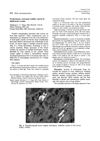
September 1989 in “Journal of The American Academy of Dermatology” This article reports that cocaine injections can lead to skin lesions containing talc crystals at the sites of injection.
October 2024 in “Dermatologica Sinica” This case report describes a 21-year-old male diagnosed with Crohn's disease and ulcerative pyoderma gangrenosum presenting with diverse extraintestinal symptoms, and highlights the success of a multi-drug treatment regimen including steroids and infliximab in improving clinical outcomes, though hematochezia was initially persistent.
 7 citations
,
June 2019 in “Australasian Journal of Dermatology”
7 citations
,
June 2019 in “Australasian Journal of Dermatology” This study presented a case series of erosive pustular dermatosis on the scalps of elderly patients, noting unusual presentation with hypergranulation tissue and unique dermoscopic vascular patterns, diverging from typical manifestations.