3 citations
,
July 2018 in “DergiPark (Istanbul University)” This article reviews the usage of medicinal plants for treating certain conditions in European Turkey, detailing the plants' parts, preparatory methods, and traditional therapeutic applications but reports no new experimental results.
December 2020 in “Zenodo (CERN European Organization for Nuclear Research)” This article discusses three herbal plants commonly used for hair growth support and reports no new clinical results; the authors suggest these herbs may help restore hair health.
This study found that the hydroalcoholic extract of Urtica dioica L. demonstrated some clinical efficacy in reducing lesion severity in guinea pigs with Microsporum canis infections, suggesting potential as a supplementary topical treatment for tinea corporis.
February 2023 in “Current Pharmaceutical Design” This review explores medicinal plants as potential treatments for hair loss, suggesting their promise due to anti-inflammatory and antioxidant properties, but reports no new clinical results.
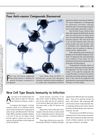 December 2011 in “Asia-Pacific biotech news”
 This collection of research news highlights various scientific advancements, including discoveries in anti-cancer compounds, new cell types that boost immunity, and a potential Parkinson's breakthrough in Australia, among others from China, India, Korea, Singapore, and Thailand.
 610 citations
,
April 2014 in “Nature Reviews Immunology”
610 citations
,
April 2014 in “Nature Reviews Immunology” This review discusses the complex mechanisms regulating skin immunity to balance host defense with inflammation, but reports no new findings.
January 1998 in “Dermatology” This abstract lists various medical conditions, treatments, and substances, but it does not report any new research findings.
 25 citations
,
January 2011 in “Pharmacognosy magazine”
25 citations
,
January 2011 in “Pharmacognosy magazine” This study found that Nardostachys jatamansi DC rhizome extracts and specific isolated terpenoids promoted hair growth.
 4 citations
,
September 2018 in “Rendiconti lincei. Scienze fisiche e naturali”
4 citations
,
September 2018 in “Rendiconti lincei. Scienze fisiche e naturali” This study concluded that spikenard specimens in Renaissance Italian herbaria are attributed to Nardostachys jatamansi, a plant used in traditional medicine and cosmetics.
 April 2018 in “The journal of investigative dermatology/Journal of investigative dermatology”
 In a laboratory setting, this study found that Biotrinine® dry extract activated hair follicle growth pathways and increased certain growth factor secretions in human dermal papilla cells, suggesting potential benefits for treating chronic hair loss.
 6 citations
,
April 2023 in “Frontiers in plant science”
6 citations
,
April 2023 in “Frontiers in plant science” In this study, NREs from lentil root nodules, specifically Serratia plymuthica 33GS and Serratia sp. R6, significantly enhanced lentil growth, altered root exudation, and modulated rhizospheric microbial communities in a greenhouse setting.
 November 2024 in “TẠP CHÍ KHOA HỌC TRƯỜNG ĐẠI HỌC QUỐC TẾ HỒNG BÀNG”
 This study investigated the botanical characteristics and preliminary phytochemical components of Nepenthes kampotiana, revealing its morphological structure, including pitcher-like leaves for trapping prey, and identifying chemical groups such as essential oils, triterpenoids, flavonoids, and tannins.
1 citations
,
January 2014 in “Journal of clinical & experimental dermatology research” This study suggests that the fresh leaf extracts of Naringi crenulata may promote hair growth in Wistar rats, potentially due to the presence of terpenoids and flavonoids.
 July 2017 in “Journal of Young Pharmacists”
 In this study, the ethyl acetate fraction of Nothopanax scutellarium leaves showed a mild irritation effect but promoted hair growth and increased hair diameter in rabbits.
 January 2025 in “Natural Product Research”
 This review compiles scientific data on Nyctanthes arbor-tristis Linn., highlighting its documented anti-inflammatory, anticancer, and hepatoprotective properties, among others, and recommends future research to further explore the plant's bioactive components and their potential applications.
 44 citations
,
January 2007 in “Biological & pharmaceutical bulletin”
44 citations
,
January 2007 in “Biological & pharmaceutical bulletin” This study found that Piper nigrum leaf extract showed in vivo anti-androgenic activity and potent 5α-reductase inhibitory effects, with piperine and (−)-cubebin identified as active components.
 June 2026 in “Zenodo (CERN European Organization for Nuclear Research)”
 This literature review suggests that Cyperus rotundus L extract shows promise as a natural hair growth agent due to its bioactive compounds and mechanisms that stimulate hair growth, although more human clinical trials are needed to confirm its safety and efficacy.
January 2006 in “Xibei zhiwu xuebao” This study found that norethindrone and levonorgestrel affected Arabidopsis thaliana root growth differently depending on concentration, with levonorgestrel being highly active and most effective at promoting taproot growth at low doses.
This literature review suggests that Cyperus rotundus L extract is a promising natural agent for promoting hair growth due to its bioactive compounds and mechanisms of action, but emphasizes the need for further human clinical trials to confirm its safety and effectiveness.
December 2025 in “eTheses of Maulana Malik Ibrahim State Islamic University (Maulana Malik Ibrahim State Islamic University)” This study found that the highest antioxidant-activity formulation of the RENTT herbal combination effectively stimulated hair growth in mice and may serve as a natural therapy for chemotherapy-induced alopecia.
 December 2025 in “Bioscientist Jurnal Ilmiah Biologi”
 In this study, researchers developed an optimized formulation of a traditional ethnomedicinal recipe from East Nusa Tenggara, which demonstrated strong antioxidant activity and significantly enhanced hair growth in a mouse alopecia model, compared to control groups.
December 2025 in “eTheses of Maulana Malik Ibrahim State Islamic University (Maulana Malik Ibrahim State Islamic University)” In this laboratory study, the researchers reported that an ethnomedicinal hair growth formula from East Nusa Tenggara, incorporating Kemiri, Kembang sepatu, Beringin, Mangkokan, and Waru, demonstrated significant antioxidant activity and effectively stimulated hair growth, suggesting potential development as a natural cosmeceutical.
January 2008 in “Lishizhen Medicine and Materia Medica Research” This study found that the n-butanol extract from Untica mairei Levl's roots significantly inhibited 5α-reductase activity in an in vitro model using rat prostate enzyme.
 January 2023 in “Han'gug mi'saengmul saengmyeong gong haghoeji/Han-guk misaengmul saengmyeong gonghak hoeji”
 This study found that a mixed extract of N. jatamansi, O. basilicum, and C. sativus, particularly when extracted via steaming and ultrasonic methods, increased antioxidant content, stimulated melanin production for black hair, and promoted hair growth in mouse models, while maintaining high cell viability.
This research found that nod factor can induce root hair reorientation and gene expression in Medicago truncatula with as little as a single molecule, implicating heterotrimeric G-protein signaling in this process.
 1 citations
,
July 2022 in “Bandung Conference Series. Pharmacy”
1 citations
,
July 2022 in “Bandung Conference Series. Pharmacy” This study found that a hair tonic formulation using candlenut oil as an active ingredient could significantly promote hair growth in rabbits, achieving 29.77 mm in 22 days.
January 2024 in “Journal of Applied Health Sciences and Medicine” In this study, Nephrolepis biserrata extract significantly improved fertility indices in male Wistar rats with testosterone propionate-induced benign prostatic hyperplasia, showing increased sperm count and reduced prostate weight, suggesting potential pro-fertility benefits for BPH-related infertility.

This study suggests that Nepenthes kampotiana Lecomte ethanol extract may promote hair growth and inhibit cell death in models of androgenic alopecia, indicating potential as a treatment option.
13 citations
,
May 2019 in “Evidence-based Complementary and Alternative Medicine” This study found that Callicarpa nudiflora water extract significantly accelerated wound healing and improved skin repair in deep second-degree scalds in rats, supporting its traditional medicinal use.
January 2022 in “Lumbung Farmasi: Jurnal Ilmu Kefarmasian/Lumbung Farmasi” In this experimental study, researchers found that a hair tonic combining celery leaf extract and honey, specifically Formula B, showed the highest potential for promoting hair growth in rabbits, with outcomes comparable to a minoxidil control.