 77 citations
,
July 2020 in “Cell”
77 citations
,
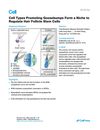
July 2020 in “Cell” This study found that sympathetic nerves and arrector pili muscles form a niche that modulates hair follicle stem cell activity, revealing their role in hair follicle regeneration.
 40 citations
,
January 2016 in “Elsevier eBooks”
40 citations
,
January 2016 in “Elsevier eBooks” This article explains the structure and multifunctional roles of the human skin, including its protective, regulatory, and sensory functions, but does not report new research findings.
19 citations
,
February 2013 in “Journal of Investigative Dermatology” Touch domes in human skin are complex sensory structures not directly linked to hair.
 11 citations
,
May 2009 in “Medical Hypotheses”
11 citations
,
May 2009 in “Medical Hypotheses” This paper proposes a theory explaining how the normal anabolic effects of androgens lead to structural changes and hair follicle miniaturization, contributing to androgenic alopecia.
80 citations
,
January 2020 in “Journal of Nanobiotechnology” This review highlights that incorporating nanomaterials into scaffolds can significantly enhance angiogenesis in tissue regeneration by simulating extracellular matrix structures and effectively delivering angiogenesis-related factors, offering promising designs for vascularization and therapeutic applications.
 13 citations
,
June 2020 in “Scientific reports”
13 citations
,
June 2020 in “Scientific reports” In this study, melatonin administration enhanced various cellular and structural features of the scrotal skin in Soay rams, including increased thickness, cell count, and gland activity.
2 citations
,
June 2020 in “Journal of Investigative Dermatology” This article reviews the steps and methods involved in preparing skin tissues for three-dimensional volumetric imaging, highlighting its potential to provide detailed insights into skin structure not possible with traditional 2D histology, but reports no new findings.
 September 2022 in “bioRxiv (Cold Spring Harbor Laboratory)”
 This study applied a new RGB trichrome stain to human skin samples, revealing distinct structural staining in normal tissues and potential proteoglycan-rich zones in hair follicles.
482 citations
,
June 1979 in “Proceedings of the National Academy of Sciences” This study demonstrated that keratin is widely present in various epithelial cells, providing structural strength and potential insights into the origin of cell lines.
 May 2026 in “The Journal of Headache and Pain”
 In this study, researchers developed an enhanced rodent model of trigeminal neuralgia, demonstrating that structural and functional changes in the anterior cingulate cortex are linked to chronic pain and emotional disturbances, and chemogenetic inhibition of specific neurons could alleviate symptoms.
April 2017 in “The Journal of urology/The journal of urology” This study found that Sonic Hedgehog protein treatment enhanced the sprouting and regeneration of pelvic ganglia and cavernous nerves after injury, with localization of delivery affecting outcomes.
May 2026 in “Biotechnology and Bioengineering” This review discusses recent breakthroughs in 3D bioprinting for hair regeneration, highlighting developments like biomimetic dermal papilla spheroids and follicle organoids, but notes that clinical application is hindered by challenges in integrating vascular and nerve systems and managing hair-cycle dynamics.

In this study, upper-bulge epidermal stem cells in mouse hair follicles were shown to play a role in forming tactile sensory units by creating an extracellular matrix that supports nerve interactions.
7 citations
,
January 1995 in “The Indian Journal of Animal Sciences” This study observed that buffalo teats have a melanin-rich epidermis, no hair follicles, and a complex structure with specific epithelial and muscular characteristics.
 1 citations
,
March 2014 in “Applied Microscopy”
1 citations
,
March 2014 in “Applied Microscopy” This study confirmed the localization of CK19 and vimentin in skin cells, with CK19 linked to hair growth and vimentin stabilizing fibroblast structure.
 2 citations
,
January 2018 in “Springer eBooks”
2 citations
,
January 2018 in “Springer eBooks” The document explains what healthy skin, nails, and hair look like on an ultrasound.
 January 2025 in “Nature Communications”
 Using synchrotron X-ray imaging, this study mapped the complex innervation of male rat vibrissa follicles, revealing distinct types of myelinated afferent neurons and patterns of axonal organization that may inform sensory processing in the brainstem.
 1 citations
,
January 2008
1 citations
,
January 2008 This paper details the early stages of human scar regeneration using topical iodine and examines hair's role in the regeneration process, noting hair's ability to move freely and transport regenerative material.

Dental procedures and treatments show promise but need more research for conclusive results.
March 2025 in “The Scientific Issues of Ternopil Volodymyr Hnatiuk National Pedagogical University Series pedagogy” This review discusses the clinical phenotypes of primary mitochondrial cytopathies linked to significant genetic defects in mitochondrial DNA, reporting no new clinical results; the authors emphasize the need for differential diagnosis.
January 2015 in “Journal of the turkish academy of dermatology” This review discusses the evidence and literature on phototherapy for vitiligo but reports no novel clinical findings, highlighting the treatment's reliance on melanocyte reservoirs for repigmentation.
 36 citations
,
January 2014 in “Elsevier eBooks”
36 citations
,
January 2014 in “Elsevier eBooks” This narrative review discusses the structure and functions of the skin, focusing on its barrier role, self-repair, thermoregulation, and immune functions, and reports no new experimental results.
 71 citations
,
February 2020 in “Journal of Translational Medicine”
71 citations
,
February 2020 in “Journal of Translational Medicine” This article reviews current strategies and advancements in regenerating skin appendages and sensory nerves in tissue-engineered skin, highlighting the challenge of restoring skin sensations like pain, temperature, and touch to improve patients’ quality of life.
 March 2015 in “Plastic and reconstructive surgery”
 This chapter reviews the skin's structure and its clinical relevance, highlighting connective tissue diseases and the potential for novel treatments like protein, cell, or stem cell transfer, but reports no new findings.
 13 citations
,
March 2012 in “The Journal of Dermatology”
13 citations
,
March 2012 in “The Journal of Dermatology” This study reports that transplanted mouse hair follicles restored piloerection ability and connected properly with host tissues, suggesting potential for advanced hair restoration therapies.
 396 citations
,
May 2011 in “Cell stem cell”
396 citations
,
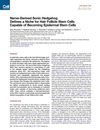
May 2011 in “Cell stem cell” This study found that Shh from neurons signals to Gli1-expressing cells in the hair follicle, cultivating a niche where these bulge cells can potentially transform into epidermal stem cells in wound healing.
 108 citations
,
July 2004 in “American Journal of Pathology”
108 citations
,
July 2004 in “American Journal of Pathology” This study suggests that nerve growth factor plays a crucial role in the stress-induced termination of hair growth in mice, and its antagonism might offer a therapeutic approach to mitigate stress-related hair loss.
 86 citations
,
December 2001 in “Experimental dermatology”
86 citations
,
December 2001 in “Experimental dermatology” This review classifies mutant mice with hair abnormalities into six categories, providing an annotated table that serves as a reference for understanding the molecular controls of hair growth.
 66 citations
,
July 2007 in “Journal of Molecular Medicine”
66 citations
,
July 2007 in “Journal of Molecular Medicine” This study in mice demonstrated that stress or nerve growth factor injection increases sensory neuron activity related to skin innervation, suggesting a strong connection between stress perception and neurogenic skin inflammation.
 57 citations
,
May 2014 in “Molecular Phylogenetics and Evolution”
57 citations
,
May 2014 in “Molecular Phylogenetics and Evolution” This study utilized a sequence-structure alignment approach to improve the characterization of Class A Rhodopsin GPCR superfamily, including orphan and unclassified receptors, through evolutionary analysis.