July 2024 in “Journal of Investigative Dermatology” INTASYL is a promising, adaptable RNAi technology for treating skin cancers.
 1 citations
,
February 2023 in “International Journal of Research in Ayurveda and Pharmacy”
1 citations
,
February 2023 in “International Journal of Research in Ayurveda and Pharmacy” In a single case study, a 12-year-old boy with alopecia areata experienced hair regrowth within 15 days of Ayurveda treatment, specifically nasya karma with Anu taila and shamana chikitsa over 60 days, with no adverse effects observed.
This abstract is a list of dermatological conditions and treatments without providing new research findings or clinical results.
September 2023 in “bioRxiv (Cold Spring Harbor Laboratory)” This study found that dissolving microneedle array patches containing mesoporous silica nanoparticles can deliver antigen-loaded nanoparticles into mice effectively, inducing strong immune responses similar to traditional subcutaneous injection.
 December 2024 in “JURNAL ANALIS LABORATORIUM MEDIK”
 This study observed that wound healing occurred faster in healthy mice compared to diabetic mice, and diabetic wounds displayed persistent inflammatory cell presence when examined microscopically, highlighting delayed healing dynamics in diabetic conditions.
5 citations
,
January 1991 in “Drugs of The Future” 2 citations
,
March 1977 in “British Journal of Dermatology” This study found that intracutaneous injections of nandrolone phenylpropionate specifically induced local epidermal thickening and increased sebaceous gland volume in female hairless hamsters, independent of a dermal inflammatory response.
 13 citations
,
August 2007 in “Bioorganic & medicinal chemistry letters”
13 citations
,
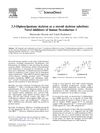
August 2007 in “Bioorganic & medicinal chemistry letters” This study developed a new competitive 5alpha-reductase inhibitor with an IC(50) of 0.84 microM using a novel chemical structure.
 13 citations
,
May 2021 in “Plants”
13 citations
,
May 2021 in “Plants” This study found that the n-hexane fraction from Leea indica leaves significantly increased hair growth in mice and showed potential as a natural treatment for alopecia.
 February 2020 in “Recent advances in pathology and laboratory medicine”
 In this study, the incidence of skin diseases among general out-patients in North & Middle Andaman was found to be 3.956%, with dermatophyte fungal infections being most prevalent.
 August 2024 in “International Journal of Research in Dermatology”
 In this randomized, double-blind, placebo-controlled study, Indulekha Svetakutaja Hair Oil significantly reduced dandruff severity compared to coconut oil, with a greater reduction in Total Dandruff scores after 4 weeks of treatment, suggesting it is both safe and effective for dandruff management.
 May 2026 in “International Research Journal of Ayurveda & Yoga”
 This review explores the Charaka samhita's concept of Ashtanindita purusha, identifying eight physical constitutions traditionally regarded as undesirable due to their association with various diseases, and aims to correlate these with contemporary genetic, endocrinological, and metabolic disorders.
![Synthesis of Spiro[cyclohexane-1,2'-[2H]indene] Derivatives as Inhibitors of Steroid 5α-Reductase](/images/assets/d91300a7-4d66-4d2c-90ac-293b0dbc5ff5/small/21048.jpg) 8 citations
,
June 1995 in “Helvetica Chimica Acta”
8 citations
,
June 1995 in “Helvetica Chimica Acta” This article outlines the synthesis of spiro[cyclohexane‐1,2′‐[2 H ]indene] derivatives similar to known steroid 5α‐reductase inhibitors, but it does not report experimental findings.
 8 citations
,
August 2020 in “PLOS Computational Biology”
8 citations
,
August 2020 in “PLOS Computational Biology” This study presents a computational approach, CATNIP, which repurposes drugs using only their biological and chemical information, predicting new uses like adrenergic uptake inhibitors for Parkinson's and vandetanib for Type 2 Diabetes.
13 citations
,
April 1997 in “Biochemical and Biophysical Research Communications” This study observed that insulin-dependent diabetes induces specific molecular changes in the keratin structure of hair, potentially offering a new way to study diabetic complications through easily accessible tissues.
July 2026 in “International Journal for Research in Applied Science and Engineering Technology” This study explored the use of Kasisadi Lepa, a classical herbo-mineral formulation, and found its components could reduce dandruff by addressing scalp inflammation, microbial growth, and tissue damage with potential integration into long-term scalp health strategies.
 5 citations
,
January 1970 in “Journal of Nepal Paediatric Society”
5 citations
,
January 1970 in “Journal of Nepal Paediatric Society” This article reviews Vitamin D-dependent rickets Type II with a focus on alopecia as a potential diagnostic clue for this rare disorder, reporting no new clinical findings.
January 2022 in “Buletin penelitian tanaman rempah dan obat/Bulletin komunikasi penelitian tanaman rempah dan obat” This study observed that a hair tonic containing 3% ethanolic extract of bidara leaves stimulated rabbit hair growth more effectively over 28 days than both distilled water and 2% minoxidil, attributing this effect to the extract's anti-inflammatory and antioxidant properties.
May 2026 in “Mendeley Data” This abstract provides supplementary materials for a study on the efficacy and safety of a topical siRNA-based formulation targeting DKK-1 for androgenetic alopecia, but reports no new findings.
8 citations
,
October 2006 in “Journal of Experimental and Clinical Anatomy” August 2024 in “Research Journal of Health Sciences” This study reports that normal scalp and hair in Black Africans exhibited regular white dots and a preserved honeycomb pattern, with some showing peripilar casts and scales.
28 citations
,
January 2009 in “Cellular & Molecular Biology Letters” This study concluded that finasteride-induced DHT deficiency intensified constitutive iNOS expression in rat testicular and epididymal cells, suggesting a complex regulatory relationship needing further investigation.
June 2008 in “Springer eBooks”  9 citations
,
April 2025 in “International Journal of Nanomedicine”
9 citations
,
April 2025 in “International Journal of Nanomedicine” This research highlights a hydrogel system that could significantly improve diabetic wound healing by releasing ibuprofen to both suppress inflammation and promote tissue regeneration, indicating a strong potential for future clinical use.
July 2026 in “Journal of the American Academy of Dermatology”  April 2017 in “Journal of Investigative Dermatology”
 The researchers reported that iPSCs derived from Sendai virus reprogrammed blood cells can mature into functional keratinocytes for up to 60 days, potentially offering new approaches for DEB treatment.
 9 citations
,
October 2014 in “Experimental and Clinical Endocrinology & Diabetes”
9 citations
,
October 2014 in “Experimental and Clinical Endocrinology & Diabetes” This study observed that acanthosis nigricans is highly prevalent in Latin American youths, especially at the knuckles, and may indicate early insulin resistance even in those with a normal BMI.
June 2025 in “Formosa Journal of Sustainable Research” In this study, the NADES extract of mangkokan leaves (Polyscias scutellaria) demonstrated antibacterial activity against Escherichia coli and Staphylococcus aureus, with a total flavonoid content measured at 4.944 mgEQ/gSimplisia using the disc diffusion method.
December 2022 in “Ecological Chemistry and Engineering S” This study synthesized indole-acenaphthylene compounds using a magnetic nanocatalyst and explored their photoluminescence properties for detecting copper ions in a mixed solvent system, achieving a detection limit of 9.5 ∙ 10 –6 M.