 November 2020 in “bioRxiv (Cold Spring Harbor Laboratory)”
 The study found that dermal EZH2 plays a crucial role in coordinating dermal fibroblast differentiation and epidermal development by modulating Wnt/β-catenin and retinoic acid signaling.
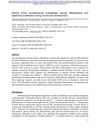 November 2020 in “bioRxiv (Cold Spring Harbor Laboratory)”
 This study found that the Polycomb Repressive Complex 2, particularly its component Ezh2, is crucial in regulating dermal fibroblast differentiation and epidermal keratinocyte proliferation during murine skin development.
 December 2019 in “bioRxiv (Cold Spring Harbor Laboratory)”
 This study found that redhaired individuals consistently had higher calcidiol levels compared to non-redhaired subjects, suggesting a physiological adaptation for vitamin D synthesis in low UV-B conditions.

This study found that neonatal administration of finasteride reduced sensitivity to alcohol's motor-stimulating effects and increased preference for novelty and initial alcohol consumption in rats, suggesting a role in alcohol vulnerability.
 May 2017 in “bioRxiv (Cold Spring Harbor Laboratory)”
 This study found that the peach gene CTG134, involved in auxin-ethylene interactions, plays a role in hormonal regulation during root hair formation in Arabidopsis and tobacco.
 April 2017 in “Journal of Investigative Dermatology”
 In this study of 40 dermatomyositis patients, most with moderate-severe disease at baseline improved over time in a polyphasic pattern, while those with mild disease often remained stable.
 April 2017 in “Journal of Investigative Dermatology”
 This study found that 10% carbamide peroxide significantly reduced acne lesions compared to a vehicle solution, suggesting it as an effective and safe alternative to benzoyl peroxide for treating mild to moderate acne.
 April 2017 in “Journal of Investigative Dermatology”
 This study found that a 10% carbamide peroxide solution significantly reduced acne lesions more effectively than a vehicle solution, suggesting it as a safe and effective alternative to benzoyl peroxide for treating mild to moderate acne.
 April 2017 in “Journal of Investigative Dermatology”
 Psoriasis patients experience moderate functional impairment related to disease severity and less satisfaction.
January 2016 in “Dermatology Online Journal” This review discusses dermatologic issues specific to transgender patients undergoing hormonal therapy and offers guidance for dermatology providers, but does not report new clinical results.
 January 2015 in “Dermatology online journal”
 This case report reviews a 67-year-old man with both alopecia totalis and lichen planus of the nails, suggesting a possible autoimmune link between these rare concurrent conditions, but presents no new clinical data.
 January 2015 in “Prace Naukowe Uniwersytetu Ekonomicznego we Wrocławiu”
 Using Lasswell's model can make CSR communication more effective and trusted.
 January 2024 in “International journal of advanced biochemistry research”
 This case study reported that a one-year-old male dog with demodicosis successfully recovered after treatment with Bravecto (fluralaner) and supportive therapies, highlighting the importance of recognizing and managing Demodex canis infections in dogs.
 January 2024 in “International Journal of Advanced Biochemistry Research”
 In this study investigating canine pyoderma, the researchers found that Staphylococcus species isolated from 57 dogs were most sensitive to the antibiotic Linezolid, with a 100% sensitivity rate, followed by other antibiotics like Doxycycline hydrochloride and Cefpodoxime.
 July 2007 in “Journal of Generic Medicines”
 The UK High Court revoked Lundbeck's patent for Escitalopram, and second medical use claims based on dosage were not considered novel.
 January 2019 in “Arabian Journal of Chemistry”
 This study developed and validated an HPLC method to quantify impurities in finasteride, demonstrating its suitability for quality assurance of the drug and its related substances.
 182 citations
,
June 2017 in “Biomaterials”
182 citations
,
June 2017 in “Biomaterials” This study found that adipose-derived mesenchymal stem cells produced more anti-inflammatory and pro-angiogenic cytokines on electrospun scaffolds, which enhanced wound healing and macrophage activity in a rat model.
 44 citations
,
October 1989 in “International Journal of Pharmaceutics”
44 citations
,
October 1989 in “International Journal of Pharmaceutics” This study found that topical minoxidil solutions showed the highest skin permeation at 3-4% concentrations, with crystallization occurring at a 5% concentration due to vehicle component evaporation.
 34 citations
,
December 2015 in “Neuroscience & Biobehavioral Reviews”
34 citations
,
December 2015 in “Neuroscience & Biobehavioral Reviews” In this study, several compounds, including estrogen and Dutasteride, showed neuroprotective effects on dopaminergic neurons in an MPTP mouse model of Parkinson's disease.
 28 citations
,
April 2014 in “Hormones”
28 citations
,
April 2014 in “Hormones” This study found that increased serum A4A levels were associated with more severe polycystic ovary syndrome phenotypes and could be a useful marker for biochemical hyperandrogenemia.
 4 citations
,
January 2018 in “Forensic Science International”
4 citations
,
January 2018 in “Forensic Science International” This study reported that a newly developed UHPLC-MS/MS method detected illegal synthetic hair-growth compounds in 10% of 76 hair-growth products, highlighting the need for ongoing monitoring to protect public health.
 February 2026 in “Orphanet Journal of Rare Diseases”
 This study identified pathogenic or likely pathogenic gene variants in 70.1% of Russian families affected by hypohidrotic ectodermal dysplasia, expanding knowledge of causative mutations.
This study tested a novel cryo-carboxy dispensing device for treating androgenetic alopecia in six volunteers and found an unexpectedly rapid and positive response, with significant hair regrowth observed by day 90, prompting early conclusion of the trial.
 June 2023 in “International journal of pharmaceutical quality assurance”
 This study found that videodermoscopy is a promising non-invasive tool for distinguishing between types of non-scarring alopecia on the scalp, highlighting its potential in dermatological practice.
 March 2005 in “Journal of The American Academy of Dermatology”
 This study investigates the potential of a cosmetic day lotion with a 5a-reductase inhibitor and a night lotion with an angiogenic ingredient to modulate hair growth, but reports no clinical results.
 947 citations
,
February 2004 in “The Journal of Clinical Endocrinology and Metabolism”
947 citations
,
February 2004 in “The Journal of Clinical Endocrinology and Metabolism” In this study, polycystic ovary syndrome was the most prevalent cause of androgen excess, and suppressive hormonal therapy improved hirsutism, menstrual dysfunction, and acne in most patients, though side effects were common.
 363 citations
,
May 2006 in “Current Opinion in Psychiatry”
363 citations
,
May 2006 in “Current Opinion in Psychiatry” This review highlights that medical complications, notably in anorexia nervosa, are common and often serious in patients with eating disorders, affecting multiple organ systems.
 178 citations
,
April 2017 in “Journal of The American Academy of Dermatology”
178 citations
,
April 2017 in “Journal of The American Academy of Dermatology” This systematic review and meta-analysis found that minoxidil, finasteride, and low-level laser light therapy significantly improve hair growth in men with androgenetic alopecia, while minoxidil is also effective for women, compared to placebo.
 139 citations
,
June 2003 in “Journal of Investigative Dermatology Symposium Proceedings”
139 citations
,
June 2003 in “Journal of Investigative Dermatology Symposium Proceedings” This article reviews androgenetic alopecia in women, highlighting diagnosis criteria and noting that topical minoxidil is currently the only proven treatment for hair growth; it reports no clinical trial findings.
 136 citations
,
April 2016 in “Dermatologic Surgery”
136 citations
,
April 2016 in “Dermatologic Surgery” This study found that platelet-rich plasma significantly increased hair density and anagen hair proportions in androgenetic alopecia patients, suggesting potential as an adjuvant therapy.