 3 citations
,
May 2022 in “The journal of investigative dermatology/Journal of investigative dermatology”
3 citations
,
May 2022 in “The journal of investigative dermatology/Journal of investigative dermatology” In this study, researchers found that skin pigmentation alterations in a mouse model of Carney complex may be caused by specific dermal fibroblasts promoting melanogenic signaling.
This study found that spearmint tea reduced testosterone levels and improved self-reported hirsutism in women with PCOS, but did not significantly change objective hirsutism scores during the 30-day trial.
 October 2024 in “Journal of the Endocrine Society”
 This study found that certain CYP21A2 mutations significantly reduce enzyme activity, contributing to non-classic congenital adrenal hyperplasia phenotypes, which may aid in enhancing diagnosis and treatment strategies.
 April 2018 in “The journal of investigative dermatology/Journal of investigative dermatology”
 This phase 2a trial evaluated Samcyprone for common wart treatment and found that while a sensitization reaction is necessary for therapeutic response, its level does not predict wart clearance.
July 2024 in “Journal of Investigative Dermatology” Scalp cooling may be less effective for women of color on certain chemotherapy treatments.
4 citations
,
March 2024 in “Journal of the American Academy of Dermatology” Scalp cooling therapy is costly and often not covered by insurance, limiting access for low-income patients.
 37 citations
,
August 2016 in “Clinical, Cosmetic and Investigational Dermatology”
37 citations
,
August 2016 in “Clinical, Cosmetic and Investigational Dermatology” This article discusses central centrifugal cicatricial alopecia, highlighting its prevalence, potential genetic factors, and management challenges, but reports no new clinical conclusions and calls for further research.
August 2024 in “American Journal of Medical Genetics Part A” In this case study, researchers detailed two Saudi cases of the ultra-rare Trichohepatoneurodevelopmental syndrome, identifying pathogenic variants in the CCDC47 gene and reinforcing a strong gene-disease association, which helps clarify the disorder's clinical features and genetic mutations.
 3 citations
,
January 2011 in “Intestinal Research”
3 citations
,
January 2011 in “Intestinal Research” This article reports on a patient case of Cronkhite-Canada syndrome, detailing symptoms and diagnostic findings, and reviews the syndrome's characteristics without presenting new clinical data.
 June 2008 in “Dermatologic Surgery”
 This article introduces a new Core Curriculum for Hair Restoration Surgery, aimed at enhancing physician competence in diagnosing and treating hair loss with a multidisciplinary approach.
December 2024 in “Clinical and Experimental Dermatology” This study found that patients with central centrifugal cicatricial alopecia preferred shared decision-making with their doctors regarding treatment management.
October 2017 in “The American Journal of Gastroenterology” This case report details a 71-year-old man diagnosed with Cronkhite-Canada Syndrome, highlighting the importance of early diagnosis and endoscopic evaluation due to the disease's progressive nature and significant mortality risk.
1 citations
,
July 2017 in “PubMed” This study describes two Danish cases of Cronkhite-Canada syndrome presenting with malnutrition and gastrointestinal issues; both patients underwent successful treatment and remission after developing colonic adenocarcinomas.
6 citations
,
January 2022 in “BIO-PROTOCOL” This article provides a protocol for live imaging of C. elegans germline stem cells, highlighting their potential for studying mitosis and other cell processes, but does not report new experimental findings.
December 2019 in “The American Journal of Gastroenterology” In this study, three cases of Cronkhite-Canada syndrome revealed small bowel mucosal lesions, but these findings did not correlate with clinical symptoms or steroid treatment outcomes.
9 citations
,
October 2020 in “Journal of the American Academy of Dermatology” Patients with central centrifugal cicatricial alopecia may have a higher risk of breast and colorectal cancer.
 14 citations
,
January 2001 in “Current Treatment Options in Oncology”
14 citations
,
January 2001 in “Current Treatment Options in Oncology” Treat limited stage small cell lung cancer with chemotherapy and radiation, and consider preventive brain radiation for better survival chances.
March 2026 in “Journal of Investigative Dermatology” This study identified CCCA in 10 children of African descent, highlighting the occurrence of this scarring alopecia in patients under 18 and the importance of early diagnosis for better outcomes.
 August 2026 in “Mendeley Data”
 This review article systematically summarizes current knowledge on using hair follicle neural crest stem cells and their exosomes for repairing peripheral nerve injuries, focusing on the molecular mechanisms and potential applications. The dataset includes comparison tables and diagrams to visually present findings from existing research.
October 2025 in “Transactions on Materials Biotechnology and Life Sciences” This study reviews the mechanisms and recent findings of immunotherapies for NSCLC, highlighting their potential to improve treatment outcomes and reduce side effects compared to traditional therapies.
 January 2022 in “bioRxiv (Cold Spring Harbor Laboratory)”
 This study suggests that typical skin lesions in Carney complex may originate from the pro-melanogenic activity of a specific dermal fibroblast population influenced by PKA signaling.
4 citations
,
December 2021 in “Journal of Clinical Nursing” This study observed that women with early-stage breast cancer often felt inadequately prepared for the discomfort and time commitments of scalp cooling during chemotherapy, leading to the development of patient-co-produced informational resources to better prepare them.
 February 2024 in “International journal of medical science and clinical research studies”
 This article reviews the clinical features, pathogenesis, and treatment strategies for Central Centrifugal Cicatricial Alopecia, emphasizing the need for enhanced understanding and early diagnosis, but reports no new research findings.
 62 citations
,
March 2011 in “European journal of endocrinology”
62 citations
,
March 2011 in “European journal of endocrinology” This study found that parents identified with cryptic NCCAH through genetic testing are mostly asymptomatic but may experience temporary female infertility and require glucocorticoid stress coverage in specific circumstances.

In preclinical studies, topical CUR61414 reduced Hh signaling and shrank BCCs in mice, but this study found no clinical efficacy in human superficial or nodular BCCs.
10 citations
,
August 2002 in “British Journal of Ophthalmology” This case study reports that intralesional cidofovir was successfully used for treatment without systemic toxicity, suggesting it might be an option worth considering for SCC.
This study introduced the C-CAT, a new assessment tool for central centrifugal cicatricial alopecia, and found that established treatments improved symptoms in most patients over six months.
 August 2026 in “Mendeley Data”
 This review systematically assembles recent insights into the use of hair follicle neural crest stem cells and their exosomes for peripheral nerve injury repair, highlighting molecular mechanisms and possible translational applications, with comprehensive tables and diagrams summarizing existing literature.
 1 citations
,
April 2022 in “The Journal of Family Practice”
1 citations
,
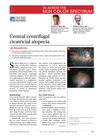
April 2022 in “The Journal of Family Practice” This report describes early and late stages of central centrifugal cicatricial alopecia in two Black women, highlighting progression from a small to a large central patch of hair loss.
December 2025 in “JGH Open” In this case study, a 78-year-old Japanese woman with Cronkhite-Canada syndrome experienced mesenteric lymphadenopathy, which reduced in size after treatment with the corticosteroid prednisolone. This suggests that mesenteric lymphadenopathy, though uncommon in CCS, may respond to steroid therapy.