1 citations
,
January 2023 in “Dermatologic Therapy” This study reported that a single treatment using macrofocused ultrasound energy with a 2 mm transducer significantly reduced pore count, pore volume, and pore index in 34 Thai subjects with enlarged facial pores over a 6-month period, with no adverse events observed.
 December 2023 in “Medical Times”
 In this study, combining stromal cells and PRP resulted in a significantly higher cell count and volume than using a saline group, suggesting increased potential efficiency; however, clinical outcomes need further evaluation.
35 citations
,
January 2000 in “Journal of comparative neurology” This study re-examined the structure of lanceolate endings in rat vibrissae, suggesting that their apical cones may function as a transducer site for detecting hair movements.
October 2025 in “Journal of the Endocrine Society” This case report documented the management of a 46-year-old female with Marine-Lenhart syndrome, combining antithyroids with minimally invasive sclerotherapy to achieve euthyroidism and reduce thyroid nodule size by 58%.
 February 2025 in “International Journal of Morphology”
 In this study conducted on mouse fetuses, valproic acid was found to reduce Sonic Hedgehog expression in the skin and hair follicles, but the inclusion of vitamin E helped mitigate this effect, supporting its potential role in managing valproic acid-induced changes.
March 2021 in “Berkala Ilmu Kesehatan Kulit dan Kelamin” This review discusses the treatment options for male androgenetic alopecia, including FDA-approved therapies and new possibilities, but reports no new clinical results.
 12 citations
,
September 2024 in “Frontiers in Immunology”
12 citations
,
September 2024 in “Frontiers in Immunology” This study found that metabolism-related genes significantly impact the prognosis and metastasis in breast cancer, and the development of prediction models may guide personalized therapeutic strategies.
51 citations
,
January 2024 in “Burns & Trauma” This review summarizes the therapeutic potential and development of engineered extracellular vesicles for tissue repair and regenerative medicine, reporting no new clinical findings.
 January 2026 in “International Society of Hair Restoration Surgery”
 This study reports that a novel multimodal approach, combining tattoo machine–assisted drug delivery of hair loss treatments with oral and topical medications, may enhance hair density and thickness in androgenetic alopecia patients, though larger controlled studies are needed to confirm these early findings.
This study observed that stimulating the cholinergic system via muscarinic receptors in dermal papilla cells and other hair-related tissues promoted hair growth, with mechanisms involving the activation of Wnt/β-catenin signalling pathways in cell cultures and increased hair shaft elongation in mouse vibrissae treated with bethanechol.
 September 2023 in “Frontiers in cell and developmental biology”
 This study found that a catalytically active version of Vav2 significantly altered gene expression patterns in hair follicle stem cells in mice, with these changes varying over the animals' lifespans.
2 citations
,
January 2024 in “Revista Paulista de Pediatria” In this case report, researchers described a 6-year-old girl with severe mandibuloacral dysplasia type A, noting unique physical deformities and a rare homozygous LMNA gene mutation not commonly associated with the condition.
February 2026 in “ACS Omega” This study developed a multifunctional hydrogel, QTMP-Gel, which significantly accelerated wound healing in an oral mucositis hamster model by providing antioxidant and antibacterial effects, reducing inflammation, and controlling infection.
7 citations
,
March 2023 in “Lasers in Surgery and Medicine” This study found that a single ablative fractional laser treatment significantly reduced hedgehog pathway gene expression in microscopic murine basal cell carcinomas, nearly matching the effects of repeated topical vismodegib applications.
 13 citations
,
February 2006 in “Clinical and Experimental Dermatology”
13 citations
,
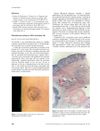
February 2006 in “Clinical and Experimental Dermatology” A benign tumor developed at a girl's BCG vaccination site, not previously linked to the vaccine.
 2 citations
,
September 2016 in “Symbiosis online journal of veterinary sciences”
2 citations
,
September 2016 in “Symbiosis online journal of veterinary sciences” This report details a case of feline degenerative mucinotic mural folliculitis associated with feline immunodeficiency virus, identified using immunohistochemistry and immunoassay techniques.
September 2017 in “Scientific Repository (Petra Christian University)” This project developed an SMS-based e-voting application using Gammu and PHP, aiming to facilitate an accurate, quick, and transparent voting process for student elections.
 April 2023 in “Research Square (Research Square)”
 The researchers reported that combining stromal vascular fraction (SVF) with fractional CO2 laser treatment significantly improved burn scar outcomes and patient satisfaction compared to using the laser alone.
May 2025 in “Lasers in Surgery and Medicine” This study reported that nonablative monopolar radiofrequency therapy provided sustained reductions in both inflammatory and noninflammatory acne lesion counts and sebum production in participants with moderate-to-severe acne vulgaris, with high patient satisfaction and no significant adverse effects observed up to 12 months posttreatment.
 3 citations
,
February 2023 in “International Journal of Molecular Sciences”
3 citations
,
February 2023 in “International Journal of Molecular Sciences” This review discusses the composition, preparation, and applications of autologous platelet and extracellular vesicle-rich plasma, highlighting its potential benefits and the need for further research, but it reports no new clinical findings.
 15 citations
,
January 2019 in “Journal of the Formosan Medical Association”
15 citations
,
January 2019 in “Journal of the Formosan Medical Association” This case study reports that adding adalimumab to a 12-year-old VKH patient's treatment allowed for ocular inflammation remission, vision improvement, and corticosteroid tapering, suggesting escalation of immunosuppression may be critical in pediatric VKH cases.
 July 2025 in “ACS Pharmacology & Translational Science”
 In this study, maslinic acid applied topically was observed to stimulate hair growth in mice comparably to minoxidil, primarily activating pathways like Wnt/β-catenin, and suggesting a link between hair growth and cilia activity.
28 citations
,
September 2014 in “Journal of Veterinary Internal Medicine” This study found that the novel drug VDC-1101 showed a 45% objective response rate in treating canine cutaneous T-cell lymphoma, offering a potential treatment option for this challenging disease.

This case report suggests that scalp arteriovenous malformations can cause local hair loss, which may recover following ethanol embolization treatment.
December 2010 in “대한미용학회지” This study found that Polygoni multiflori Radix water extracts stimulated hair growth and hair follicle development in mice, suggesting it may be safer than minoxidil.
6 citations
,
February 1998 in “PubMed” This study found that patients with MPA had significantly lower zinc and manganese levels and higher copper levels in their hair compared to hair-healthy men.
 25 citations
,
August 2015 in “International Journal of Cosmetic Science”
25 citations
,
August 2015 in “International Journal of Cosmetic Science” This study suggests that an extract from Malva verticillata seeds could help treat hair loss by modulating the Wnt/β-catenin pathway in cultured human dermal papilla cells.
June 2024 in “European Journal of Pharmaceutics and Biopharmaceutics” This study reported that using photoacoustic waves to enhance transdermal delivery of encapsulated minoxidil can significantly increase hair growth while reducing treatment frequency and systemic side effects.

This study found that finite element analysis-guided design improved bubble microneedles' controlled tip separation and insertion strength, supporting effective transdermal and sublingual drug delivery.
54 citations
,
November 2014 in “JEADV. Journal of the European Academy of Dermatology and Venereology/Journal of the European Academy of Dermatology and Venereology” This study found that combining low-fluence Q-switched Nd: YAG laser and intense pulsed light led to faster and more effective melasma treatment compared to using the laser alone, though recurrence still occurred.