 April 2023 in “Research Square (Research Square)”
 In this study, gene therapy using a VDR-expressing adenoviral vector significantly improved hair growth and reduced cyst formation in Vdr -KO rats with alopecia linked to type II rickets, whereas control treatments did not show these effects.
27 citations
,
July 2013 in “Journal of Investigative Dermatology” Revertant cell therapy shows promise for treating type XVII collagen deficiency, but better cell selection methods are needed.
 4 citations
,
December 2013 in “The Journal of Dermatology”
4 citations
,
December 2013 in “The Journal of Dermatology” This letter to the editor discusses a case of delayed-onset pachyonychia congenita linked to a new mutation in keratin 6b but presents no new research findings.
 4 citations
,
January 2014 in “International Journal of Trichology”
4 citations
,
January 2014 in “International Journal of Trichology” This report presents a 12-year-old male with symptoms indicative of Marie-Unna type hereditary hypotrichosis, characterized by a specific pattern of hair loss evolving with age.
January 2021 in “Dermatology online journal” This case report describes a 2-year-old girl with loose anagen syndrome type B, confirmed by painless trichoscopic examination, with no signs in her identical twin sister.
 1 citations
,
September 2019 in “Journal of Investigative Dermatology”
1 citations
,
September 2019 in “Journal of Investigative Dermatology” In this study, researchers used a CRISPR-based method to correct mutations in the COL7A1 gene in stem cells from RDEB patients, restoring normal collagen expression in engineered skin grafts in mice.
2 citations
,
September 1998 in “Der Hautarzt” A gene mutation causes a rare hereditary hair loss, offering potential for new treatments.

This case report details a 17-year-old boy diagnosed with atypical juvenile pityriasis rubra pilaris (type 5) after presenting with persistent itchy skin lesions since age seven.
In this study, researchers created a mouse model using CRISPR/Cas9 technology to investigate hypotrichosis simplex and woolly hair, finding that Krt71-knockout mice exhibited curly hair and developed complete hair shedding without immune deficiencies, mimicking conditions seen in humans and potentially aiding future hair disorder research.
35 citations
,
May 2006 in “Journal of Investigative Dermatology” Monilethrix involves multiple genes affecting hair structure, including DSG4 mutations.
8 citations
,
December 2003 in “Experimental Dermatology” In this study, injecting chimeric RNA–DNA oligonucleotides into mice skin caused a temporary mutation in keratin 17, altering hair morphology, but the mutation was transient due to genetic compensation or cell replacement.
5 citations
,
April 2017 in “The journal of investigative dermatology/Journal of investigative dermatology” This study reports on an ongoing Phase I/IIa clinical trial of ex vivo gene therapy for treating severe Recessive Dystrophic Epidermolysis Bullosa, involving six adult participants with COL7A1 mutations resulting in deficient type VII collagen production.
 199 citations
,
April 2010 in “Nature”
199 citations
,
April 2010 in “Nature” A gene called APCDD1, which controls hair growth, is found to be faulty in a type of hair loss called hereditary hypotrichosis simplex.
 13 citations
,
October 2024 in “Scientific Reports”
13 citations
,
October 2024 in “Scientific Reports” In this study using data from young women in West Bengal, India, the researchers identified that leptin signaling impairment, insulin resistance, and specific gene mutations significantly contribute to PCOS, with obesity commonly manifesting in affected individuals.
 1 citations
,
March 2015 in “Journal of the European Academy of Dermatology and Venereology”
1 citations
,
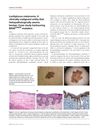
March 2015 in “Journal of the European Academy of Dermatology and Venereology” This letter to the editor shares a case study of lentiginous melanoma that appears clinically malignant but histopathologically benign, involving the BRAFV600R mutation.
412 citations
,
January 1998 in “Science” This study identified a missense mutation in the human hairless gene associated with a rare form of recessively inherited alopecia universalis, pinpointed on chromosome 8p12.
73 citations
,
April 1999 in “Journal of steroid biochemistry and molecular biology/The Journal of steroid biochemistry and molecular biology” This study found that the vitamin D-VDR system is crucial for mineral and bone metabolism post-weaning and identified missense mutations in 1alpha-hydroxylase causing type I rickets.
 April 2017 in “Journal of Investigative Dermatology”
 This study suggests that mutation-targeted siRNA therapy could potentially treat keratitis-ichthyosis-deafness syndrome by selectively reducing harmful GJB2 mutant gene expression in patient-derived keratinocytes.
October 2024 in “Journal of the Endocrine Society” This study highlights a rare case of vitamin D-dependent rickets type 2A caused by a heterozygous mutation in the vitamin D receptor gene, emphasizing the complexity of managing this condition with high-dose calcium and vitamin D therapy.
July 2001 in “APMIS. Acta pathologica, microbiologica et immunologica Scandinavica./APMIS” This article reviews the potential causes of insufficient androgen action during fetal development, such as enzyme and receptor gene mutations or environmental disruptors, but reports no new results.
9 citations
,
August 2021 in “Genome Biology and Evolution” This study found widespread losses of g-type lysozyme genes across various mammalian lineages, with both gene copies extensively lost in cetaceans and sirenians, and linked this to hairlessness in these fully aquatic mammals.
5 citations
,
September 2018 in “International journal of genomics” This study found that keratin damage in mammals and birds can result from N-homocysteinylation, reducing keratin solubility and indicating significant protein modification through genetic or nutritional disruptions in homocysteine metabolism.
2 citations
,
July 2013 in “Journal of Life Sciences” In this case report, researchers described a two-year-old girl with Vitamin D dependent rickets Type II, noting elevated 1,25-dihydroxyvitamin D3 and alopecia, and observed limited treatment response likely due to poor compliance.
 61 citations
,
January 2017 in “Human Reproduction Open”
61 citations
,
January 2017 in “Human Reproduction Open” This review discusses hormone replacement therapy for women with premature ovarian insufficiency, strongly recommending it for symptom relief and bone protection, but notes a lack of evidence on optimal types and doses.
50 citations
,
February 2016 in “Journal of Investigative Dermatology” A mutation in the KRT25 gene causes a rare hair disorder with thin, woolly hair.
45 citations
,
March 2001 in “Journal of Investigative Dermatology” This study identified a new cytokeratin, mK6irs, specifically expressed in the inner root sheath of mouse hair follicles, distinguishing it as a member of the type II cytokeratin family.
1 citations
,
July 2007 in “Journal of Investigative Dermatology” The mutation causes hairless mice due to mislocalized and dysfunctional HR protein.
 July 2022 in “International Journal of Contemporary Pediatrics”
 This report describes siblings with vitamin D-dependent rickets type 2, characterized by growth retardation, alopecia totalis, and low 25(OH)D3 levels, highlighting its autosomal recessive pattern and distinction from other rickets types.
October 2014 in “Archives of Disease in Childhood” This case study reported that growth hormone therapy dramatically improved rickets symptoms and growth in three children with vitamin-D dependent rickets type 2 who had not responded to standard treatments.
 January 2014 in “S. Karger AG eBooks”
 Type 2 diabetes in youth is increasing, with high treatment failure rates and more severe than Type 1; certain drugs can lower lipid levels effectively with varying side effects, and apples may benefit heart health like statins but with fewer side effects.