Search
for
Sort by
Research
60-90 / 1000+ resultsresearch An examination of a strand of 30,000 and 70,000 year old mammoth hair
This research analyzed two ancient mammoth hair strands and reported distinct structural and elemental differences, including calcium, iron, and copper deposits, which vary with age and origin.

research Short-term cryoprotectant-free cryopreservation at −20°C does not affect the viability and regenerative capacity of nanofat
In this mouse study, the researchers found that cryopreserving nanofat at -20°C maintained its viability and regenerative potential, comparable to freshly generated nanofat, supporting its potential for repeated use in regenerative applications.
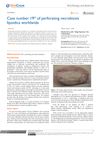
research Case number 19th of perforating necrobiosis lipoidica worldwide
This article reports the first case of perforating necrobiosis lipoidica in Colombia and the 19th case worldwide in diabetic patients.
research Laser Ablation and Intravital Microscopy to Study Intestinal Remodeling
This study describes a new intravital microscopy method for observing intestinal regeneration by tracking crypt dynamics in living mice after laser-induced tissue damage, revealing events like crypt fission, fusion, and disappearance over multiple weeks.

research 250 Sweat glands shrink upward with aging, causing dermal layer defects that lead to loss of skin elasticity and wrinkling-establishment of 3D imaging method for skin appendages
This study found that their novel 3D-imaging method, ASAXA-μCT, identified shrinkage of sweat glands as a key factor in skin aging, which leads to dermal defects, decreased elasticity, and increased wrinkling and sagging.
research Histology of moose (Alces alces andersoni) interdigital glands and associated green hairs
This study investigated the interdigital glands of moose, detailing their unique green hair coloration and the function of sebaceous and sweat glands, particularly during the rut period.

research Sample preparation protocol for cross-sectional microscopy of hair fibers v1
The document describes a method for preparing hair for microscopy by embedding it in plastic, cutting it, and storing it cold before imaging.
research Detection of Bim and Puma in mouse hair follicles using immunofluorescence and TUNEL assay double staining
This study suggests that Bim and Puma proteins play a role in hair follicle development and maintenance, although they only partially overlap with apoptosis during normal hair cycle stages.

research Fiber-Safe Extraction of Red Mordant Dyes from Hair Fibers
This study describes a new method for extracting red mordant dyes from wool fibers using ethylene diamine tetraacetic acid and N,N-dimethyl formamide, preserving the fibers for further examination.
research Effect of Extreme Consumption of Clove on the Morphology of Mice and Liver Tissue
This study found that excessive consumption of cloves in mice caused toxic changes in the liver, including structural damage and cell death, but concluded these effects are not considered dangerous.
research Reticular Erythematous Mucinosis Syndrome
This report discusses a case of reticular erythematous mucinosis syndrome, highlighting minimal mucin deposition and significant lymphocytic infiltration around the hair follicle, contributing to the ongoing debate about its nature as a mucinosis.
research 1350 Human scalp skin as an abundant and accessible source for eccrine sweat gland isolation and organ culture
This study describes a new method for isolating intact human eccrine glands from scalp follicular units, potentially advancing research on sweat gland physiology.

research Clinical Evaluation of the MIRA Technique in Cellulite Treatment: A Retrospective Case–Control Study
This study found that the MIRA technique, which customizes needle length and injection angle guided by ultrasound, improved structural and esthetic outcomes for cellulite treatment compared to standard methods.
research Effect of Incubation with Dimethyl Sulfoxide on the Mitotic Cycle of Cell Culture of Rabbit Dermal Papilla
This study found that a combination of 5% DMSO and BSA minimizes toxic effects on the cytogenetic stability of dermal papilla cells during cryopreservation.
research A Correlative Fluorescent and Electron Microscopic Technique for Ultralocalization of Trichocyte Keratins
This study demonstrates a sample preparation method for wool follicles that allows for clear keratin labeling and ultrastructural preservation in microscopy, reducing common artefacts from conventional fixation techniques.
research Transmission electron microscopy staining methods for the cortex of human hair: a modified osmium method and comparison with other stains
This study describes a modified reduction-osmication method for staining human scalp hair that improves reagent penetration and visualization of hair cortex features using transmission electron microscopy.
research Morphological and inflammatory changes in the skin of autopsied fetuses according to the type of stress
Stress during pregnancy can thin fetal skin.
research Apoptotic clearance by stem cells: molecular mechanisms for recognition and phagocytosis of dead cells
In this study published in Nature, researchers explored how hair follicle stem cells manage apoptotic cell clearance while maintaining their regenerative roles, identifying significant molecules involved in sensing and engulfing dying cells to sustain tissue health.
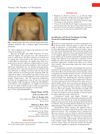
research An Effective and Novel Technique for Hair Control in Craniofacial Surgery
This article introduces a novel, inexpensive hair preparation technique using glove-finger sheaths to secure and protect hair during calvarial surgery, reducing procedure time and hair damage without the need for full scalp shaving.
research Application of Automated mRNA In Situ Hybridization for Formalin-fixed, Paraffin-embedded Mouse Skin Sections
This study demonstrated that combining cell conditioning with mild protease digestion enhanced the visualization of versican mRNA in formalin-fixed mouse skin tissue sections compared to using either technique alone.
research Severe Ulceronecrotic Dermatitis Associated with Mite Infestation in the Critically Endangered Amargosa Vole (Microtus californicus scirpensis)
This study reported that 39.7% of Amargosa voles had mite-associated lesions, which may severely impact their health and fitness.

research Effect of decellularisation methods on methacryloyl-substituted placental ECM hydrogels
This research concluded that the novel hydrogel PlacMA, derived from human placenta and curable by visible light, shows promise for cell culture and tissue engineering applications due to its tunable properties.
research Permanent Makeup (PMU) Removal with Plant Origin Extracts
This study investigated non-laser methods for removing permanent makeup using plant extracts, testing their decolorization effects on mice through tattooing and electroporation techniques.
research Cryopreservation of Hair-Follicle Associated Pluripotent (HAP) Stem Cells Maintains Differentiation and Hair-Growth Potential
This study established that cryopreservation methods can maintain the pluripotency and hair growth potential of hair follicle-associated pluripotent stem cells, enabling potential applications in regenerative medicine and hair transplantation.
research THIN-LAYER DRYING FROM WASTES POMEGRANATE PEEL
This study examined the drying of pomegranate peel as a method for reducing waste and found that drying efficiency varied with temperature and air velocity, potentially adding value to this by-product.
research Mechanisms of skin vascular maturation and maintenance captured by longitudinal imaging of live mice
research Treatment of Sarcoptic Mange in Wombats With Topical Moxidectin
This study reported successful treatment of sarcoptic mange in two wild bare-nosed wombats using three topical doses of moxidectin, clearing skin crusting and mites within two weeks.
research MORPHOLOGICAL CHARACTERISTICS OF ACELLULAR DERMAL MATRIX MANUFACTURING
This study developed a protocol for acellular dermal matrix manufacturing from pig skin, demonstrating effective removal of cellular components while preserving the collagen scaffold's structural organization through a series of physical and chemical treatments.
research Fabricating the multibranch carboxyl-modified cellulose for hemorrhage control
This study found that modified microcrystalline cellulose with citric and ascorbic acid demonstrated enhanced hemostatic properties and biocompatibility in vitro and in animal hemorrhage models.