2 citations
,
July 2022 in “The Kaohsiung Journal of Medical Sciences” This study demonstrated that the immunomodulatory drug FTY720 may enhance the survival of allogeneic fat grafts in mice by reducing immune rejection and improving neovascularization.
 23 citations
,
January 2005 in “Nihon Ishinkin Gakkai zasshi”
23 citations
,
January 2005 in “Nihon Ishinkin Gakkai zasshi” This case study identified Trichophyton rubrum as the cause of trichophytia profunda acuta in a patient using nested PCR, suggesting an alternative diagnostic approach when KOH tests and cultures fail.
19 citations
,
December 2021 in “Stem Cell Research & Therapy” This study found that Muse cells, when injected subcutaneously, alleviated symptoms of atopic dermatitis in mice, suggesting potential for treating inflammatory skin conditions.
 44 citations
,
January 2019 in “Journal of Translational Medicine”
44 citations
,
January 2019 in “Journal of Translational Medicine” This study found that macrophages are crucial for skin regeneration during tissue expansion, as their depletion in rats led to inhibited skin growth and reduced secretion of key growth factors.
 35 citations
,
August 2001 in “Journal of Cutaneous Medicine and Surgery”
35 citations
,
August 2001 in “Journal of Cutaneous Medicine and Surgery” This paper reviews the use of tacrolimus for various conditions, noting its effectiveness in treating certain skin disorders but highlighting that some findings remain anecdotal due to limited case numbers.
5 citations
,
May 2024 in “Developmental Cell” Lower GATA3 levels in mice help hair regrow by changing certain immune cells.
 14 citations
,
January 2017 in “Annals of Dermatology”
14 citations
,
January 2017 in “Annals of Dermatology” In this retrospective study, low-dose methotrexate was observed to be effective and well-tolerated in treating recalcitrant alopecia areata multiplex, achieving complete or near-complete hair regrowth in about 90% of patients despite some experiencing elevated liver enzymes and gastrointestinal discomfort.
 March 2024 in “Research Square (Research Square)”
 In this study, researchers discovered that the MafB gene, which is important for macrophage differentiation, shows high expression in the pancreas and is influenced by sex steroids, with varied expression patterns in hamster tissues and during reproductive phases.
 June 2013 in “Annals of the rheumatic diseases”
 This study concluded that while methotrexate-related adverse events were infrequent in early rheumatoid arthritis patients taking adalimumab, some increased with higher methotrexate doses, suggesting use of the lowest effective dose.
19 citations
,
October 2023 in “Bioengineering” This study reviewed the efficacy of mechanical fractionation techniques to produce tissue stromal vascular fraction (tSVF) and found that tSVF injections are particularly effective for conditions like osteoarthritis and wound healing, with centrifugation before fractionation improving isolation efficiency regardless of preparation method.
15 citations
,
August 2019 in “F1000Research” This review discusses the physiological roles of anthrax toxin receptors CMG2 and TEM8, highlighting their influence on extracellular matrix homeostasis, angiogenesis, cell migration, and skin elasticity, and reports no new clinical results.
June 2025 in “British Journal of Dermatology” This study compared oral tofacitinib and methotrexate in treating moderate-to-severe alopecia areata, finding that tofacitinib was more effective at reducing SALT scores and improving scalp hair assessment PRO scores, though both treatments reduced psychological distress similarly without serious adverse effects.
 1 citations
,
November 2020 in “International Journal of Dermatology”
1 citations
,
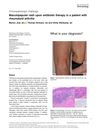
November 2020 in “International Journal of Dermatology” In this case report, the authors suggest that methotrexate-induced rheumatoid papular eruption is a rare side effect of methotrexate, resolved after discontinuation, which may be linked to rheumatic conditions.
18 citations
,
January 2009 in “Experimental Dermatology” This study proposes that mammalian target of rapamycin (mTOR) may connect various signaling pathways in hair follicle tumor formation, offering a potential unified model for understanding these tumors.
June 2011 in “Portuguese National Funding Agency for Science, Research and Technology (RCAAP Project by FCT)” The researchers reported that both estrogen receptors ERα and ERβ are expressed in human testis, and identified two novel genes, Aven and Regucalcin, linked to estrogen and androgen regulation, which may be crucial for spermatogenesis.
January 2026 in “Journal of Investigative Dermatology” This study found that human γδTregs promoted hair regrowth and restored hair follicle immune privilege in a model of alopecia areata, suggesting potential for cell-based therapy in autoimmune diseases.
 17 citations
,
June 2020 in “British Journal of Dermatology”
17 citations
,
June 2020 in “British Journal of Dermatology” This study observed that oral mTOR inhibitors frequently cause dermatological side effects, such as mouth ulcers and acneiform eruptions, but these rarely require stopping the treatment.
 1 citations
,
November 2024 in “Frontiers in Immunology”
1 citations
,
November 2024 in “Frontiers in Immunology” This study provides an analysis of global publications on TLS, offering insights into the role of TLS in immunotherapy and suggesting future research directions.
1 citations
,
June 2012 in “OhioLink ETD Center (Ohio Library and Information Network)” In this study, the 40-MBR system was shown to enhance drug-screening efficiency by providing reliable, real-time monitoring of cell conditions in 3-D cultures compared to traditional methods.
 March 2005 in “Journal of The American Academy of Dermatology”
 Mycophenolate mofetil improved skin condition in a man with nephrogenic fibrosing dermopathy.
 9 citations
,
January 2018 in “BioMed Research International”
9 citations
,
January 2018 in “BioMed Research International” This study found that topical application of TSG from Polygonum multiflorum promoted hair regrowth in depilated mice, potentially through the inhibition of apoptosis-related proteins.
March 2026 in “Bioengineering & Translational Medicine” This study reported that a modified version of Thymosin beta 4, called PEG-rTβ4, demonstrated potential as a treatment for acute myocardial infarction by improving cardiac function and reducing cell death via specific biochemical pathways, suggesting its promise in drug development efforts.
 7 citations
,
February 2015 in “Journal of comparative pathology”
7 citations
,
February 2015 in “Journal of comparative pathology” This study observed that NSG-hu-BLT mice developed graft-versus-host disease characterized by CD8+ T lymphocyte-related cell death in the skin and liver, which may affect their utility in other research areas.
 9 citations
,
March 2012 in “Experimental dermatology”
9 citations
,
March 2012 in “Experimental dermatology” This meeting report discusses the first symposium on natural gene therapy for skin, preceding the 41st annual meeting of the European Society for Dermatological Research, and reports no new experimental findings.
1 citations
,
February 2025 in “Journal of the Neurological Sciences” This study suggests that BTP levels in cerebrospinal fluid might help diagnose CIDP and predict therapy response but require validation in larger cohorts.
 56 citations
,
February 2012 in “Cell Cycle”
56 citations
,
February 2012 in “Cell Cycle” This review discusses the role of miRNA/mRNA regulatory networks in skin development, epidermal homeostasis, and tissue remodeling, and suggests potential for miRNA-based therapies in treating skin conditions, but reports no new clinical results.
![Discovery of 7-Methoxy-6-[4-(4-Methyl-1,3-Thiazol-2-yl)-1H-Imidazol-5-yl]-1,3-Benzothiazole (TASP0382088): A Potent and Selective Transforming Growth Factor-β Type I Receptor Inhibitor as a Topical Drug for Alopecia](/images/assets/9620bd26-3366-4f2a-bcac-f511697bbc41/small/35997.jpg) 6 citations
,
January 2013 in “Chemical & pharmaceutical bulletin/Chemical and pharmaceutical bulletin”
6 citations
,
January 2013 in “Chemical & pharmaceutical bulletin/Chemical and pharmaceutical bulletin” In this study, TASP0382088 showed potent selective inhibition of the ALK5 receptor, significantly reducing Smad2 phosphorylation in mouse skin following topical application.
 March 2020 in “Section 5: Patient safety and quality assurance”
 This study found that tofacitinib and baricitinib had an acceptable adverse reaction profile when used to treat rheumatoid arthritis, with similar side effects to those described in their technical data sheets.
9 citations
,
September 2022 in “Frontiers in Physics” This study found that Mueller Matrix microscopy can accurately identify, detect, and evaluate hair follicles in mouse skin tissue, suggesting its potential for skin structure research and dermatological applications.
 5 citations
,
August 2019 in “iScience”
5 citations
,
August 2019 in “iScience” In this study, Trf1 genetic deletion in mice, including those with cancer-prone mutations, was shown to not affect overall viability and cause only mild effects, while being necessary for tumor formation, suggesting a potential therapeutic window for Trf1 as an anti-cancer target.