A new mutation in the TRPS1 gene caused Trichorhinophalangeal syndrome in a 17-year-old, highlighting the need for genetic testing.
 April 2024 in “Human genomics”
 This study identified MPB susceptibility genes and potential drug candidates that may help uncover molecular mechanisms and address male-pattern baldness.
 April 2018 in “Journal of Investigative Dermatology”
 The researchers reported that in nonmelanoma skin cancers, the expression of osteopontin splice variants is significantly higher compared to normal skin, with OPN-a elevated in basal cell carcinoma more than OPN-c.
33 citations
,
February 2021 in “Journal of Medicinal Chemistry” This study found that novel MPC inhibitor analogues with specific chemical modifications promoted significant hair growth in shaved mice when applied topically.
6 citations
,
January 2008 in “Indian Journal of Dermatology” This case report describes a rare autosomal dominant hair shaft disorder, monilethrix, observed in three consecutive generations of a family, with gradual improvement noted with age.
 8 citations
,
March 2015 in “Neuromuscular Disorders”
8 citations
,
March 2015 in “Neuromuscular Disorders” This study found that adult patients with Myotonic Dystrophy type 1 exhibited a higher prevalence of various morphofunctional, inflammatory, and proliferative skin disorders compared to healthy controls.
 3 citations
,
March 2019 in “Case Reports”
3 citations
,
March 2019 in “Case Reports” This report highlights a case of possible association between myotonic dystrophy type 1 and basal cell carcinoma, urging clinicians to consider this link despite negative genetic testing for known hereditary BCC syndromes.
5 citations
,
June 1993 in “Pediatric dermatology” Monilethrix Syndrome causes fragile, beaded hair that breaks easily and needs early diagnosis for better care.
 23 citations
,
January 2015 in “Journal of The American Academy of Dermatology”
23 citations
,
January 2015 in “Journal of The American Academy of Dermatology” This study found that patients with myotonic dystrophy type 1 had higher numbers of nevi, dysplastic nevi, melanomas, and pilomatrixomas compared to age- and sex-matched controls.
November 2018 in “Journal of dermatology & cosmetology” This manuscript reports on the first case of perforating necrobiosis lipoidica in Colombia, marking the 19th documented case worldwide.
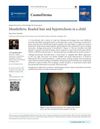 January 2026 in “Cosmoderma”
 In this clinical case study, a 9-year-old girl was diagnosed with monilethrix, a hereditary hair shaft disorder characterized by weak, beaded hair, with management focusing on minimizing hair trauma.
 January 2011 in “Journal of Human Genetics”
 This study found a severe MBTPS2 gene mutation in a Japanese IFAP syndrome patient, suggesting other factors may influence the syndrome's clinical features compared to previously studied patients.
1 citations
,
February 2025 in “Journal of the Neurological Sciences” This study suggests that BTP levels in cerebrospinal fluid might help diagnose CIDP and predict therapy response but require validation in larger cohorts.
10 citations
,
December 2023 in “International Journal of Nanomedicine” This study reviewed the challenges of delivering nucleic acids for gene therapy, highlighting the limitations of non-viral vehicles and exploring bioinspired strategies using cell membrane camouflage for improved delivery efficacy.
4 citations
,
July 2022 in “The Journal of Clinical Endocrinology & Metabolism” This study identified a novel homozygous mutation in the 5'-UTR of the POMC gene, suggesting a new molecular mechanism for the syndrome of adrenal insufficiency, obesity, and red hair.
June 2026 in “Journal of Integrated Science and Technology” This review discusses the proposed shift from PCOS to PMOS, emphasizing a comprehensive approach to diagnosis and management, but reports no new clinical results.
 14 citations
,
May 2021 in “Marine Drugs”
14 citations
,
May 2021 in “Marine Drugs” This review discusses the therapeutic properties of polydeoxyribonucleotides derived from marine organisms for wound healing and inflammation, but it reports no new clinical results.
 February 2010 in “Journal of The American Academy of Dermatology”
 The document concludes that using gadolinium-based contrast agents during MRI can be linked to Nephrogenic Systemic Fibrosis in patients with severe kidney disease.
June 2023 in “Clinical Cosmetic and Investigational Dermatology” This report describes a 60-year-old female with pretibial pruritic papular dermatitis who showed significant improvement of skin lesions after one month of treatment with oral pentoxifylline. The authors highlight the unique clinical and histological features of PPPD and propose pentoxifylline as a potential therapy.
2 citations
,
May 2022 in “International journal of trichology” This article reviews the condition plica neuropathica, including its manifestations, potential causes, and treatment, but it does not provide new clinical findings.
 April 2024 in “Nano research”
 This study on androgenetic alopecia in mice introduced a novel therapy combining microneedle patches and cold atmospheric plasma to enhance minoxidil delivery, leading to improved hair regeneration by boosting vascular growth and reshaping the hair follicle microenvironment.
 87 citations
,
July 2018 in “Biochimica et Biophysica Acta (BBA) - Molecular Cell Research”
87 citations
,
July 2018 in “Biochimica et Biophysica Acta (BBA) - Molecular Cell Research” This review discusses the essential roles and complex regulation of PP2A in various physiological processes and reports no clinical results; the authors highlight the need for further mouse model research to explore PP2A's therapeutic potential.
1 citations
,
January 2022 in “Annals of Dermatology” In this case report, researchers identified a novel homozygous missense mutation in the MBTPS2 gene associated with the mild form of IFAP syndrome in a 7-year-old boy.
6 citations
,
March 1991 in “Journal of Radioanalytical and Nuclear Chemistry” Manganese levels in hair may be linked to multiple sclerosis.
10 citations
,
December 2008 in “Molecular Carcinogenesis” This study found that overexpressing the PML protein in transgenic mice decreased skin tumor occurrence and delayed their progression, highlighting PML's potential role in influencing keratinocyte growth and differentiation.
8 citations
,
March 2015 in “Molecular Medicine Reports” This study found that para-phenylenediamine induces cytotoxic effects in normal human hair dermal papilla cells by altering microRNA expression and causing cell death, cell cycle arrest, and oxidative stress.
 94 citations
,
August 1975 in “Journal of Cutaneous Pathology”
94 citations
,
August 1975 in “Journal of Cutaneous Pathology” In this study, the researchers observed that male pattern alopecia is characterized by miniature follicles, enlarged sebaceous glands, and an increased number of mast cells, without significant abnormalities in enzyme activity.

This study presents a rare instance of Netherton syndrome diagnosed incidentally in siblings of consanguineous parents, initially misdiagnosed as other skin conditions, emphasizing the need for careful evaluation in chronic skin cases to prevent misdiagnosis.
 October 2023 in “Journal of dermatological science”
 This study highlights that mutations in the MBTPS2 gene can lead to dermatological disorders like IFAP syndrome and severe bone diseases such as X-Linked Osteogenesis Imperfecta, emphasizing the significance of understanding these genetic variants for disease mechanisms and associations.
2 citations
,
October 2025 in “Cells” This review discusses the multifunctional role of PKM2 in promoting cardiac repair and regeneration, highlighting its potential as a therapeutic target in cardiovascular medicine, but reports no new experimental results.