2 citations
,
November 2018 in “Veterinary Dermatology” This study found that in poodles, perifollicular changes in the hair follicle glassy membrane are not always linked to calcium deposition.
September 2017 in “PubMed” In this case report, a Danish family with monilethrix showed varying symptoms, diagnosed via dermatoscopy, microscopy, and gene sequencing. The study highlights that while no cure exists, oral minoxidil shows promise in a single case, and reducing hair trauma remains key for management.
January 2022 in “SSRN Electronic Journal” This study reports that aging in mice leads to curved hair follicles and an increase in white hairs, potentially due to changes in keratinocyte and melanocyte stem cells.
1 citations
,
April 2013 in “Pakistan Journal of Biological Sciences” This study found that hair coloring, waving, and ironing were associated with increased hair abnormalities compared to untreated hair in Iranian women.

In this case report, a 38-year-old woman with lifelong monilethrix and progressive frontal scalp thinning associated with androgenetic alopecia highlights the diagnostic and management challenges when these hair conditions coexist.
 1 citations
,
October 2013 in “BMJ”
1 citations
,
October 2013 in “BMJ” This case study reports a man with rapid hair thinning, whitening, and sparse beard, linked to an increased proportion of hair follicles in catagen or telogen phase and peribulbar lymphocytic infiltrate.
 1 citations
,
July 2018 in “CMAJ. Canadian Medical Association journal”
1 citations
,
July 2018 in “CMAJ. Canadian Medical Association journal” This case report describes a three-year-old girl with a two-year history of hair loss who was previously treated with selenium sulfide shampoo, with no family history of alopecia.
June 2010 in “Chinese Journal of Dermatology” This study found a novel R430Q gene mutation in hHb6, which may be linked to the hereditary hair disorder monilethrix in the examined family.
7 citations
,
January 2002 in “PubMed” This study observed significant skin changes, including epidermal thickening and pleomorphic keratinocytes, in rats after subchronic UVB irradiation, highlighting specific reactions in the dorsal skin.
35 citations
,
September 2003 in “Archives of dermatology” This study proposed that the tiger tail phenomenon in trichothiodystrophy hair is caused by regular undulations of hair fibers, altering the optical properties seen under polarized light.
 4 citations
,
January 2014 in “Indian dermatology online journal”
4 citations
,
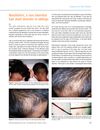
January 2014 in “Indian dermatology online journal” This article discusses the genetic hair disorder monilethrix, characterized by beaded, fragile hair due to defective keratin genes, and reports no effective treatment currently available; variability in severity was noted among affected siblings.
 September 2023 in “Cutis”
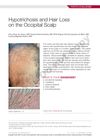
 This study presents a case of a 6-month-old infant girl with hypotrichosis and an alopecic plaque in the occipital region, characterized by broken and dystrophic hairs with follicular papules and perifollicular hyperkeratosis, suggesting a diagnostic consideration.
January 2005 in “Chinese Journal of Veterinary” This study observed that hairless mice of different strains initially grow hair but soon develop alopecia and other skin and pigmentation changes with age.
January 2016 in “Case reports in clinical medicine” This article discusses monilethrix in a 6-year-old girl, explores various aspects of the disease, and its treatment, but reports no new clinical results.
January 2015 in “Nasza Dermatologia Online” This case report describes an eight-year-old Kashmiri boy diagnosed with monilethrix, a rare genetic hair disorder, characterized by a beaded appearance and fragility of the hair shaft.
1 citations
,
August 2024 in “Journal of Morphology” This study observed that developing mammary organs in Monodelphis domestica show mammary hairs in 12-week-old females, which disappear by 18 weeks, with findings suggesting shared characteristics between their nipples and eutherian nipples, supporting the evolutionary link between mammary glands and hair organs.
 1 citations
,
January 2018 in “Acta dermato-venereologica”
1 citations
,
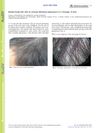
January 2018 in “Acta dermato-venereologica” A teenager's hair with alternating white and dark bands, known as Pili annulati, is a genetic condition that is usually harmless and often considered attractive.
 74 citations
,
March 1963 in “Archives of Dermatology”
74 citations
,
March 1963 in “Archives of Dermatology” This article reviews historical reports of skin changes, such as pseudoacanthosis nigricans, associated with cholesterol-lowering drugs like triparanol and nicotinic acid, but presents no new clinical findings.
21 citations
,
November 1980 in “PubMed” This study describes a newly identified mite species, Demodex zalophi, found on captive sea lions and highlights its unique traits, including being the first of its kind described in marine mammals.
 156 citations
,
October 1996 in “Science of The Total Environment”
156 citations
,
October 1996 in “Science of The Total Environment” This study observed that tributyltin pollution induces imposex, reduces reproductive success, and leads to population decline in Ocinebrina aciculata, highlighting its sensitivity compared to other prosobranch species.
24 citations
,
January 1969 in “Archives of Dermatological Research” Hair malformations may occur due to timing issues in hair development.
 April 2026 in “Communications Biology”
 In this study of Danioninae species, researchers reported that the presence of breeding tubercles on the pectoral fins is conserved in certain species and linked to local androgen conversion, with steroid 5-α-reductase playing a crucial role in their development.
1 citations
,
January 2018 in “Journal of clinical & experimental dermatology research” This study presented cases of severe and permanent nail changes resembling lichen planus in patients with chilblain lupus erythematosus, suggesting a unique pattern related to cold exposure rather than typical histopathology findings.
 24 citations
,
January 2011 in “International Journal of Trichology”
24 citations
,
January 2011 in “International Journal of Trichology” This review highlights the light microscopic features of various infectious and non-infectious hair conditions and reports no new clinical results.
 16 citations
,
April 2012 in “Journal of mammalogy”
16 citations
,
April 2012 in “Journal of mammalogy” Among Australian fur seals at one colony, this study found that alopecia, primarily affecting juvenile females, is linked to hair shaft fractures associated with low tyrosine and zinc levels, as well as higher pollutant exposure.
 May 2025 in “Pediatric Dermatology”
 This systematic review identified topical and oral minoxidil as the most effective treatments for monilethrix, but noted the varying efficacy of oral retinoids and other treatments.
49 citations
,
January 2013 in “Dermatologic Therapy” This review discusses the varying neonatal presentations of Mendelian disorders of cornification (ichthyosis) based on phenotypic groups but reports no new clinical results; the authors suggest categorizing these presentations to guide diagnosis and treatment.
This report describes a 7-year-old girl with monilethrix who showed significant improvement while on acitretin treatment, but symptoms returned after stopping the medication.
 December 2021 in “Journal of clinical images and medical case reports”
 This descriptive study observed that a "moth-eaten" pattern of hair loss can occur in several skin diseases, with lichen planopilaris and discoid lupus erythematosus being among the most common conditions identified in patients from Baghdad, emphasizing its potential as a diagnostic tool for clinicians.
186 citations
,
October 1957 in “A M A Archives of Dermatology” This paper presents a collection of unusual cases observed over seven years, with detailed histological descriptions but no definitive diagnoses, aiming to encourage further discussion and understanding of the disease process.