 6 citations
,
August 2012 in “The Journal of Pediatrics”
6 citations
,
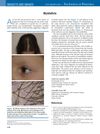
August 2012 in “The Journal of Pediatrics” This case report describes a 12-year-old girl diagnosed with monilethrix, characterized by fragile, beaded hair shafts, with no effective treatment currently available.
51 citations
,
May 1996 in “American journal of physiology. Regulatory, integrative and comparative physiology/American journal of physiology. Regulatory, integrative, and comparative physiology” In this study, captive gray seals exhibited increased resting metabolic rates and elevated thyroid hormone levels during the final stage of molting, with more pronounced changes in juveniles.
 7 citations
,
November 2013 in “Pediatric and Developmental Pathology”
7 citations
,
November 2013 in “Pediatric and Developmental Pathology” This retrospective review of hair samples from pediatric patients indicated that microscopic hair examination might be a useful first-line investigation for diagnosing various genetic conditions.
 January 2013 in “The Pan African medical journal”
 This report describes two cases of monilethrix in Afghan siblings, detailing the hair disorder's clinical presentation and potential influences on hair growth, such as hormonal changes and iron supplementation.
4 citations
,
May 2020 in “The journal of pediatrics/The Journal of pediatrics” This case report details the diagnosis of monilethrix in a 4-year-old boy, characterized by brittle hair and specific dermoscopic findings, and highlights the condition's hereditary nature and management through avoiding mechanical hair damage.
 December 2014 in “Bangladesh Journal of Veterinary Medicine”
 In this study, mixed lice infestations and their associated skin changes were observed in the Egyptian lesser blind mole rat, marking the first report of such findings in this species.
 3 citations
,
January 1989 in “PubMed”
3 citations
,
January 1989 in “PubMed” This paper discusses various histologic features to distinguish types of alopecia and reports no new clinical findings.
July 2026 in “Cosmoderma” In this case report, a 5-year-old boy presented with an itchy patch of hair loss in the frontotemporal region, with trichoscopy revealing specific hair shaft features, such as black dots and corkscrew hairs.
26 citations
,
December 2003 in “Experimental Dermatology” In this study, researchers identified two de novo germline missense mutations in the hair keratins hHb1 and hHb6 in patients with monilethrix whose parents were not clinically affected.
This chapter reviews the clinical and morphological diagnostic features of various hair dysplasias, including atypical pili torti, pseudomonilethrix, and trichothiodystrophy, and reports no new results.
 January 2022 in “Revista Dermatológica Centro Uraga”
 This article reviews two cases of monilethrix in siblings, detailing their clinical and dermatoscopic characteristics, but reports no new findings.
 September 2016 in “Journal of The American Academy of Dermatology”
 This case study identified the condition as Monilethrix in a 17-year-old female, characterized by a beaded hair appearance and linked to a genetic cause.
 1 citations
,
October 2025 in “Scientific Reports”
1 citations
,
October 2025 in “Scientific Reports” This study investigated the Mandarin duck as a model for understanding lifelong developmental changes, finding that male sail feather morphogenesis involves a combination of local morphogenetic programs, epigenetic regulation, and hormonal cues, with increased female estrogen levels observed before the mating season.
January 1999 in “Journal of Investigative Dermatology”  2 citations
,
August 1994 in “Archives of dermatology”
2 citations
,
August 1994 in “Archives of dermatology” This article reports a case of a 19-month-old boy with scalp erythematous papules and hair loss, showing no improvement with initial treatment.
58 citations
,
November 1969 in “British Journal of Dermatology” This report describes two patients with ichthyosis linearis circumflexa exhibiting symptoms resembling Netherton's disease, noting multiple hair shaft defects and discussing a possible connection to aminoaciduria.
8 citations
,
May 2005 in “The American journal of dermatopathology/American journal of dermatopathology” This study observed unique ultrastructural changes in a 4-year-old girl with pili trianguli et canaliculi that may affect hair shaft surface characteristics due to inner root sheath alterations.
 3 citations
,
March 2014 in “Veterinary dermatology”
3 citations
,
March 2014 in “Veterinary dermatology” This study reports the first documentation of mural, mucinotic, isthmus folliculitis alopecia in Norwegian puffin dogs, noting that ciclosporin treatment led to remission while other treatments were less effective.
October 2024 in “Skin Research and Technology” This report describes several cases of pili annulati in children, highlighting its genetic predisposition and distinctive "zebra stripe" hair pattern, but notes no effective treatment is available.
January 2016 in “Lithuanian University of Health Sciences” This study in a Lithuanian veterinary clinic observed diverse histomorphological skin changes in alopecic dogs caused by various rare diseases, including hyperkeratinization and pigmentation disorders.
June 2025 in “British Journal of Dermatology” This case study describes an uncommon variant of coudability hair in alopecia areata, where intermittent inflammatory processes result in alternating bands of lighter color and reduced hair shaft calibre.
This study discovered two new species of mites in the hair follicles of squirrel monkeys from South America, potentially causing follicle damage due to secondary infection.
 5 citations
,
March 2009 in “Pediatric Dermatology”
5 citations
,
March 2009 in “Pediatric Dermatology” The study found that pili bifurcati causes hair to intermittently split into two branches, each with its own outer layer.
14 citations
,
August 2004 in “Veterinary Dermatology” In this study, a thoroughbred mare exhibited a unique case of alopecia areata with lymphocytic infiltration at both the bulbar and isthmic levels of hair follicles.
February 1988 in “Journal of the American Academy of Dermatology” July 2021 in “Anais brasileiros de dermatologia/Anais Brasileiros de Dermatologia” This article reports on a family with six members diagnosed with monilethrix, highlighting varying degrees of alopecia linked to this rare hair shaft defect.
 37 citations
,
May 2016 in “JAAD case reports”
37 citations
,
May 2016 in “JAAD case reports” This abstract describes monilethrix, an autosomal dominant genodermatosis with symptoms like hair fragility and keratosis pilaris, and does not report new experimental results.
4 citations
,
April 1978 in “PubMed” This case study describes a six-month-old boy diagnosed with Netherton syndrome, featuring ichthyosiform erythroderma and alopecia, possibly linked to aminoaciduria.
December 2025 in “International Journal of Advanced Biochemistry Research” In this study, researchers analyzed hair from different regions of Malvi cattle and found significant variations in color, shape, and band pattern, although the medullary index remained consistent between 0.50 and 0.60 across the samples.
10 citations
,
September 1994 in “International Journal of Dermatology” This case report describes three Iranian men with gradual reddish-brown pigmentation on their cheeks and preauricular areas since childhood, unresponsive to sunblocks and topical steroids.