109 citations
,
April 1997 in “Archives of Dermatological Research” The researchers reported that mast cell and nerve fiber interactions in mouse skin are highly selective for nerve fiber types and vary depending on the hair cycle phase.
February 2026 in “Biophysical Journal”  41 citations
,
October 2008 in “The American journal of pathology”
41 citations
,
October 2008 in “The American journal of pathology” This study found that reducing BMP signaling in mouse nipple epithelia, achieved through Noggin overexpression, can convert them into hairy skin with pilosebaceous units.
9 citations
,
October 2022 in “Journal of Molecular Neuroscience” This study reports a novel LSS gene mutation in an Egyptian family with alopecia intellectual disability syndrome 4, expanding the known clinical and genetic features of the condition.
Trichorrhexis nodosa causes hair to break easily, often affecting young to middle-aged black women.
 12 citations
,
February 2010 in “Tetrahedron Letters”
12 citations
,
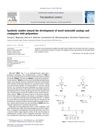
February 2010 in “Tetrahedron Letters” This article describes the synthesis of novel polyamine-modified minoxidil analogs and conjugates to potentially enhance minoxidil's biological activity, selectivity, and water solubility, but reports no new biological results.
July 2024 in “Journal of Investigative Dermatology” This study found that systemic treatment with DS77754007, a KLK5 inhibitor, improved skin symptoms in a mouse model of Netherton Syndrome more effectively than certain antibody treatments, suggesting KLK5 inhibition as a promising therapeutic approach for this condition.
 2 citations
,
April 2010 in “The Open Dermatology Journal”
2 citations
,
April 2010 in “The Open Dermatology Journal” This review discusses the development and role of corneodesmosin in skin and hair follicle integrity, highlighting findings from mouse models and its connection to genetic diseases, with no new experimental results included.
203 citations
,
May 2017 in “Journal of controlled release” This review discusses completed and ongoing clinical studies on microneedle-based technologies for cosmetic, therapeutic, and diagnostic applications and reports no new clinical results.
43 citations
,
February 1999 in “Biochemical Journal” This study found that transgenic mice overexpressing the SSAT gene under a metallothionein promoter suffered delayed hair loss and were highly sensitive to polyamine analogues, which led to significant liver changes and mortality.
13 citations
,
November 2017 in “Neurotoxicity research/Neurotoxicity resarch” This study found that sodium metabisulfite activates sodium channels and increases cellular excitability and excitotoxicity in both cardiomyocyte and neuron models, which exacerbates seizures and neuronal damage in rats.
10 citations
,
May 2007 in “British Journal of Dermatology” This case report describes the first known instance of congenital follicular mucinosis in a newborn, diagnosed through histopathological examination of a scalp lesion.
18 citations
,
June 2018 in “Journal of Dental Research” This study found that during amelogenesis in Msx2 null mice, a dysfunctional enamel organ developed due to abnormal epithelial transformation and lacked proper enamel formation.
2 citations
,
April 2020 in “PubMed” 1 citations
,
October 2022 in “Journal of Cosmetic Dermatology” In this study, combining 2% minoxidil with weekly microneedling significantly improved hair regrowth in women with female pattern hair loss compared to using minoxidil alone, with an 85% effective rate reported in the group receiving both treatments over a 24-week period.
32 citations
,
May 1999 in “Biochemical and Biophysical Research Communications” This study found that the gene BSSP, a serine protease, is predominantly expressed in sebaceous glands and is overexpressed in nude mouse skin.
11 citations
,
June 2015 in “Scientific Reports” In this study of Han Chinese women, the mitochondrial DNA N haplogroup was associated with a higher risk of late-onset systemic lupus erythematosus and its specific manifestations, such as skin impairment and neurological disturbances.
 5 citations
,
January 1998 in “Journal of Toxicologic Pathology”
5 citations
,
January 1998 in “Journal of Toxicologic Pathology” This study found that topical treatment with Maneb led to delayed epithelial cell degeneration in hair follicles of rats due to apoptosis.
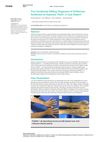
This study presents a rare instance of Netherton syndrome diagnosed incidentally in siblings of consanguineous parents, initially misdiagnosed as other skin conditions, emphasizing the need for careful evaluation in chronic skin cases to prevent misdiagnosis.
April 2025 in “OPAL (Open@LaTrobe) (La Trobe University)” This study developed a dissolvable microneedle system loaded with nanozymes and minoxidil that enhanced hair regeneration in androgenetic alopecia mouse models by improving blood flow, reducing reactive oxygen species, and increasing cell proliferation compared to minoxidil alone.

This study found that the transcription factor Meis2 is crucial for the maturation and innervation of sensory neurons responsible for light touch in mice, with its absence leading to reduced touch sensitivity.
This source reviews advancements in microneedle-based cosmeceutical delivery, discussing new technologies and highlighting a burgeoning area of research involving microneedling combined with stem cell delivery for anti-aging, without finding measurable changes in skin barrier function or appearance during the study period.
76 citations
,
January 2022 in “Journal of Tissue Engineering” This review summarizes recent progress in microneedle-based drug delivery systems and discusses their potential impact on cellular mechanisms and immunization signaling pathways, highlighting the need for further development in fabrication methods.
 April 2025 in “ACS Applied Nano Materials”
 In AGA mouse models, this study found that the combination of nickel–copper nanozymes and minoxidil in dissolvable microneedles significantly enhanced hair regeneration and improved the hair follicle microenvironment by reducing reactive oxygen species and increasing vascular density, compared to minoxidil alone.
 16 citations
,
March 2016 in “The journal of investigative dermatology/Journal of investigative dermatology”
16 citations
,
March 2016 in “The journal of investigative dermatology/Journal of investigative dermatology” In this study, researchers observed that a noncanonical mechanism involving the γ-secretase-dependent, RBPj-independent Notch intracellular domain improves survival in Msx2-Cre mice by delaying hair follicle destruction and reducing disease severity.
 January 2024 in “JAAD case reports”
 Netherton syndrome can cause severe and chronic vulvovaginal symptoms that may improve with continuous oral contraceptives.
3 citations
,
January 2002 in “Actas Dermo-Sifiliográficas” In this case report, a 23-year-old woman developed localized trichorrhexis nodosa after compulsively applying 3% minoxidil to her scalp for two months.
 12 citations
,
February 2022 in “Acta Biomaterialia”
12 citations
,
February 2022 in “Acta Biomaterialia” In this study, researchers found that dissolving microneedles made with hyaluronic acid enhanced the effectiveness of minoxidil in reducing hair loss and promoting hair growth in alopecia-affected mice more effectively than topical minoxidil alone, while using only 10% of the drug amount.
August 2025 in “OPAL (Open@LaTrobe) (La Trobe University)” This study demonstrates that machine learning-assisted fabrication of PRP-incorporated microneedles effectively promotes hair regrowth in AGA mice, outperforming minoxidil and mitigating biosafety risks associated with synthetic materials.
 April 2024 in “Nano research”
 This study on androgenetic alopecia in mice introduced a novel therapy combining microneedle patches and cold atmospheric plasma to enhance minoxidil delivery, leading to improved hair regeneration by boosting vascular growth and reshaping the hair follicle microenvironment.