26 citations
,
July 2005 in “Optometry and vision science” This case report documents unilateral madarosis and facial alopecia as potential adverse effects of botulinum A toxin injections in a patient treated for left oromandibular dystonia.
This case report describes a six-year-old child with congenital biotinidase deficiency whose symptoms, including breathlessness, alopecia, and hearing loss, were reversed with biotin supplementation.
 November 2022 in “The journal of investigative dermatology/Journal of investigative dermatology”
 This study found that conditional deletion of CD271 in mouse epidermis led to significant disorganization and increased thickness, suggesting CD271's crucial role in regulating skin differentiation and structure.
 1 citations
,
June 2023 in “Chemical engineering journal”
1 citations
,
June 2023 in “Chemical engineering journal” In this laboratory study, a novel minoxidil-loaded microneedle patch demonstrated potential for treating alopecia areata by promoting slow drug release and reducing application frequency, while exhibiting antibacterial properties to prevent infection during use.
 February 2023 in “bioRxiv (Cold Spring Harbor Laboratory)”
 This study found that in adult mouse skin, somatosensory axon plasticity is highly dynamic and influenced by epithelial-neural crosstalk and intrinsic neural mechanisms.
This case report describes a novel mutation in the CDH3 gene in an 11-year-old Iranian boy with sparse scalp hair and macular dystrophy, leading to altered P-cadherin synthesis.

This abstract provides no results, as it pertains to a presentation on determining hip muscle forces using an EMG-to-force processing model.
12 citations
,
July 2015 in “Experimental Dermatology” This study found that overexpression of Gsdma3 in mice led to epidermal hyperplasia, skin inflammation, and hair growth defects, suggesting gain-of-function mutations in Gsdma3 cause these conditions.

This report details a case of right fourth nerve palsy in a 47-year-old man following hair replacement surgery, hypothesized to be due to brainstem instability related to an anatomical variant and postoperative posture-induced cerebrospinal fluid shifts.
This study identified a 14,883 bp genomic deletion affecting the Plcd1 and Vill genes as likely responsible for the abnormal phenotype observed in snthr-1Bao mice.
 June 2026 in “Drug Delivery and Translational Research”
 This study developed a spring-driven microneedle booster that improved early and cumulative delivery of minoxidil, accelerating hair regrowth compared to traditional roller methods in an androgenetic alopecia model.
January 2026 in “British Journal of Dermatology” This study found that combined microneedling with minoxidil significantly improved hair count and diameter in patients with androgenetic alopecia compared to minoxidil alone, despite mild adverse events, and microneedling parameters like depth and duration did not significantly affect outcomes.
8 citations
,
July 2019 in “Journal of Molecular Neuroscience” 12 citations
,
March 2023 in “Pharmaceutics” In this study, researchers developed microparticle-embedded gas-propelled microneedles that showed higher drug loading and transdermal delivery efficiency compared to traditional microneedles.
This study found that combining Ganoderma lucidum extract with microneedle therapy promoted hair growth in a mouse model of alopecia more effectively than microneedle therapy alone.
 April 2024 in “Dermatologic surgery”
 This source does not report specific results or findings, instead it provides details about the affiliation of the researchers and reference details for the publication.
 December 2022 in “Biological and Clinical Sciences Research Journal”
 This study found that among mixed connective tissue disease patients in a tertiary care hospital in Pakistan, Raynaud phenomenon was the most common clinical feature, present in 80% of patients.
 December 2024 in “JURNAL ANALIS LABORATORIUM MEDIK”
 This study observed that wound healing occurred faster in healthy mice compared to diabetic mice, and diabetic wounds displayed persistent inflammatory cell presence when examined microscopically, highlighting delayed healing dynamics in diabetic conditions.
 August 2026 in “Pharmaceutics”
 In this study, radiofrequency microporation significantly improved topical minoxidil delivery and hair regrowth in a mouse model of androgenetic alopecia, with minimal systemic exposure compared to oral administration, suggesting it could be a promising needle-free option for topical therapy.

This study found that the transcription factor Meis2 regulates the maturation and innervation of sensory neurons in mice, affecting their response to light touch.
March 2026 in “ACS Applied Materials & Interfaces” This study described a novel three-dimensional-printed microneedle system designed for improved transdermal delivery of minoxidil to treat hair loss, demonstrating effective hair regrowth and safety in a mouse model while allowing sustainable needle base recovery.
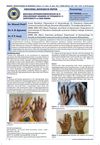 July 2021 in “PARIPEX INDIAN JOURNAL OF RESEARCH”
 This study highlighted knuckle hyperpigmentation as an early sign of vitamin B12 deficiency, indicating a potential link to megaloblastic anemia in the vegetarian population in India.
 94 citations
,
August 1975 in “Journal of Cutaneous Pathology”
94 citations
,
August 1975 in “Journal of Cutaneous Pathology” In this study, the researchers observed that male pattern alopecia is characterized by miniature follicles, enlarged sebaceous glands, and an increased number of mast cells, without significant abnormalities in enzyme activity.
June 2025 in “Proceedings of the National Academy of Sciences” In this study, a mouse model with a PIK3CA gain-of-function mutation in Schwann cells revealed unique communication with neighboring cells and a glycolytic shift in peripheral nerves, and early alpelisib treatment significantly improved symptoms, though efficacy declined with delayed administration due to limited drug penetration.

This study is the first to report major spontaneous diseases in aging Julia Creek dunnarts, highlighting hormonal dysregulation and lymphoid neoplasia as common conditions in this endangered species.
26 citations
,
July 2007 in “Wound Repair and Regeneration” This study found that MRL/MpJ mice heal burn wounds with scar formation, experiencing delayed wound closure and impaired myofibroblast development, which contrasts with quicker contraction in BALB/c mice.
 October 2022 in “JAAD case reports”
 This case report identifies necrolytic migratory erythema associated with a glucagonoma in a 40-year-old man, presenting with distinct skin lesions, weight loss, and diarrhea.
6 citations
,
October 2001 in “British Journal of Ophthalmology” This article discusses the potential of intralesional cidofovir for treating SCC without systemic toxicity, noting that surgical excision remains the best treatment option; it reports no new clinical results.
35 citations
,
August 2006 in “Molecular genetics and metabolism” This study found significant variation in tissue mutant load in individuals with the T8993G mutation, which complicates genetic counseling and may inform genotype-phenotype correlations, especially using hair bulb mtDNA analysis.
 1 citations
,
August 2021 in “Canadian journal of neurological sciences”
1 citations
,
August 2021 in “Canadian journal of neurological sciences” This article offers HTML content and a downloadable PDF but does not provide an abstract or new findings for summary.