 March 2026 in “Folia Histochemica et Cytobiologica”
 This review highlights LTBP1 as a critical integrator in disease processes, showing its dual role in cancer progression and suppression, its pathological influence in fibrosis, and its contribution to various disorders, suggesting its potential as a biomarker and therapeutic target.
May 2024 in “International journal of medicine and psychology.” This study examined monoclonal antibodies LT-1, LT-2, and LT-7, finding they can effectively detect certain antigens on T and B cells involved in various lymphoproliferative diseases, aiding in the diagnosis of both acute and chronic lymphoid neoplasias.
421 citations
,
September 2003 in “Development” This study concluded that label-retaining cells in mouse epidermis differ in their sensitivity to proliferative stimuli, influencing their division and potential transdifferentiation without consistently depleting their population.
12 citations
,
May 2021 in “The journal of investigative dermatology/Journal of investigative dermatology” This study found that disrupting Lm332 expression in mice changes keratinocyte genetic expression, alters cell shape, and disrupts epidermal homeostasis, despite some compensatory anchorage by hair follicle basal cells.
22 citations
,
November 2008 in “The journal of investigative dermatology/Journal of investigative dermatology” This study observed that cathepsin L and transglutaminase 3 colocalize in the human hair bulb and nail matrix, suggesting their involvement in terminal differentiation within these epidermal appendages.
 3 citations
,
April 2022 in “Frontiers in Physiology”
3 citations
,
April 2022 in “Frontiers in Physiology” This study found that loss of the Ptch2 receptor in mice leads to increased incisor growth and enhanced mesenchymal stem cell differentiation, highlighting Ptch2's role in organ regenerative potential.
53 citations
,
April 2016 in “Stem cell research & therapy” This study reports that LL-37 treatment enhances cell proliferation, migration, and secretion of regenerative factors in adipose-derived stem cells, potentially promoting hair growth in vivo.
June 2022 in “Mayo Clinic Proceedings” This case report describes a 69-year-old man diagnosed with stage 3 acute kidney injury secondary to new IgG kappa light chain multiple myeloma, where treatment with bortezomib-based therapy showed potential for kidney function salvage.
49 citations
,
January 1972 in “Biochimica et Biophysica Acta (BBA) - Protein Structure”  1 citations
,
April 2023 in “Science Advances”
1 citations
,
April 2023 in “Science Advances” This study found that sustained ERK activity during tissue regeneration in spiny mice is linked to fibroblast growth factor and ErbB signaling, while inhibiting ERK shifted regeneration toward scarring.
3 citations
,
April 2010 in “The FASEB Journal” This study found that estrogen, through estrogen receptors, can regulate the expression of the HOXC13 gene involved in hair follicle development, with MLL3 histone methylase playing a collaborative role.
13 citations
,
June 2014 in “Molecular therapy” This study found that a lentiviral array of reporters can identify lineage-specific promoters and pathways in mesenchymal stem cell differentiation, aiding in the prediction of signaling pathway effects.
1 citations
,
August 2009 in “Mechanisms of Development” 41 citations
,
February 2005 in “Experimental Cell Research” This study suggests that the MAEG protein may facilitate epithelial–mesenchymal interactions during hair follicle development by binding to RGD-binding integrins like α8β1.
18 citations
,
May 2011 in “Journal of Investigative Dermatology” Wnt signaling affects the development and growth of Langerhans cells in mice.
 4 citations
,
January 2022 in “The journal of investigative dermatology/Journal of investigative dermatology”
4 citations
,
January 2022 in “The journal of investigative dermatology/Journal of investigative dermatology” In this study, researchers found that the KLHL24-ΔN28 protein variant disrupts hair follicle stem cells in a mouse model, leading to premature hair loss by degrading keratin 15.
April 2011 in “The FASEB Journal” This study found that profilin1 protein significantly accelerated wound healing in transgenic mice by reducing wound size and enhancing vascularization and cell migration compared to nontransgenic and 88R/L mice.
 20 citations
,
September 2010 in “Cell Cycle”
20 citations
,
September 2010 in “Cell Cycle” This study reports that in MRL mice, loss of p53 does not impair ear regeneration, suggesting p21's potential role in this process may involve the Tgfb/Smad pathway.
4 citations
,
December 2016 in “Blood” This study describes a case of cyclic thrombocytopenia where a novel MPL gene mutation may contribute to the disease, with gene expression changes in platelet and neutrophil genes preceding platelet count fluctuations.
 137 citations
,
October 2009 in “The American journal of pathology”
137 citations
,
October 2009 in “The American journal of pathology” This study found that matriptase, a membrane serine protease, is crucial for maintaining multiple types of epithelial tissues in mice, with its absence leading to severe organ dysfunction and increased permeability.
 September 2023 in “bioRxiv (Cold Spring Harbor Laboratory)”
 This study describes the use of a genetically engineered mouse model, mTurquoise2-Col4a1, to fluorescently label collagen IV and observe basement membrane dynamics during skin development, revealing its stability and pliability during rapid growth phases.
 133 citations
,
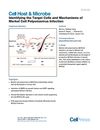
May 2016 in “Cell Host & Microbe”
133 citations
,
May 2016 in “Cell Host & Microbe” In this study, human dermal fibroblasts were identified as natural host cells that support productive Merkel cell polyomavirus infection, and the MEK antagonist trametinib was introduced as an effective inhibitor to control the virus.
 26 citations
,
December 2020 in “Nature metabolism”
26 citations
,
December 2020 in “Nature metabolism” Martin-Perez et al. show that rapamycin's beneficial effects in a mouse model of Leigh syndrome are linked to the downregulation of protein kinase C.
May 2005 in “Molecular Carcinogenesis” This study found that mrp/plf-mRNA expression in murine skin increases in response to different tumor promoters, suggesting its potential as a short-term biomarker for chemical carcinogenesis.
31 citations
,
March 2010 in “Molecular Endocrinology” This study identified that androgens increase calcium sensitization in mouse colonic smooth muscle by activating the Rho/Rho kinase pathway, highlighting its role in modulating muscle contractility.
 July 2025 in “New Phytologist”
 This study demonstrated that the FER/MLO signaling module regulates calcium dynamics and ROS accumulation in root hair growth, with the constitutively active MLO (faNTA) able to restore normal development and signaling in specific mutant genotypes, highlighting MLO15's role in root hair tip growth regulation.
 April 2021 in “Journal of Investigative Dermatology”
 In this study, researchers observed that different ERK signal activation dynamics during hair follicle regeneration are linked to cell fate specification and are affected by distinct upstream signaling pathways.
This study found that bursts of ERK activation in the epidermis of mice were linked to cell division, supporting synchronized cell proliferation and transient ERK activity in living tissues.

This study found that the FER/MLO signaling module plays a crucial role in calcium oscillations and ROS production in root hair tip growth, with the MLO15 protein regulating these processes and restoring disrupted growth and signaling in fer mutant root hairs.
This study found that selective deletion of PIKFyve kinase using a PF4 promoter in mice led to defective platelet lysosome biogenesis and a prothrombotic effect, with unexpected macrophage infiltration in multiple organs.