
This study assessed the effectiveness of JAK inhibitors in Jordanian patients with alopecia areata, finding that while both tofacitinib and baricitinib improved SALT scores, baricitinib showed greater improvement and a trend towards better hair regrowth, particularly with longer treatment durations.
 121 citations
,
January 1991 in “Acta dermato-venereologica”
121 citations
,
January 1991 in “Acta dermato-venereologica” In this study, terbinafine reached high concentrations in stratum corneum and sebum after oral administration, with drug levels remaining above fungicidal concentrations for over three weeks.
 October 2024 in “Cermin Dunia Kedokteran”
 This article discusses the surveillance and spread of hand, foot, and mouth disease in China, Singapore, and Indonesia, and reports no new results, emphasizing the need for improved prevention and management strategies.
 3 citations
,
August 2023 in “Drug safety”
3 citations
,
August 2023 in “Drug safety” This source reports that trastuzumab deruxtecan improves outcomes in HER2-positive and HER2-low metastatic breast cancer, emphasizing the need for careful adverse event monitoring, particularly for interstitial lung disease, and managing emetic risk to maximize benefits.
 June 2023 in “British Journal of Dermatology”
 In this study, baricitinib showed promising results in improving scalp, eyebrow, and eyelash hair loss in adults with severe and very severe alopecia areata over 52 weeks.
20 citations
,
January 2024 in “Journal of the European Academy of Dermatology and Venereology” This study conducted a meta-analysis and found that among therapies for alopecia areata, baricitinib_4 mg was most likely to be effective, followed by ritlecitinib and ivarmacitinib, while other treatments like dupilumab and secukinumab were less effective.
17 citations
,
September 2022 in “Biomaterials Research” This study found that the film-trigger applicator system enhanced drug delivery efficiency and skin penetration of dissolving microneedles compared to traditional patch systems in both lab and animal models.
 June 2025 in “International Journal of Science and Research (IJSR)”
 This study found that oral tofacitinib at a 5mg twice daily dosage was effective in treating recalcitrant alopecia areata, showing significant improvement in hair regrowth and a 27% reduction in SALT scores over six months, with minimal side effects among the 19 patients monitored.
2 citations
,
December 2012 in “The Professional Medical Journal” This study found that Biobran MGN-3 significantly reduced chemotherapy-induced tiredness, anorexia, nausea, and hair loss, improving quality of life in breast cancer patients undergoing treatment.
 41 citations
,
December 2015 in “JAMA Dermatology”
41 citations
,
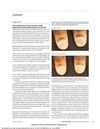
December 2015 in “JAMA Dermatology” Tofacitinib citrate improved nail dystrophy and pain in patients with alopecia universalis without causing side effects.
September 2026 in “Apollo Medicine” In this case report, researchers observed that a 35-year-old male with alopecia universalis achieved full regrowth of scalp, eyebrow, and facial hair with oral upadacitinib treatment after previous therapies failed to provide lasting relief.
12 citations
,
April 2023 in “Molecular Pharmaceutics” This study demonstrated that a microarray patch can deliver antibodies in a controlled and prolonged manner, maintaining their functionality after manufacturing and heat exposure, with successful pharmacokinetic proof-of-concept in rats.
 August 2018 in “Journal of the American Academy of Dermatology”
 Tofacitinib is a potential alternative treatment for alopecia totalis, especially in patients with a shorter duration of the condition and more preserved hair follicles, but the overall response rate is low.
This study found that scalp care using micro-needle therapy was effective in improving hair density and thickness in middle-aged women with menopausal symptoms compared to a control group.
 October 2022 in “Journal of Armed Forces Medical College, Bangladesh”
 In this clinical trial, Tofacitinib effectively promoted hair regrowth in patients with alopecia areata, alopecia totalis, and alopecia universalis, with 75.6% experiencing no side effects, making it a promising treatment option according to the study.
 1 citations
,
June 2023 in “American Journal of Clinical Dermatology”
1 citations
,
June 2023 in “American Journal of Clinical Dermatology” In two phase 3 clinical trials, this study found that adults with severe alopecia areata receiving baricitinib experienced significant hair regrowth on the scalp, eyebrows, and eyelashes over 36 weeks compared to placebo, although longer-term data are needed to fully assess benefits and risks.
 24 citations
,
June 2020 in “Industrial Crops and Products”
24 citations
,
June 2020 in “Industrial Crops and Products” This study reports that biomass activated carbon fibers derived from metaplexis japonica seed hair effectively adsorb methylene blue dye, demonstrating high capacity and rapid adsorption performance.
 January 2025 in “Balkan Medical Journal”
 Baricitinib helps regrow hair in severe alopecia areata and is safe, but more research is needed.
April 2017 in “Leukemia research” This study reported that tofacitinib may be a promising treatment for alopecia areata in adolescents, showing significant hair regrowth with mild adverse effects in a retrospective review.
166 citations
,
February 2020 in “Advanced Functional Materials” This study reports that a novel programmable device delivering VEGF through miniaturized needles significantly improved healing outcomes in diabetic mice's chronic wounds compared to traditional topical treatments.
 1 citations
,
May 2025 in “Frontiers in Medicine”
1 citations
,
May 2025 in “Frontiers in Medicine” In this case series, dual-targeted therapy was observed to provide promising clinical responses in refractory inflammatory bowel disease, with 88.23% to 100% response rates across 9 months and an endoscopic response in 88.89% of evaluated patients, though some adverse events occurred.
October 2024 in “Journal of Pakistan Association of Dermatologists” This study reports that a 21-year-old male with alopecia totalis responded positively to the JAK inhibitor tofacitinib, achieving complete hair regrowth after six months of treatment without significant side effects, though further research is needed to evaluate long-term efficacy.
45 citations
,
July 2025 in “Journal of Medicinal Chemistry” This article discusses the development and clinical progress of PROTAC technology, particularly focusing on the New Drug Application for vepdegestrant, an estrogen receptor-targeting PROTAC, marking significant advancements in targeted protein degradation therapies.
 9 citations
,
May 2021 in “International Journal of Dermatology”
9 citations
,
May 2021 in “International Journal of Dermatology” In this study, sublingual tofacitinib achieved a longer estimated half-life than oral administration in treatment-resistant alopecia areata patients, potentially supporting daily dosing; overall treatment response was modest.
2 citations
,
February 2025 in “Archives of Dermatological Research” This retrospective study observed that switching from tofacitinib to baricitinib improved hair growth in patients with alopecia areata, particularly for previous non-responders, and noted fewer side effects with baricitinib.
 September 2024 in “Journal of the American Academy of Dermatology”
 This study found that baricitinib, when administered consistently over three years, maintained its efficacy in patients with severe alopecia areata who responded by Week 52 with notable hair regrowth, indicated by a SALT score of ≤20.
 May 1993 in “Drugs & Therapy Perspectives”
 Formestane is a preferred second-line treatment for advanced breast cancer in postmenopausal women because it's effective and has fewer side effects.
 May 2023 in “International Journal of Trichology”
 In this case report, the researchers described the use of tofacitinib in treating a 14-year-old boy from India with severe alopecia areata, achieving complete hair regrowth within 2 months without serious adverse events, highlighting tofacitinib's potential benefits and safety in adolescent cases.
In this study, the researchers analyzed skin samples from Dun Mongolian horses to uncover molecular pathways linked to the "Bider" marking, identifying differential gene expression and several pigment-related signaling pathways that may play key roles in its formation.
January 2025 in “Dermatologic Therapy” This study found that baricitinib significantly reduced alopecia severity in JAK inhibitor-naïve patients compared to those previously treated with tofacitinib, indicating that switching JAK inhibitors can be safe and may be beneficial for selected patients with partial prior responses.