 14 citations
,
July 2009 in “Current Opinion in Otolaryngology & Head and Neck Surgery”
14 citations
,
July 2009 in “Current Opinion in Otolaryngology & Head and Neck Surgery” This review discusses recent developments in hair restoration, highlighting the continued prominence of follicular unit strip surgery and the growing literature on the relatively new technique of follicular unit extraction, without presenting new clinical results.
 13 citations
,
January 2010 in “Advances in Biochemical Engineering / Biotechnology”
13 citations
,
January 2010 in “Advances in Biochemical Engineering / Biotechnology” This review covers various aspects of hair biology, pigmentation, and development, focusing on genetic and biochemical modulation of hair follicle components but reports no new findings.
 13 citations
,
March 2002 in “Pediatric Dermatology”
13 citations
,
March 2002 in “Pediatric Dermatology” This article discusses temporal triangular alopecia, emphasizing the need for increased awareness to prevent misdiagnosis and ineffective treatment, but reports no new clinical results.
 8 citations
,
April 2020 in “Facial Plastic Surgery Clinics of North America”
8 citations
,
April 2020 in “Facial Plastic Surgery Clinics of North America” This abstract explains that androgenetic alopecia, a common hair loss disorder influenced by genetics and hormones like dihydrotestosterone, has FDA-approved treatments including minoxidil, finasteride, and photolaser therapy, but its genetic basis and susceptibility to environmental factors remain complex.
 8 citations
,
June 2008 in “Aktuelle Dermatologie”
8 citations
,
June 2008 in “Aktuelle Dermatologie” Early diagnosis and personalized treatment are crucial for managing different types of alopecia effectively.
 7 citations
,
January 2019 in “Pharmaceutical Biology”
7 citations
,
January 2019 in “Pharmaceutical Biology” This study suggests that Eclipta prostrata may promote hair growth in mice and human dermal papilla cells through regulating FGF-7 and mTOR signaling.
 6 citations
,
March 2018 in “Journal of Medicinal Food”
6 citations
,
March 2018 in “Journal of Medicinal Food” This study demonstrated that water-soluble peptides from egg yolk, termed "hair growth peptide," stimulated human hair follicle cell growth and improved hair growth in female pattern hair loss.
 4 citations
,
May 2025 in “Dermatology and Therapy”
4 citations
,
May 2025 in “Dermatology and Therapy” This study found that baricitinib improved symptoms of atopic dermatitis and alopecia areata in both adults and children in real-world settings, aligning with clinical trial results, while noting low discontinuation due to adverse events and no new safety concerns.
 3 citations
,
April 1989 in “Drug Information Journal”
3 citations
,
April 1989 in “Drug Information Journal” Side effects of drugs can lead to the discovery of new treatments.
 2 citations
,
January 2012 in “Journal für Kardiologie (Krause & Pachernegg GmbH)”
2 citations
,
January 2012 in “Journal für Kardiologie (Krause & Pachernegg GmbH)” This review discusses therapeutic principles for managing hirsutism and androgenetic alopecia during the menopausal transition and peri-/postmenopause but reports no new clinical results.
1 citations
,
January 2022 in “Brazilian Journal of Pharmaceutical Sciences” This study investigated the physicochemical properties of polystyrene-b-poly(acrylic acid) nanovesicles coated with modified chitosans, finding that they can effectively control surface charge and potentially serve as drug delivery carriers with a 50.7% encapsulation efficiency for minoxidil.
 1 citations
,
September 2020 in “Cochrane library (CD-ROM)”
1 citations
,
September 2020 in “Cochrane library (CD-ROM)” This Cochrane Review protocol aims to evaluate the effectiveness and safety of various treatments for alopecia areata through a network meta-analysis, but no specific study findings are reported yet.
 1 citations
,
March 1997 in “Journal of the American Pharmaceutical Association”
1 citations
,
March 1997 in “Journal of the American Pharmaceutical Association” This guideline summary, endorsed by six Spanish pediatric societies, outlines consensus recommendations for managing childhood asthma, emphasizing diagnosis, maintenance treatment with low-dose inhaled corticosteroids, and patient education for effective control.
 1 citations
,
October 1990 in “The Lancet”
1 citations
,
October 1990 in “The Lancet” Using minoxidil for hair growth may cause skin lesions in some people, and taking breaks from nitrate patches for angina might worsen symptoms.
 March 2025 in “HAL (Le Centre pour la Communication Scientifique Directe)”
 This thesis investigates the underlying mechanisms and treatment options for androgenetic alopecia, highlighting the molecular roles of androgens and genetic predispositions, and evaluates current and emerging therapies, such as PROTACs and Janus Kinase inhibitors, to enhance patient management.
 February 2025 in “Global Academic Journal of Pharmacy and Drug Research”
 This study reported that compounds from the root of Beta vulgaris, specifically 4-picoline and Betalain, showed potential as effective anti-hair loss treatments by demonstrating significant inhibitory activity against the enzyme 5α-reductase in a computational molecular docking study.
 June 2012 in “Springer eBooks”
 Eating disorders can cause various hair problems, and while hair loss in these disorders is linked to metabolic syndrome, treatment focuses on specific medications and lifestyle changes for the syndrome.
 April 2012 in “Informa Healthcare eBooks”
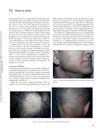
 Alopecia areata is a common autoimmune condition causing varying hair loss, diagnosed by specific patterns of inflammation around hair follicles, with several treatment options available.
 January 2026 in “Drug Delivery and Translational Research”
 This study investigated the integration of crystal engineering and microneedle technology for androgenetic alopecia treatment, finding that microneedles loaded with newly developed Kopexil multicomponent crystals reduced drug diffusion rates in vitro compared to standard formulations.
2 citations
,
June 2021 in “Korean Journal of Food Preservation” This study found that adding red ginseng powder to string cheese before stretching the curd produced the highest sensory scores and maintained cheese hardness, suggesting it is optimal for manufacturing red ginseng string cheese.
January 2021 in “Springer eBooks” Combining PRP with other treatments can improve hair loss outcomes.
17 citations
,
November 2021 in “Journal of Cosmetic Dermatology” This review discusses treatment options for androgenetic alopecia, highlighting the need for personalized, evidence-based approaches but reports no new clinical results.
1 citations
,
February 2024 in “Pharmaceutics” This review highlights recent developments in nanovesicular carriers for enhancing molecule delivery into and across the skin, focusing on the design and evolution of phospholipid and non-phospholipid systems used in cosmetics and treating various skin conditions.
 1 citations
,
December 2022 in “Pharmaceuticals”
1 citations
,
December 2022 in “Pharmaceuticals” This study found that a sub-fraction of Noni fruit, FEA-3, showed hair growth-promoting effects in a rabbit model of androgenic alopecia, similar to Minoxidil.
February 2026 in “Food Research International” Lactiplantibacillus plantarum ZJUIDS51 can help regrow hair and improve scalp health in androgenic alopecia.
November 2025 in “ACS Omega” This study found that compounds from *Tectona grandis* leaves showed moderate inhibition of steroid 5α-reductase, a factor in androgenetic alopecia, and exhibited anti-inflammatory properties by inhibiting nitric oxide and pro-inflammatory cytokines IL-1β and IL-6 in vitro, suggesting potential dual-action benefits for AGA management.
August 2025 in “Journal of Medical and Biological Engineering” In this study, a needle-free supersonic atomizer delivering Bacopa monnieri extract with hyaluronan was found to enhance hair growth in mice more effectively than the traditional smear method and minoxidil.
 June 2025 in “Current Issues in Molecular Biology”
 In this laboratory study, Cucumis melo var. makuwa leaf extract significantly reduced DHT-induced apoptosis in human dermal papilla cells by modulating androgen receptor activity and gene expression, suggesting potential as a therapy for androgenetic alopecia.

This study reports that Hair RiseTM microemulsion, made from plant extracts, significantly enhanced hair follicle cell growth and improved hair growth signaling pathways, suggesting it as a plant-based alternative for androgenetic alopecia treatment.
 February 2026 in “Archiv Euromedica”
 In this narrative review, researchers reported that oral finasteride significantly improved hair count and density in male androgenetic alopecia but had higher systemic exposure and potential side effects compared to topical formulations, which provided similar efficacy with lower systemic DHT suppression.