27 citations
,
January 1986 in “PubMed” This study found no significant difference in hair growth between patients with extensive alopecia areata treated with 1% minoxidil and those given a placebo.
46 citations
,
June 1990 in “Archives of dermatology” In this study, combination therapy with 5% minoxidil and 0.5% anthralin showed some cosmetic improvement in 11% of patients with severe treatment-resistant alopecia areata, with hair regrowth starting by week 12.
 6 citations
,
January 2016 in “Journal of Clinical and Diagnostic Research”
6 citations
,
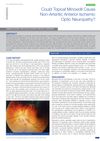
January 2016 in “Journal of Clinical and Diagnostic Research” This case report describes a non-arteritic anterior ischemic optic neuropathy that resolved after discontinuing topical 5% minoxidil treatment.
 September 2024 in “Journal of Skin and Stem Cell”
 In this study, a combination treatment of microinfusion (MMP®) and topical minoxidil showed a modest increase in hair density in a 28-year-old woman with chronic telogen effluvium, particularly in the parieto-vertex region, suggesting potential benefits but underscoring the need for larger trials to confirm efficacy.
1 citations
,
July 2024 in “JAAD International” This article discusses the off-label use of low-dose oral minoxidil for alopecia and reports no new clinical findings, noting its presumed mechanism is enhancing hair follicle microcirculation with minimal blood pressure effects.
This study developed a novel, 3D-printed dissolving microneedle system for delivering minoxidil to treat hair loss, which showed pH-triggered drug release and enhanced hair regrowth in an alopecia mouse model, offering a potentially sustainable and safe transdermal therapy option.
August 2026 in “OSF Preprints (OSF Preprints)” This review discusses low-dose oral minoxidil for adult androgenetic alopecia and female pattern hair loss and reports no clinical results; it provides a transparency archive with review materials.
 March 2024 in “International Journal of Pharmaceutics”
 This study found that combining minoxidil with ginsenosides Rg3 in a novel delivery system improved hair growth by reducing inflammation and oxidative stress in androgen alopecia treatments.
6 citations
,
June 1989 in “Cell Biology International Reports” This study reported that minoxidil affects the physiology of cultured endothelial cells, including reversible suspension of cell proliferation and dose-dependent influence on cell morphology, without significantly altering protein synthesis or inhibiting cell migration.
July 2025 in “Colloids and Surfaces B Biointerfaces” This study found that the new delivery system HL@Mi enhanced the skin penetration, local bioavailability, and safety of minoxidil, supporting improved hair growth in an androgenetic alopecia animal model.
 13 citations
,
June 2016 in “Dermatologic Therapy”
13 citations
,
June 2016 in “Dermatologic Therapy” This study found that minoxidil applied to a damp scalp may increase drug penetration in vitro, potentially improving treatment effectiveness.
 17 citations
,
July 1995 in “International Journal of Dermatology”
17 citations
,
July 1995 in “International Journal of Dermatology” This study observed that local injection of minoxidil effectively prevented Ara-C-induced alopecia in newborn rats, while topical application was ineffective.
 28 citations
,
January 1989 in “Toxicologic Pathology”
28 citations
,
January 1989 in “Toxicologic Pathology” This study found that none of the nine minoxidil-treated autopsy cases showed cardiac pathology attributable to minoxidil, suggesting no direct link between the drug and specific human cardiac lesions.
 January 2022 in “Przegla̧d dermatologiczny”
 This article reviews the use of minoxidil for alopecia treatment and finds that low-dose oral or topical forms can be effective with manageable side effects, although some patients may still experience them.
1 citations
,
May 1987 in “The Lancet” Topical minoxidil may help hair growth by improving blood flow to hair follicles.
 19 citations
,
October 2017 in “European Journal of Pharmaceutics and Biopharmaceutics”
19 citations
,
October 2017 in “European Journal of Pharmaceutics and Biopharmaceutics” This study found that the MXD/HP-β-CD GEL formulation promoted greater hair growth and improved gene expression related to hair growth in male rats compared to MXD solution or control groups.
 June 2026 in “Digital Commons - PCOM (Philadelphia College of Osteopathic Medicine)”
 This study observed that a 24-hour pre-treatment with MitoQ significantly protected H9c2 myoblasts from doxorubicin-induced damage while enhancing doxorubicin's effectiveness in prostate cancer cells, outperforming dexrazoxane's effects without compromising the anti-cancer efficacy.
 24 citations
,
April 2014 in “Oncotarget”
24 citations
,
April 2014 in “Oncotarget” This study found that minoxidil suppressed androgen receptor functions and stability, suggesting its potential use in treating diseases related to the androgen-AR pathway.
 January 2025 in “Biomedical Engineering Letters”
 This study reported that a new polymeric formulation for topical minoxidil delivery in an animal model improved hair growth and hair follicle formation more effectively than minoxidil in PBS, suggesting potential as a future hair loss treatment.
 October 2025 in “Advanced Healthcare Materials”
 This study found that using a stevioside-based microneedle patch significantly increased minoxidil's solubility and skin absorption, promoting hair growth in animal models and achieving 67.5% area coverage by day 35, highlighting the potential of this novel delivery system for androgenetic alopecia treatment.
 February 2019 in “Case medical research”
 Using lasers to deliver minoxidil can potentially improve its effectiveness in treating male pattern hair loss.
January 2021 in “Asian Journal of Research in Dermatological Science” 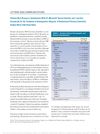 19 citations
,
May 2017 in “Dermatologic Surgery”
19 citations
,
May 2017 in “Dermatologic Surgery” Combining platelet-rich plasma with 5% minoxidil solution improves hair regrowth in androgenetic alopecia patients.
 July 2024 in “Quality in Sport”
 In this study, a review of existing trials reported that combining minoxidil with platelet-rich plasma therapy significantly improved outcomes for androgenetic alopecia more than minoxidil alone, and offered generally superior results compared to platelet-rich plasma monotherapy, while maintaining a safe profile similar to individual treatments.
16 citations
,
July 1988 in “International Journal of Dermatology” This study found that 2% minoxidil solution significantly increased nonvellus hair count in men with male pattern baldness compared to placebo during a 48-week trial.
 January 2014 in “American Journal of Medicine and Medical Sciences”
 This article discusses the mechanisms of androgenetic alopecia and explores possible explanations for minoxidil's effect on hair growth but reports no new results.
2 citations
,
April 1984 in “BMJ” This study found that a combination of minoxidil, microneedling, and PRP was significantly more effective than minoxidil alone in managing androgenetic alopecia over six months.
 40 citations
,
September 2003 in “Archives of Dermatology”
40 citations
,
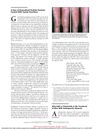
September 2003 in “Archives of Dermatology” This webpage provides access options for JAMA Dermatology but does not contain research findings or results.
3 citations
,
November 1983 in “BMJ”