 3 citations
,
January 2023 in “Journal of Pharmaceutical Negative Results”
3 citations
,
January 2023 in “Journal of Pharmaceutical Negative Results” This study reports that fluconazole emulgel formulations, using jojoba oil and liquid paraffin, showed effective drug release and improved characteristics for treating skin diseases compared to traditional oral formulations.
 3 citations
,
April 2021 in “Journal of Cosmetic Dermatology”
3 citations
,
April 2021 in “Journal of Cosmetic Dermatology” In this study, the researchers found that a manual micrometer caliper is a reliable tool for planning hair transplant surgery and accurately measures the short axis of the hair shaft.
 2 citations
,
September 2023 in “Scientific reports”
2 citations
,
September 2023 in “Scientific reports” This study reports that zinc oxide or silver nanoparticles capped with vitamin A or E, incorporated into wheat gluten films, showed significant potential in promoting burn wound healing in mice by facilitating wound contraction, re-epithelialization, and collagen deposition, while also exhibiting antioxidant and antibacterial properties.
 2 citations
,
April 2023 in “Pharmacognosy Journal”
2 citations
,
April 2023 in “Pharmacognosy Journal” This study found that bio fabricated herbal silver nanoparticles from Blumea lacera extracts demonstrated significant antibacterial activity against Staphylococcus aureus and Escherichia coli, and notable anti-inflammatory effects, though their antioxidant capacity was insignificant compared to the extract.
 2 citations
,
July 2020 in “Journal of Drug Delivery Science and Technology”
2 citations
,
July 2020 in “Journal of Drug Delivery Science and Technology” In this study, forming inclusion complexes of Finasteride and poly (ethylene glycol) resulted in significantly improved solubility and dissolution rates, suggesting a promising new solid form for enhanced drug release.
 2 citations
,
October 2015 in “Primary Care: Clinics in Office Practice”
2 citations
,
October 2015 in “Primary Care: Clinics in Office Practice” This article discusses the evaluation and treatment options for alopecia but reports no new clinical results; it highlights the importance of early diagnosis and appropriate treatment.
 1 citations
,
September 2023
1 citations
,
September 2023 This study reported that the combination of tridax procumbens and ginger juice improved antioxidant activity and protected against liver damage induced by paracetamol in rats, suggesting a potent hepatoprotective effect.
 1 citations
,
January 2021 in “Wiadomości Lekarskie”
1 citations
,
January 2021 in “Wiadomości Lekarskie” This experimental study on male rats found that a gel containing carbon dioxide extract of hops effectively promoted wound healing in severe acne by enhancing skin regeneration and exhibiting anti-inflammatory, bactericidal, and antimycotic properties.
 1 citations
,
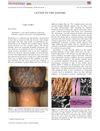
February 2018 in “Australasian journal of dermatology”
1 citations
,
February 2018 in “Australasian journal of dermatology” Advanced imaging techniques are crucial for accurately diagnosing Monilethrix, a rare hair disorder.
 February 2026 in “International Journal of Advanced Research in Science Communication and Technology”
 In this review, researchers explored the potential of herbal shampoos as effective and safe alternatives to conventional anti-dandruff treatments, highlighting that polyherbal formulations may offer comparable or superior benefits with fewer side effects.
 January 2026 in “Indus journal of bioscience research.”
 In this study, Hibiscus rosa-sinensis extract was used to formulate and evaluate herbal cosmetic creams for their antioxidant properties, stability, and effectiveness. The formulations demonstrated strong antioxidant potential, stability under various conditions, and favorable cosmetic qualities, suggesting HRS as a beneficial ingredient in skincare products.
 September 2025 in “International Journal for Research in Applied Science and Engineering Technology”
 This paper discusses the potential benefits of incorporating guava leaf extracts into skincare, hair care, and oral care products, highlighting their antibacterial, antioxidant, and acne-treating properties, as well as their possible effects on dandruff removal and hair loss reduction.
 January 2025 in “International Journal for Research Trends and Innovation”
 This study assessed a herbal hair oil made from various plant ingredients, observing it supported hair growth and maintained stability for 45 days, with the phytochemical profile indicating the presence of saponins, sulfur, and ascorbic acid.
 December 2024 in “Kahramanmaraş Sütçü İmam Üniversitesi Tıp Fakültesi Dergisi”
 This study found that switching patients with alopecia areata unresponsive to topical clobetasol 17 propionate 0.05% to anthralin treatment led to improved treatment success.
 November 2024 in “International Journal of Biology Pharmacy and Allied Sciences”
 This study aimed to evaluate a herbal shampoo made from custard apple leaves for its physical properties, skin irritability, and foam formation, with a focus on efficacy and safety, particularly for addressing hair issues like lice infection.
 July 2024 in “Anti-Infective Agents”
 This study explored the development of a herbal anti-dandruff shampoo using natural polyherbal tincture and reported strong antimicrobial effects, which suggests it may be a safer and more effective alternative to conventional solutions that can cause side effects like hair loss and irritation.
This study suggests that a herbal shampoo made from plant ingredients may be a promising natural remedy for hair fall and dandruff, demonstrating good quality and safety.
 March 2024 in “Asian journal of beauty & cosmetology”
 In this study, Derma Genie™-H001 was shown to reduce inflammation, counteract oxidative and UVB-induced damage, and support hair growth-related gene expression in human dermal papilla cells, suggesting its potential as a functional cosmetic ingredient to alleviate hair loss symptoms.
 January 2024 in “İstanbul Kuzey Klinikleri”
 This study found that low ferritin levels are associated with higher telogen ratios in women with diffuse hair loss, suggesting an important role of ferritin in telogen effluvium diagnosis.
 November 2023 in “International journal of Ayurveda and pharma research”
 This study prepared and evaluated a polyherbal hair oil using plant-based ingredients, finding that it met standard parameters and effectively addressed hair problems such as growth and dandruff, with FDA approval for clinical use.
 July 2023 in “International journal of advanced research in medical and pharmaceutical sciences”
 In this study, researchers formulated and evaluated a gel containing minoxidil and aloe vera for alopecia treatment, finding that it was stable and non-irritant on albino rats, suggesting enhanced topical drug delivery over traditional solutions.
 April 2023 in “International journal of pharmaceutical sciences review and research”
 This study concluded that an Emulgel formulation containing Tridax procumbens extract showed promising wound healing and antimicrobial activity, with improved physical properties in the F2 formulation.
 July 2022 in “International journal of Ayurvedic medicine”
 This study evaluated a newly formulated polyherbal anti-dandruff shampoo that incorporates natural ingredients, such as Neem and Aloe vera, to effectively clean hair, control dandruff, and promote hair growth without using harmful synthetic chemicals.
 November 2021 in “International journal of life science and pharma research”
 This study reported that a solid lipid nanoparticle-based gel formulation, specifically optimized for psoriasis, improved drug loading capacity and release properties using high-pressure homogenization, suggesting its potential efficacy as a topical treatment.
 February 2020 in “Journal of emerging technologies and innovative research”
 This study developed a multipurpose herbal hair emulgel incorporating aloe vera, tea extract, coconut oil, and castor oil, aimed at promoting hair growth and controlling dandruff, hair fall, and greying. Evaluation found the product to be stable.
 March 2014 in “Journal of The American Academy of Dermatology”
 Reflectance confocal microscopy can noninvasively diagnose onychomatricoma by showing unique features different from healthy nails or nail fungus.

This research suggests that plucked hair follicles may serve as a reliable surrogate tissue for tumor biopsies in drug development, based on a mouse model linking hair and tumor pharmacodynamic responses.
 February 2010 in “Journal of The American Academy of Dermatology”
 This study found that NB-002 demonstrated clear antifungal activity and clinically significant nail clearing in subjects with distal subungual onychomycosis and ≤50% nail involvement, compared to a vehicle treatment.
 January 2006 in “Journal of Society of Cosmetic Chemists of Japan”
 This study found that a new hybrid polymer containing hydrolyzed protein and silicone effectively improved moisture feel and prevented discoloration in dyed hair, particularly benefiting damaged hair.
 August 2001 in “Dermatologic Surgery”
 This study found that using the KNU implanter for follicular unit transplantation resulted in a high survival rate of 92% at 6 months, regardless of whether one-hair or two-hair units were used.