June 2021 in “Faculty Opinions – Post-Publication Peer Review of the Biomedical Literature” The researchers reported that basement membrane heterogeneity, especially laminin α5 composition, plays a critical role in distinct inter-tissue interactions and hair cycle regulation in mouse hair follicles.
 May 2008 in “The International Conference on Mathematics and Engineering Physics”
 This study reports that combining low level laser treatment with liposome-delivered methylene blue may effectively target sebaceous glands in mice, with efficacy influenced by laser timing and drug absorption.
5 citations
,
June 2024 in “Free Radical Biology and Medicine” This review highlights that current in vitro models often fail to replicate the physiological oxygen levels experienced by different skin cell types, which could affect redox states and functions, potentially accelerating skin aging.
January 2024 in “Toxicologic Pathology” This review outlines the structure and functions of the skin, emphasizing its role as a physical and immune barrier, its moisture regulation, the influence of its microbiome, and the supportive functions of its layers and adnexa.
45 citations
,
November 2022 in “Acta Biomaterialia” This study developed a biomimetic 3-D co-culture system that enhances the hair-inductive properties of human dermal papilla cell aggregates, potentially improving hair follicle tissue engineering.
December 2023 in “Modern engineering and innovative technologies” This article explores the theoretical foundations of the ChromaLens Precision Mapping system for analyzing hair, but it does not present any new experimental findings.
January 2024 in “Defence life science journal” This review explores the potential of non-invasive photobiomodulation therapy for managing combat and traumatic soft tissue injuries, emphasizing its benefits, efficacy, and underlying mechanisms, but reports no new clinical results.
 July 2025 in “Archives of Toxicology”
 The study introduced an advanced skin model, ImmuSkin-MT, which effectively distinguished between different strengths of skin sensitizers by mimicking the interaction of immune cells in skin tissue.
1 citations
,
December 2025 in “Journal of Investigative Dermatology” Photocrosslinkable biomaterials can improve wound healing by controlling mechanical environments.
March 2026 in “IntechOpen eBooks” This chapter explores the promising use of low-power laser irradiation for post-hysterectomy reconstructive care, emphasizing enhancements like a flexible fiber optic module, to potentially improve genitourinary rehabilitation in cervical cancer patients.
July 2024 in “Chemical Engineering Journal” A new microneedle system with minoxidil nanoparticles effectively promotes hair regrowth with fewer side effects.
 4 citations
,
January 2025 in “Translational Psychiatry”
4 citations
,
January 2025 in “Translational Psychiatry” In this study, remote photobiomodulation therapy to the lungs improved behavioral and neurological outcomes in rats with repeated closed-head injuries, suggesting potential preventive benefits for brain health.
9 citations
,
October 1989 in “Australian Journal of Agricultural Research” This study found that infused mouse epidermal growth factor induced wool follicle involution through a quasi-physiological process similar to catagen and a separate pathological action, resulting in fleece 'break' or shedding.
 April 2023 in “Journal of Investigative Dermatology”
 This study found that the dermal sheath smooth muscle regulates hair follicle progenitor cell death during hair regression through mechanical signaling of the TGF-β pathway.
This study found that structural changes in the stroma surrounding hair follicles and skin laxity are associated with the appearance of large pores, regardless of ethnicity or age.
 November 2025 in “Scientific Reports”
 This study found that a blink frequency of at least 20 blinks per minute is necessary to maintain tear film stability in young participants with dry eye symptoms, with lower frequencies significantly worsening various indicators of eye dryness.
24 citations
,
July 2023 in “Journal of Functional Biomaterials” This review evaluates recent advances from 2016 to 2022 in the use of microbubbles and nanobubbles, highlighting their potential for safer diagnostic and therapeutic applications in radiology and medicine without the side effects associated with traditional methods.
 1 citations
,
June 2023 in “Reproduction”
1 citations
,
June 2023 in “Reproduction” This review discusses the role of microglia in mediating prenatal androgen effects on the female brain, potentially contributing to PCOS development and neuroendocrine dysfunctions, but reports no new results.
5 citations
,
September 2009 in “Acta Ophthalmologica” This study found that the Meibomian gland shares structural and cytokeratin composition similarities with hair follicles, and plays a role in hyper-keratinisation observed in obstructive Meibomian gland dysfunction.
 April 2026 in “Experimental & Molecular Medicine”
 This study used integrated single-cell chromatin and transcriptomic analyses in developing mouse skin to uncover gene networks involved in skin lineage specification and identified Mef2c+ upper fibroblasts as potential precursors to certain muscle-like structures, with cross-species findings in human skin.
3 citations
,
January 2004 in “Elsevier eBooks”  October 2025 in “Journal of Nanobiotechnology”
 This study reports that using a hydrogel-based therapy that dynamically regulates reactive oxygen species helps achieve skin regeneration in infected wounds, promoting organized dermal architecture with improved hair follicle and blood vessel formation, rather than scar formation.
December 2025 in “Sensors” In this review, recent advances in long-acting microneedle-based transdermal drug delivery systems are outlined, highlighting biodegradable polymers like PLA, PLGA, and PCL for sustained release and discussing challenges in clinical translation such as consistency in manufacturing and validating long-term efficacy and safety.
January 2026 in “MEDS Clinical Medicine” This review highlights emerging evidence that biophysical and metabolic cues, such as oxygen levels and tissue mechanics, significantly influence skin stem cell behavior, which is crucial for developing advanced wound healing therapies beyond traditional infection and inflammation control.
35 citations
,
July 2015 in “Journal of Theoretical Biology” This study introduced a theoretical model suggesting that the morphological transition from bud to cap in tooth germ development is driven by mechanical interactions among cells.
 3 citations
,
December 2022 in “bioRxiv (Cold Spring Harbor Laboratory)”
3 citations
,
December 2022 in “bioRxiv (Cold Spring Harbor Laboratory)” This study revealed key cellular dynamics and interactions during early embryonic mouse skin development, highlighting complex transitions from precursor states to diverse multilayered structures.
 31 citations
,
November 2016 in “Cell Reports”
31 citations
,
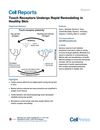
November 2016 in “Cell Reports” This study reveals that somatosensory neurons in mouse skin exhibit structural plasticity during hair-follicle regeneration, which may temporarily impair the reliability of encoding gentle touch.
49 citations
,
June 2004 in “Philosophical Transactions of the Royal Society A Mathematical Physical and Engineering Sciences” This study developed a multiscale model to understand human hair fiber mechanics and found that the yield stress decreases linearly with temperature, supported by both simulations and experimental stretching of hair fibers.
June 2026 in “Advanced Science” This study demonstrated that novel cryomicroneedles loaded with hair follicle organoids (cryoMN@HFOs) can effectively deliver and develop into functional hair follicles after intradermal transplantation in animal experiments, suggesting promising potential for human hair follicle reconstruction.
June 1967 in “Journal of Cellular Physiology” This study developed an in vitro 3D organoid model using dermal papilla spheroids and found that it enhances growth factor expression and extracellular matrix production, which could aid drug screening for hair regeneration.